Untitled
Unknown
11th–12th century · Gilt arsenical bronze · Asian Art
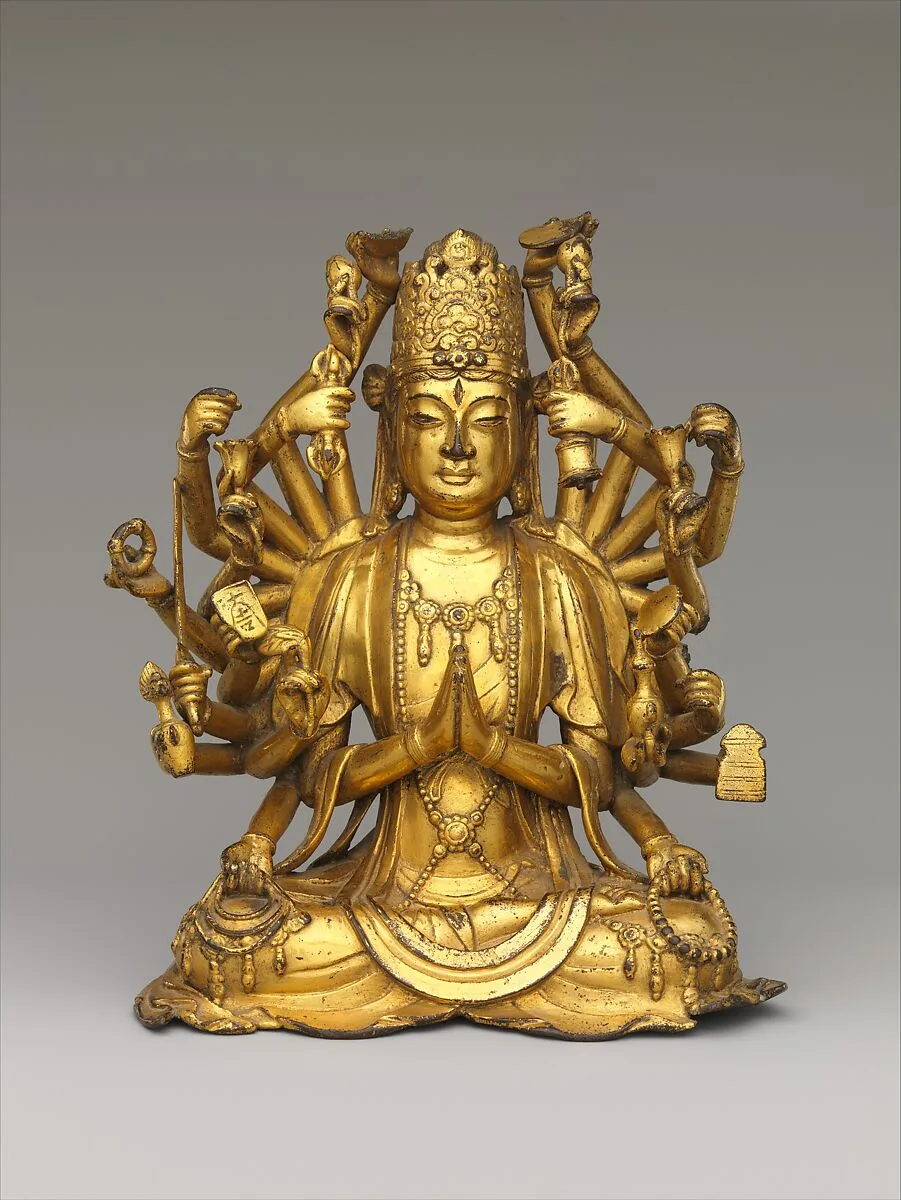
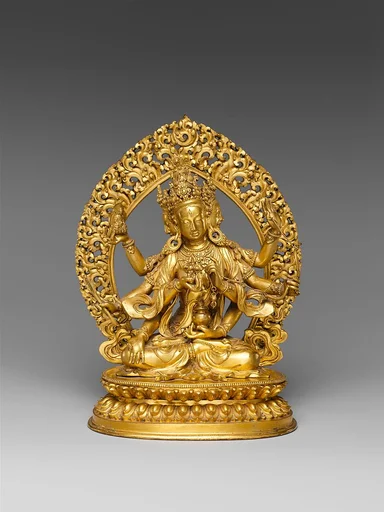
This esoteric form of Avalokiteshvara holds a range of attributes in his twenty-four hands, including the sun, the moon, a vajra, and a bell. Multiarmed, powerful tantric forms of Avalokiteshvara were introduced into East Asia by the monk Amoghavajra as part of an eighth-century effort to repel Tibet’s military expansion across Central Asia. Later, this protective form of Avalokiteshvara, who is able to aid his numerous devotees with his many arms, became especially popular in Tibet after the north Indian monk Atisha (980–1054) emphasized this tantric deity.
- Artist
- Unknown
- Date
- 11th–12th century
- Medium
- Gilt arsenical bronze
- Culture
- China, Yunnan Province
- Department
- Asian Art
- Credit line
- Rogers Fund, 1956