十六國時代 鎏金青銅釋迦牟尼佛坐像|Seated Buddha, probably Shakyamuni (Shijiamouni)
Unknown
late 4th–early 5th century · Gilt bronze; piece-mold cast · Asian Art
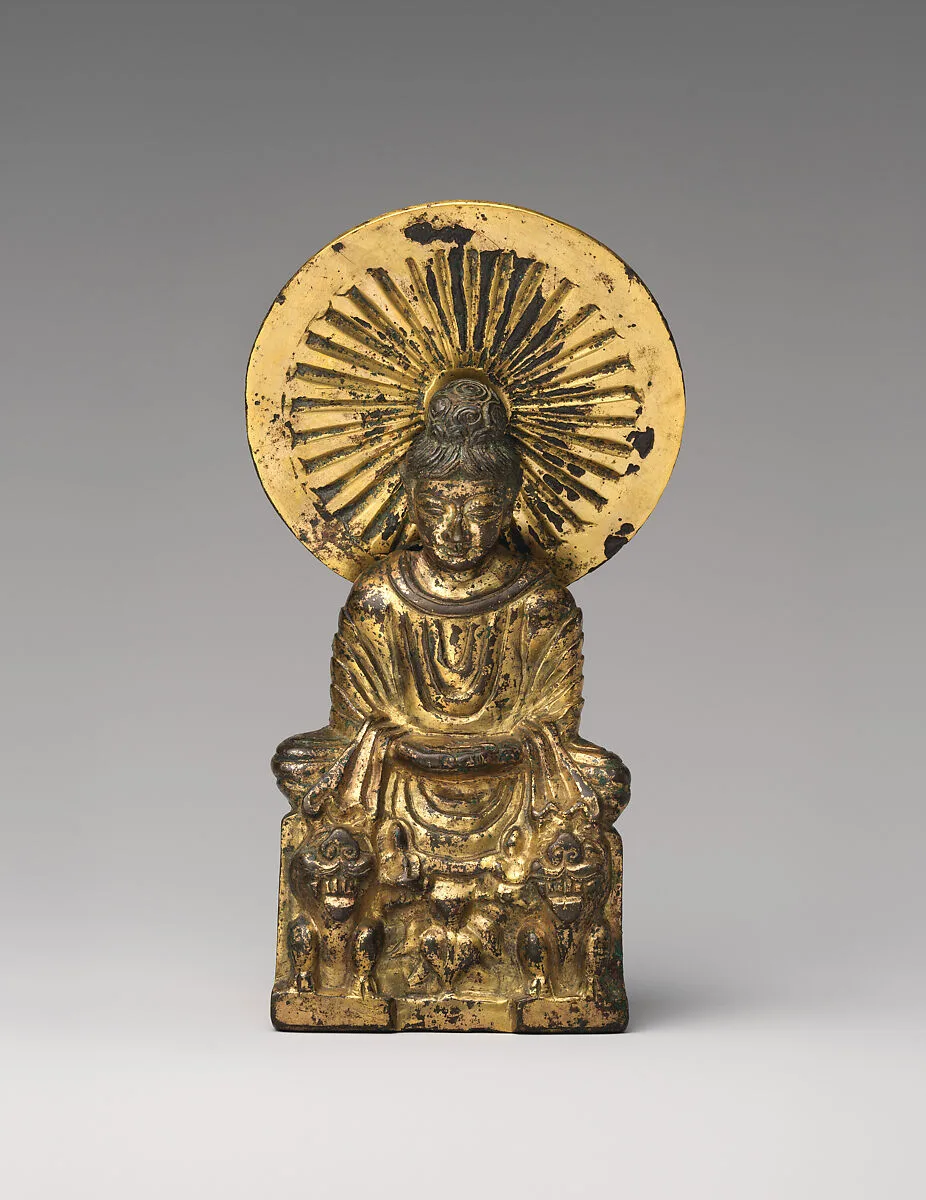
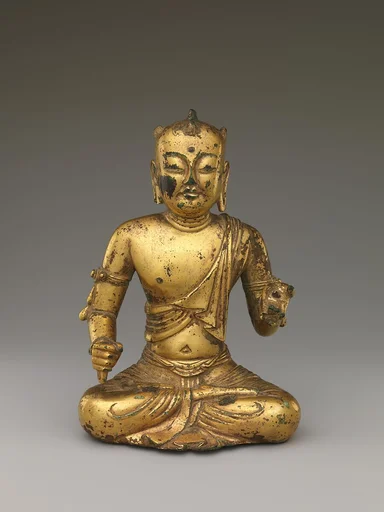
Representations of the Buddha wearing a thick shawl over both shoulders and sitting atop a throne with lions on either side are Chinese adaptations of images derived from the northwest region of the Indian subcontinent, particularly from areas in present-day Pakistan (known as Gandhara in the ancient world). Scientific examination of this sculpture has shown that it was cast using several ceramic molds, a technique that was also used to create the ancient bronze ritual vessels on view in this gallery. By the fifth century, the lost-wax method, which may have been introduced with Buddhism, was used more often for the casting of Chinese sculptures.
- Artist
- Unknown
- Date
- late 4th–early 5th century
- Medium
- Gilt bronze; piece-mold cast
- Culture
- China
- Department
- Asian Art
- Credit line
- Purchase, Arthur M. Sackler Gift, 1974