清 黃銅鎏金尊勝佛母像|Buddhist Deity, Ushnishavijaya (Zun Sheng fo mu)
Unknown
late 17th–18th century · Gilt brass; lost-wax cast · Asian Art
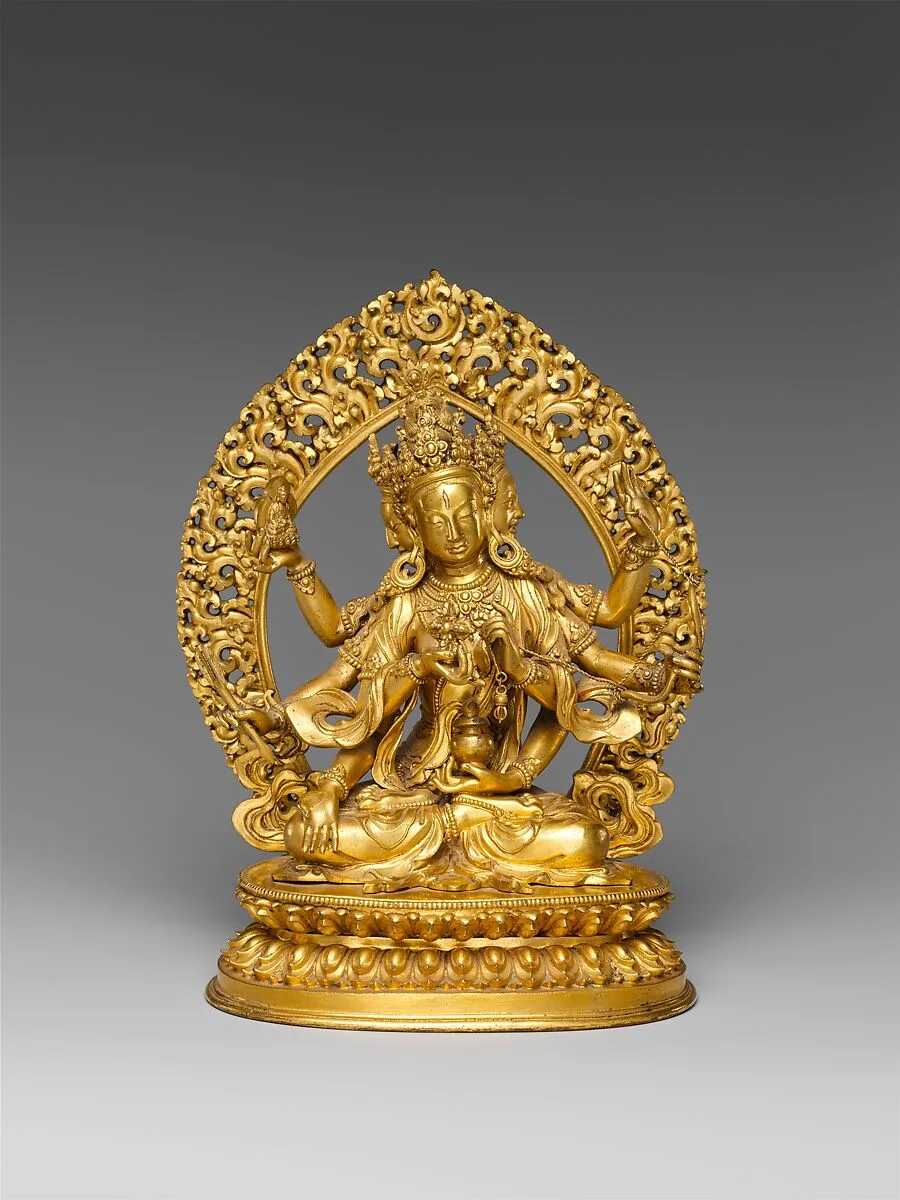
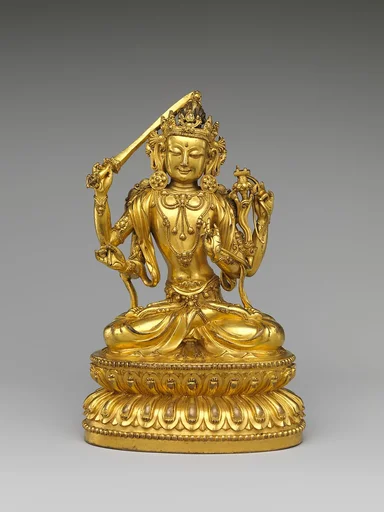
This eight-armed goddess can be identified by the implements she holds as Ushnishavijaya, one of several female deities who began to play a prominent role in Indian Buddhist practices during the seventh and eighth centuries. She has three faces and is thought to personify the ushnisha, the cranial protuberance that marks a Buddha. Therefore, she is generally associated with the development of practices focusing on spiritual understanding. The goddess holds a small seated Buddha in her upper right hand and a two-pronged vajra suspended from a long rope in her upper left. Her second pair of hands holds a bow and arrow, while the third clutches a four-pronged vajra (a ritual implement symbolic of adamantine power) before her chest. The seventh and eighth hands, the lowest pair on the sculpture, offer a gesture of beneficence and hold a covered vase. The style of the sculpture reflects the close ties between the Buddhist cultures of Tibet, Mongolia, and China during the Qing dynasty.
- Artist
- Unknown
- Date
- late 17th–18th century
- Medium
- Gilt brass; lost-wax cast
- Culture
- China
- Department
- Asian Art
- Credit line
- Purchase, Friends of Asian Art Gifts, 2007