Untitled
Unknown
18th century · Bronze · Asian Art
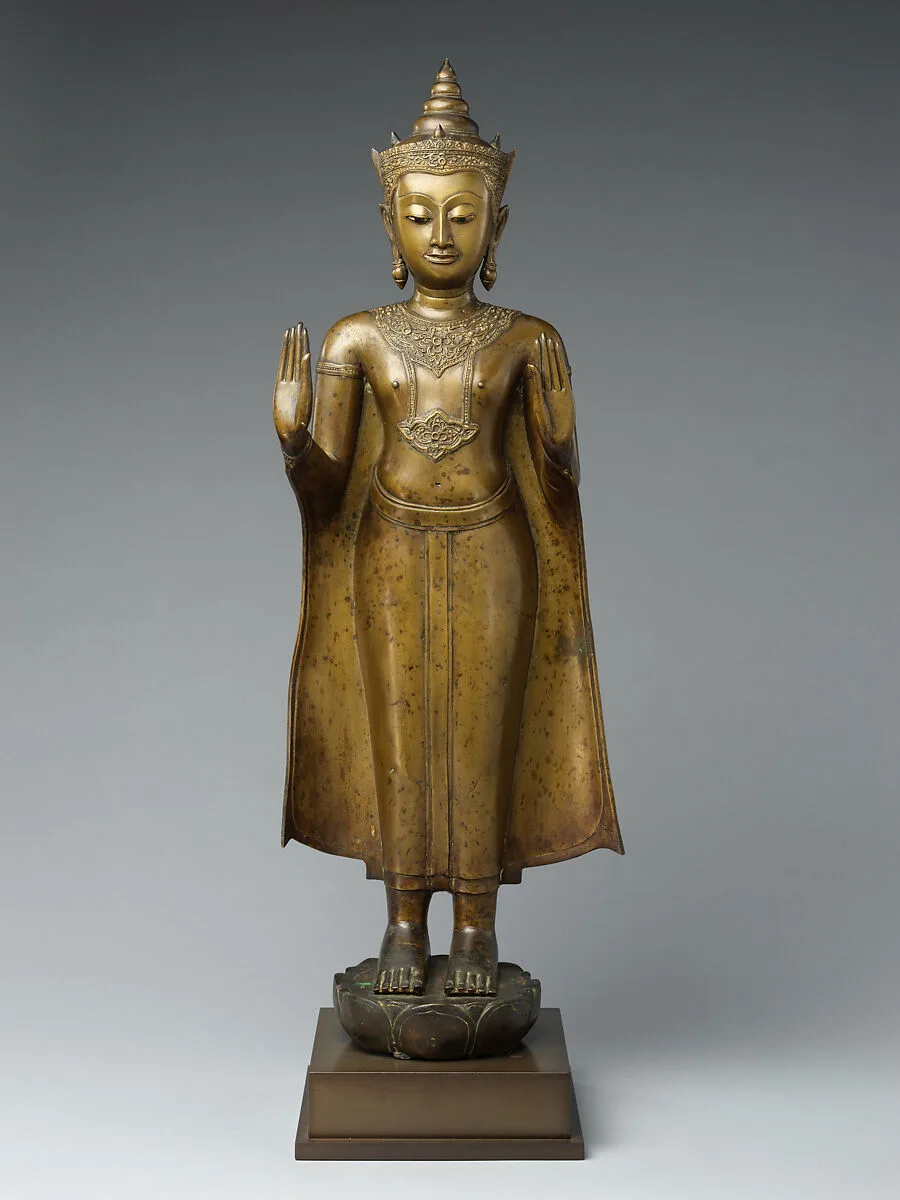
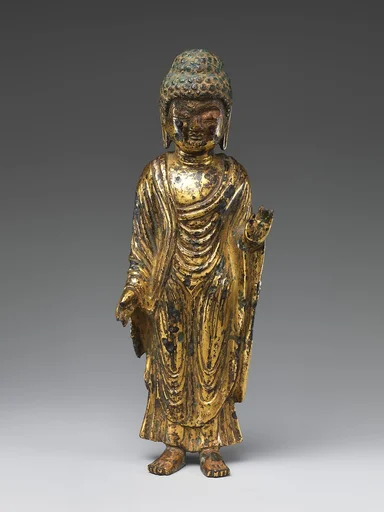
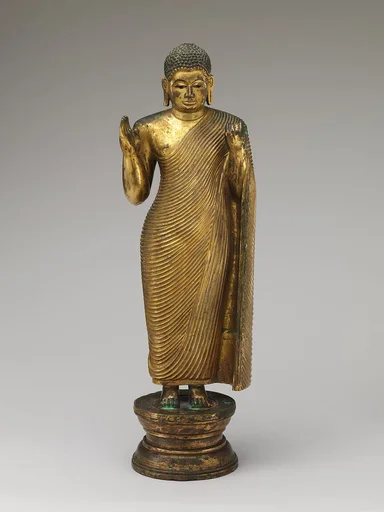
This standing Buddha is a type produced throughout the history of Buddhism in Thailand. The rigidly frontal figure stands with both hands raised, with palms facing outwards, variously gesturing protection (abhaya –mudra), or with the fingers co-joined in the gesture of imparting wisdom (vitarka-murdra). This double-gesture Buddha-type is unknown in India, or elsewhere in the Buddhist diaspora, and appears to have had its genesis in the art of the Mon-Dvaravati regions of later first millennium mainland Southeast Asia. This unique Mon representation was taken up by their Thai successors and became a favored form in which to represent the Buddha. The Buddha wears a distinctive-style diadem closely associated with the later Ayutthaya-period, combined with a cone shaped skull protuberance (ushnisha) that has assumed the form of a tier of honorific umbrellas, each of diminishing size, replicating those seen at the summit of Thai stupas.
- Artist
- Unknown
- Date
- 18th century
- Medium
- Bronze
- Culture
- Thailand, Ayutthaya or Bangkok
- Department
- Asian Art
- Credit line
- Gift of Samuel and Gabrielle Lurie, 2019