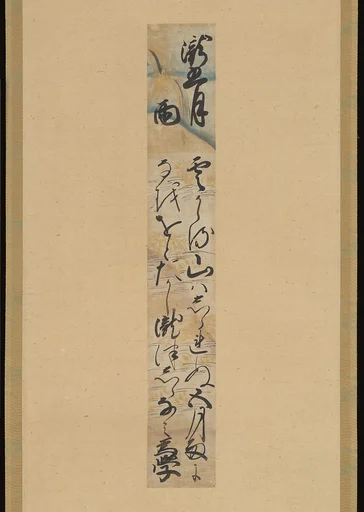
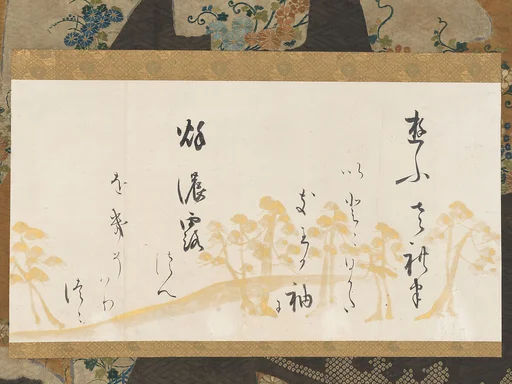
「花さそふ」和歌 (“Hana sasou” waka)|Waka Poem
Emperor Go-Yōzei 後陽成天皇
late 16th–early 17th century · Tanzaku mounted as a hanging scroll; ink on gold and silver decorated paper · Asian Art
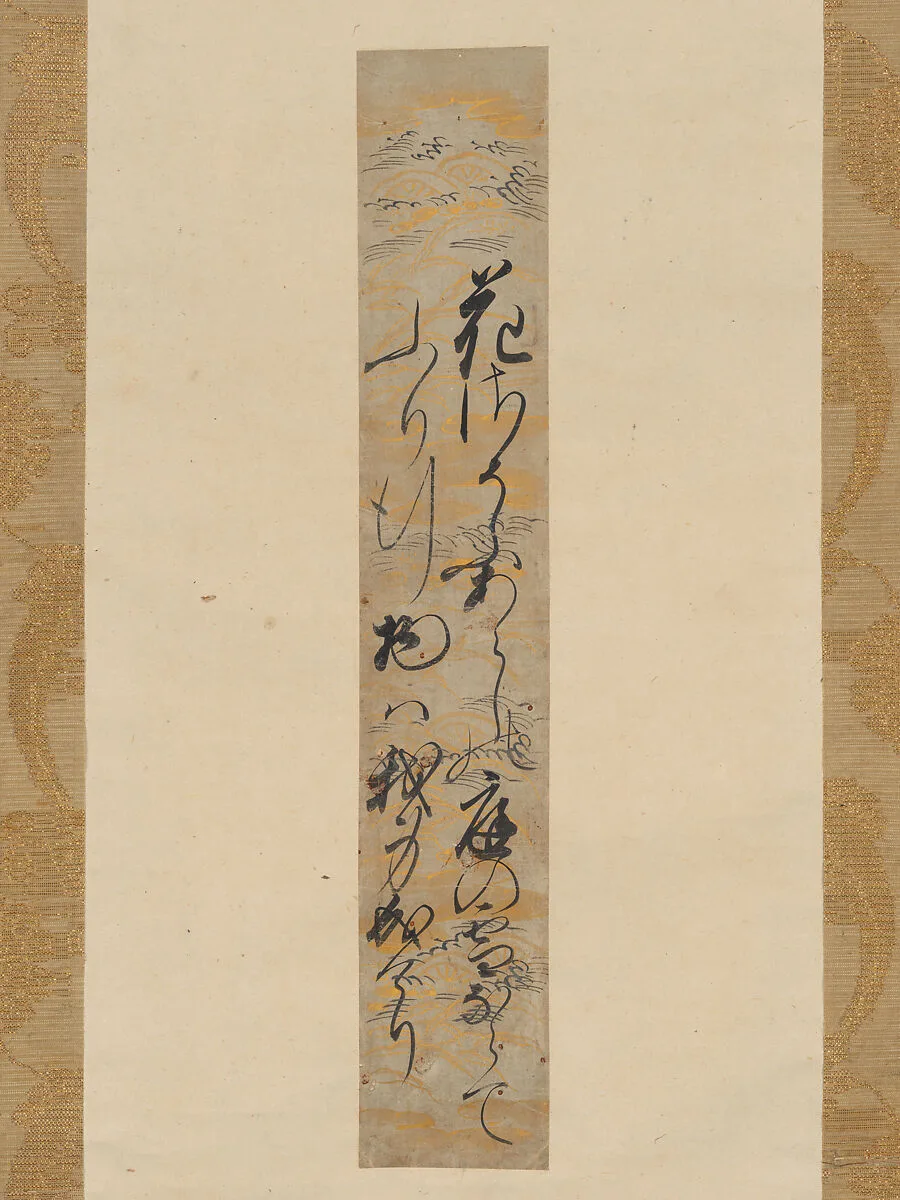
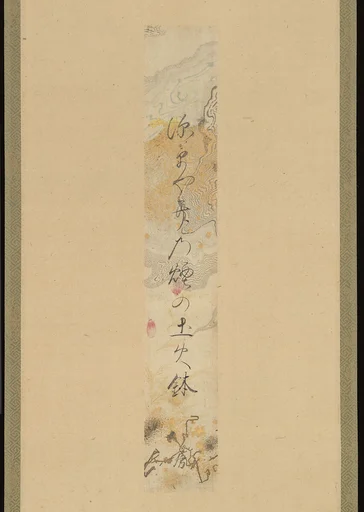
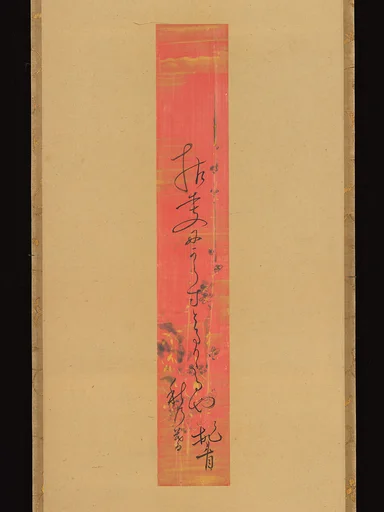
This vertical poetry slip (tanzaku), mounted as a hanging scroll, has elegant underpainting in gold and silver showing a motif of submerged cart wheels amid gentling rippling waves in stream. This decorative motif is said to have derived from the Heian practice of soaking the wheels of ox carts in water to prevent them from drying out and cracking. A popular theme during the Heian period onwards among works with a courtly connection, this design can also be found on bronze mirrors and the decorated papers used for deluxe sutra scrolls. Though unsigned, the calligraphy has been passed down through the centuries as being from the hand of Emperor Go-Yōzei, a monarch known for his cultural accomplishments, including a skilled hand in calligraphy in various styles. The exuberant yet gracefulwriting, with each kanji or kana distinctly inscribed and closely juxtaposed—but not crowding or overlapping each other—was a hallmark of his style. This epitomizes the most formal courtly style employed by Go-Yōzei, which he relied on for waka transcriptions. Though a talented poet, Emperor Go-Yōzei did not brush one of his own poems, but rather copied the famous Poem 96 from the One-Hundred Poems, One Poem Each (Hyakunin isshu), by the lay monk and former chancellor, Fujiwara no (Saionji) Kintsune (1171–1244). Originally included in the New Imperial Collection (Shin chokusenshū 新勅撰集, no. 1054) with the headnote (not included here), “Composed when he saw blossoms falling.” The poem is transcribed and translated below.
- Artist
- Emperor Go-Yōzei 後陽成天皇
- Date
- late 16th–early 17th century
- Medium
- Tanzaku mounted as a hanging scroll; ink on gold and silver decorated paper
- Culture
- Japan
- Department
- Asian Art
- Credit line
- Mary and Cheney Cowles Collection, Gift of Mary and Cheney Cowles, 2020