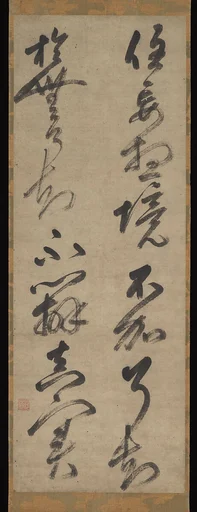
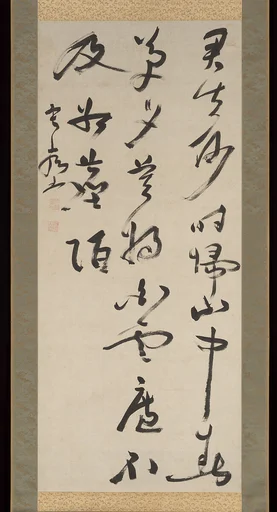
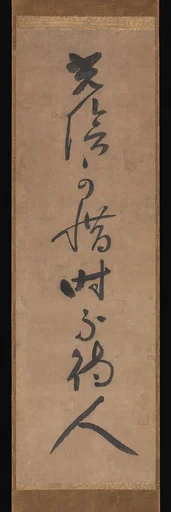
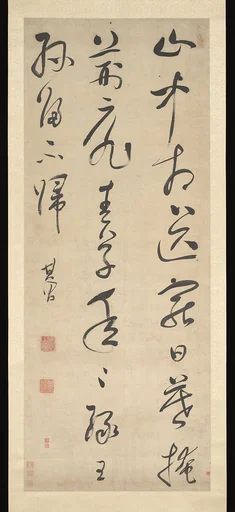
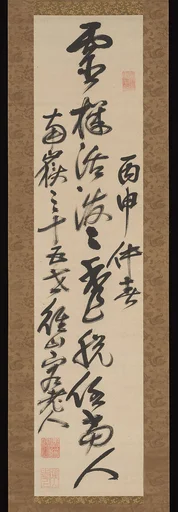
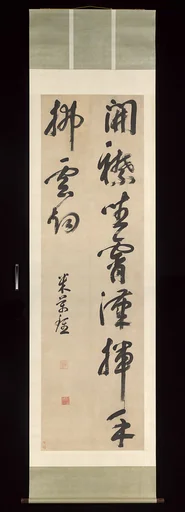
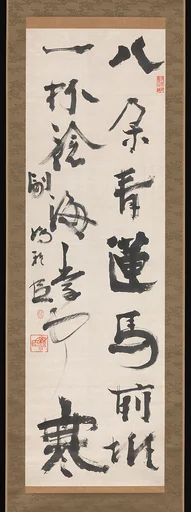
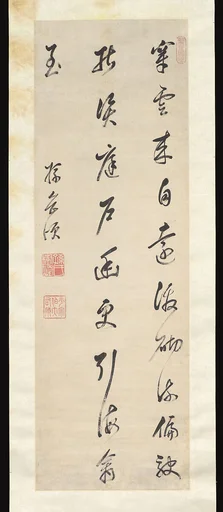
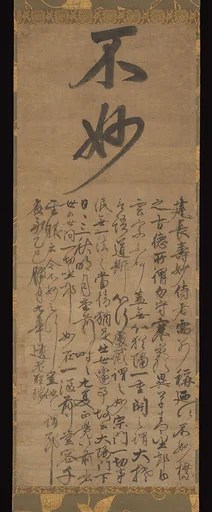
夢窓 疎石書 「応無所住而生其心」|"Abiding Nowhere, the Awakened Mind Arises”
Musō Soseki
early 14th century · Hanging scroll; ink on paper · Asian Art
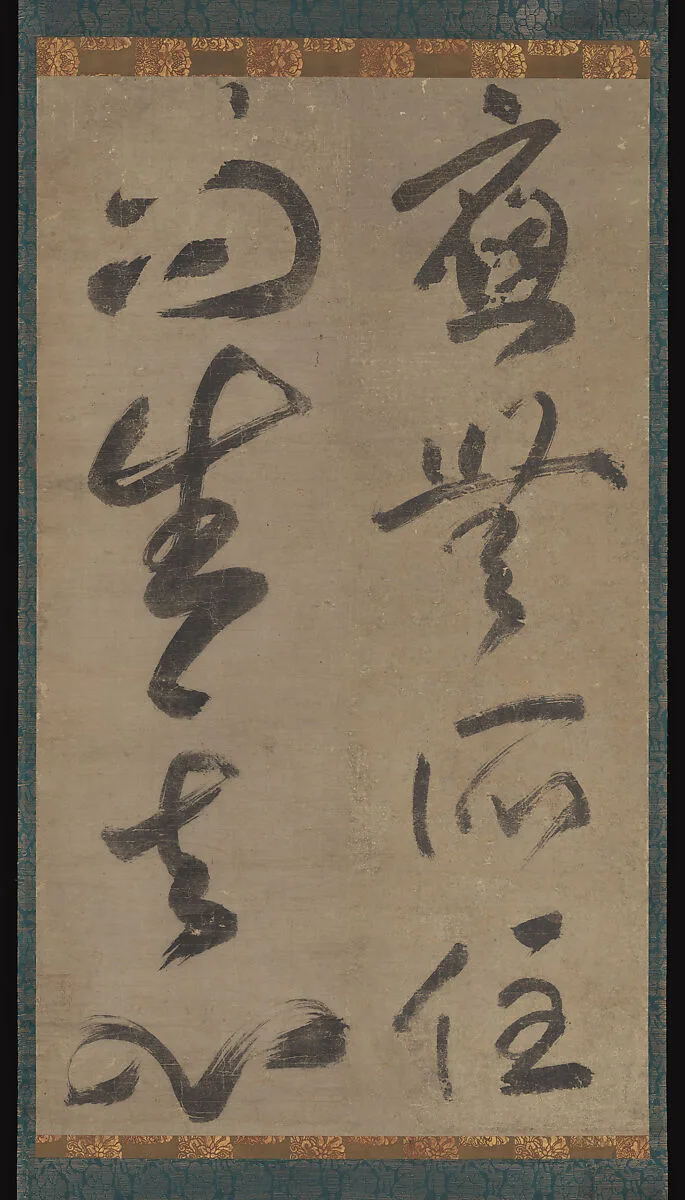
These eight Chinese characters, a sacred verse (gāthā) transcribed from the Diamond Sutra, brushed by Musō Soseki in a striking cursive script, convey a fundamental Zen message: that awakening can be achieved by transcending all aspects of the material, transitory world. Musō was one of the most influential monks in the early history of Japanese Zen. He did not travel to China, as many of his predecessors had, but rather studied under the émigré master Yishan Yining (Issan Ichinei, 1247–1317) and a number of leading Japanese monks who had been to the mainland. Musō was based in Kamakura until 1333, when he moved to Kyoto on an invitation from the emperor. He spent the rest of his life there, serving as a spiritual advisor to the emperor and to the shogun Ashikaga Takauji (1305–1358).
- Artist
- Musō Soseki
- Date
- early 14th century
- Medium
- Hanging scroll; ink on paper
- Culture
- Japan
- Department
- Asian Art
- Credit line
- Mary and Cheney Cowles Collection, Gift of Mary and Cheney Cowles, 2018