Untitled
Unknown
first half of the 17th century · Pair of six-panel folding screens; ink and color on gilt paper · Asian Art
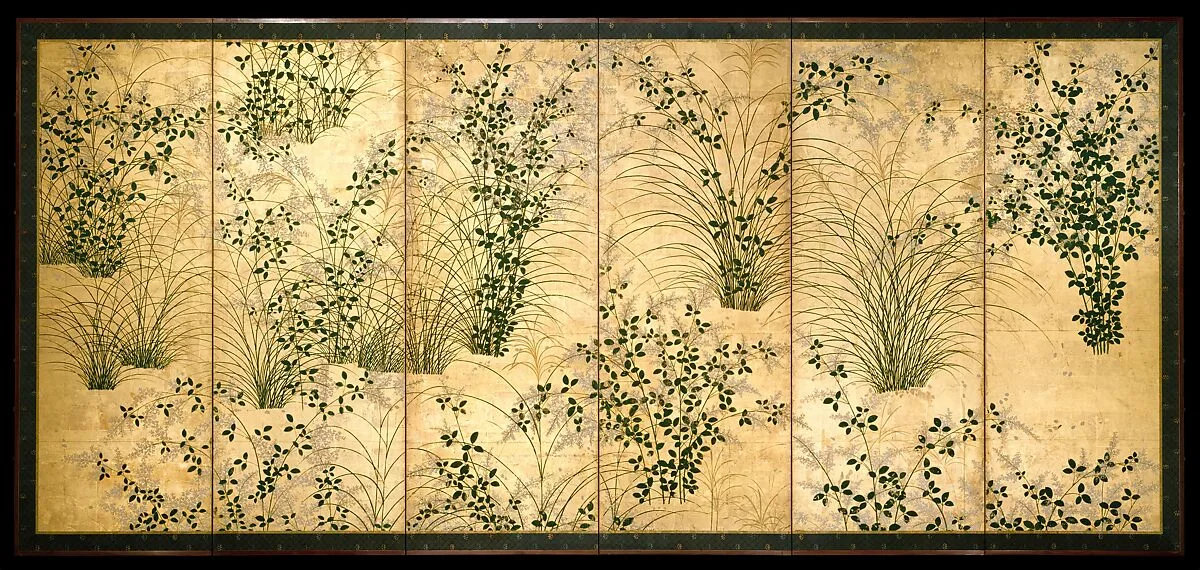
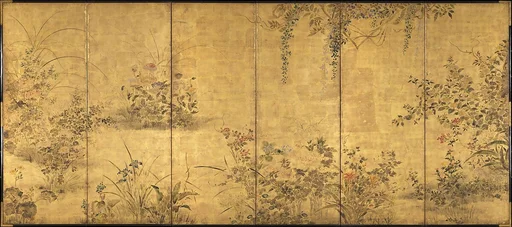
Gardens planted to evoke deserted fields of autumn wildflowers inspired poets and artists in many media: painting, ceramics, lacquer, and textiles. Eulalia and Japanese bush clover were the most appreciated of the autumn plants for their appearance of wildness and abundance when waving in the wind, as well as for their suggestion of melancholy when withered. Many screens similar to this pair have been attributed to the Hasegawa school, founded by Hasegawa Tōhaku (1539–1610). The highly dramatic depiction of the grasses—with their rhythmic arrangement into clumps and sharp angling at the bottom to hint at a recession into space—suggests that the screens were produced by a Hasegawa painter in the first half of the seventeenth century. To create their signature mode of representation, Hasegawa artists made determined efforts to assimilate all available techniques of painting, from the famed Tosa-school style to methods used by artists employed by ready-to-sell painting shops. They and their patrons especially favored the subject of autumn grasses.
- Artist
- Unknown
- Date
- first half of the 17th century
- Medium
- Pair of six-panel folding screens; ink and color on gilt paper
- Culture
- Japan
- Department
- Asian Art
- Credit line
- Purchase, Arthur Wiesenberger Foundation Gift, Louis V. Bell Fund, Bequest of Dorothy Graham Bennett, and Pfeiffer and Seymour Funds, 1972