Untitled
Unkoku Tōeki
17th century · Pair of six-panel screens; ink and gold on paper · Asian Art
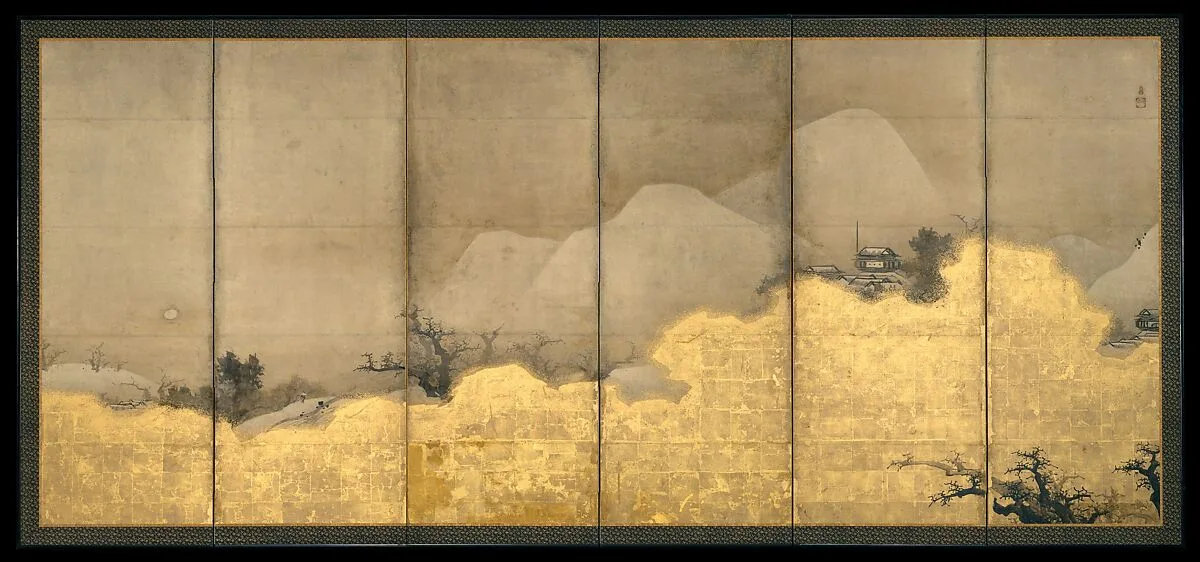
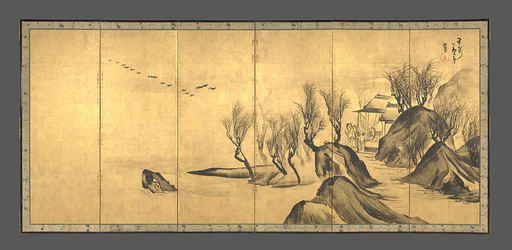
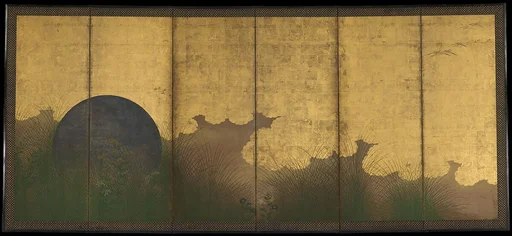
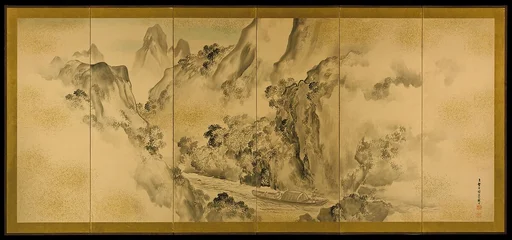
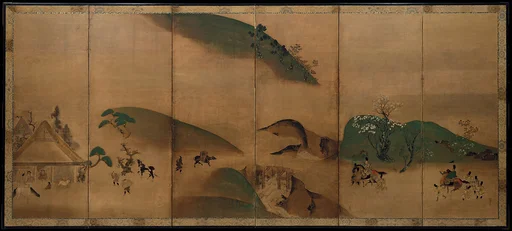
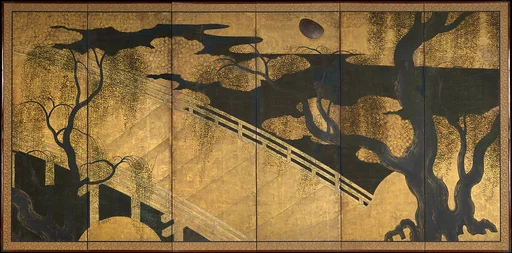
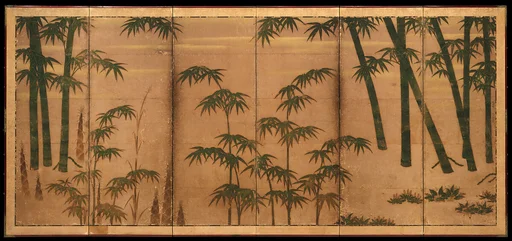
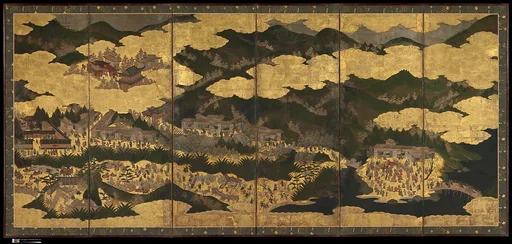
This pair of screens, invoking the Chinese landscape around the Xiao and Xiang Rivers and the traditional couplets associated with its representation, was painted by the second son of Unkoku Tōgan (1547–1618), heir to the artistic legacy and patrons of Sesshû Tōyō (1420–?1506) in western Japan. Regional schools like the Unkoku workshop were patronized by powerful local daimyo—in this instance, the Mōri in Suō and Hagi—who brought Kyoto-trained artists to their strongholds in the provinces to underscore their cultural and military authority. The Unkoku style was characterized by a strong, tensile ink line, a composition based on a balance of wash and large unpainted areas, and a shallow spatial representation.
- Artist
- Unkoku Tōeki
- Date
- 17th century
- Medium
- Pair of six-panel screens; ink and gold on paper
- Culture
- Japan
- Department
- Asian Art
- Credit line
- Rogers Fund, 1917