狩野探幽・狩野尚信・清原雪信 花鳥図屏風|Birds and Flowers
Kano Tan'yū|Kiyohara Yukinobu|Kano Naonobu
17th century · Six-panel folding screen; ink and color on silk · Asian Art
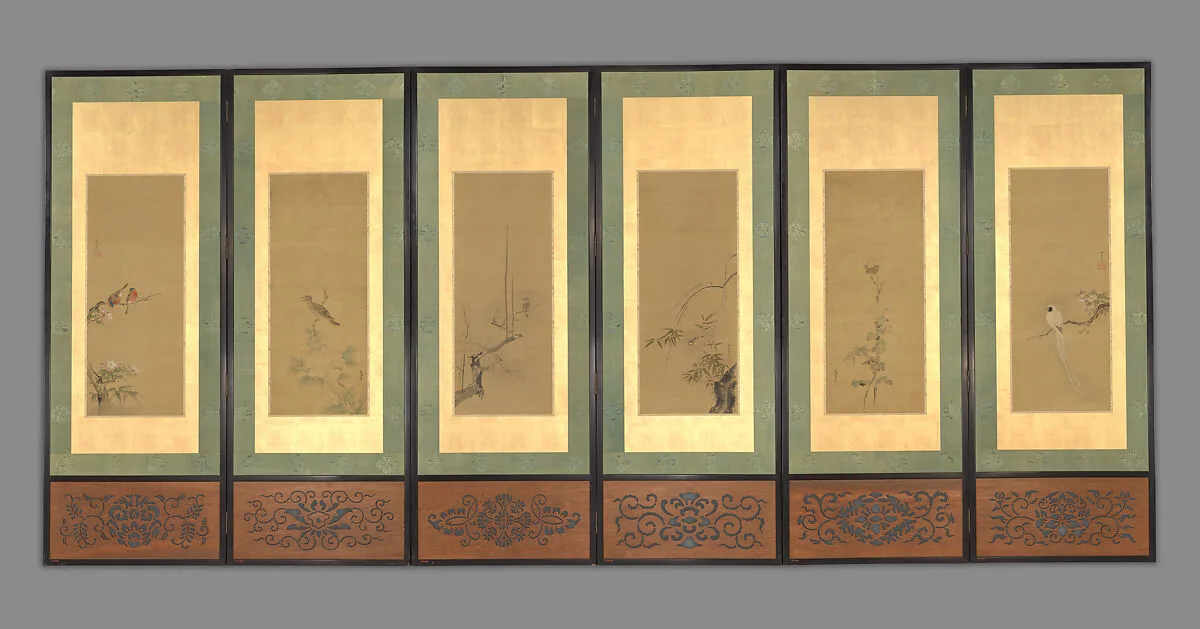
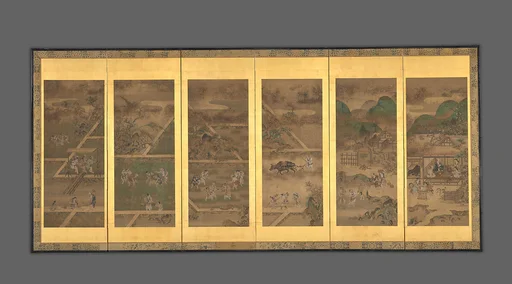
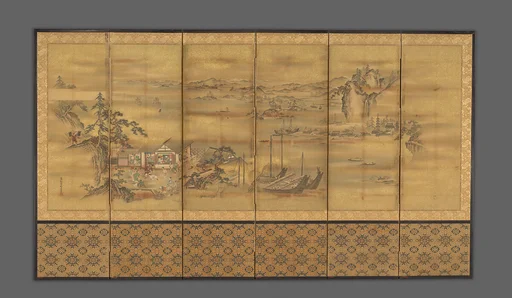
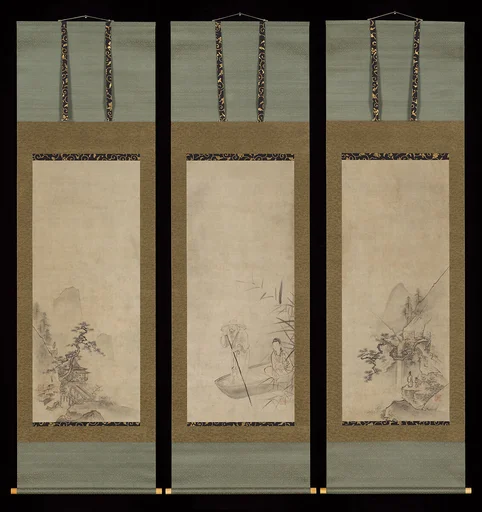
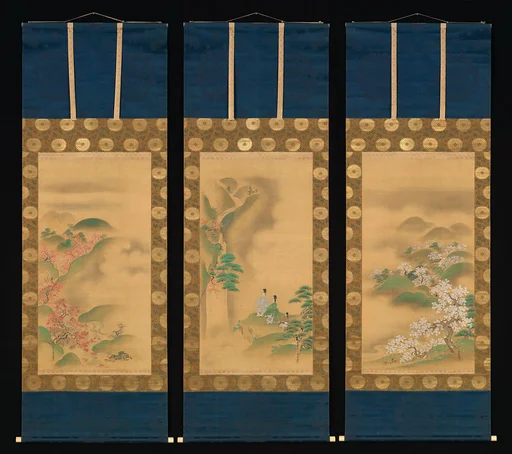
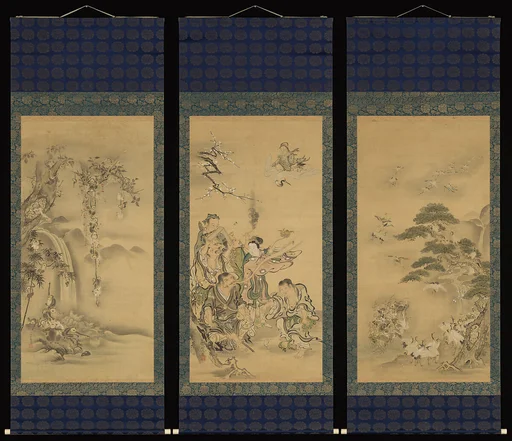
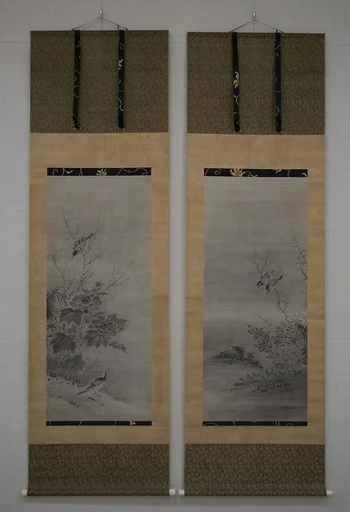
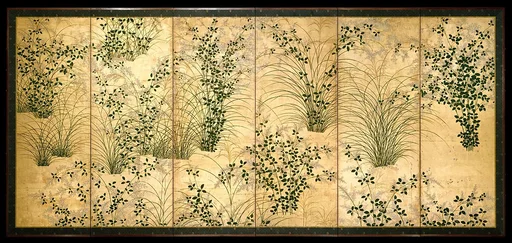
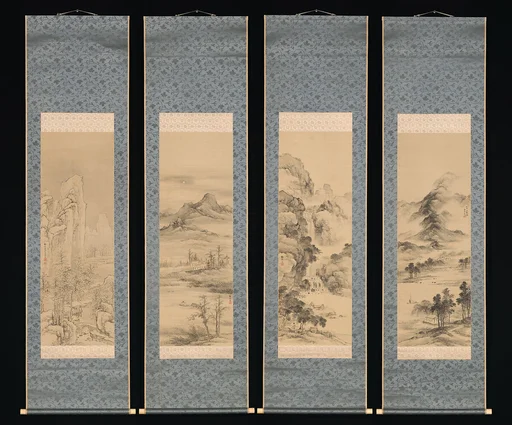
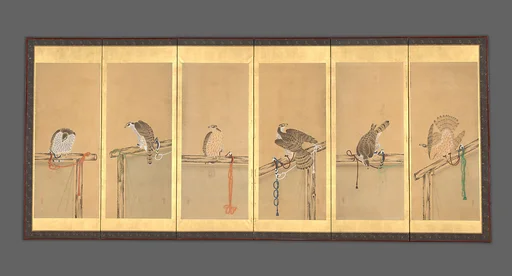
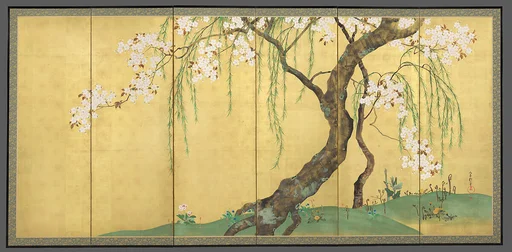
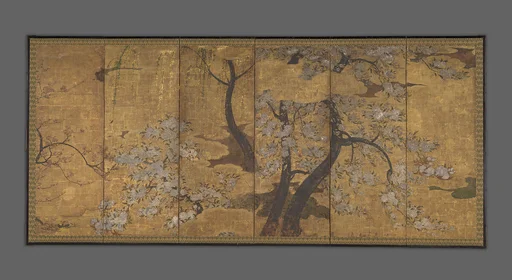
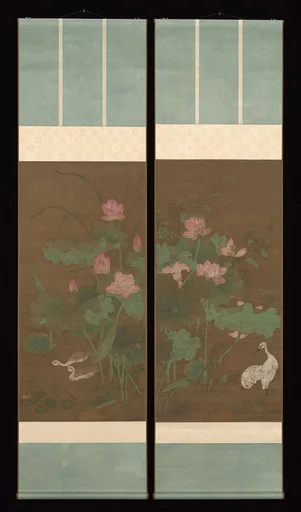
The six paintings on silk bring together bird-and-flower paintings of the celebrated Edo Kano painter Tan’yū and two of his most talented pupils: his nephew Kano Naonobu and the female painter Kiyohara Yukinobu. The master painted the two central panels, Naonobu the ones immediately to the right and left of his teacher’s, and Yukinobu the outermost ones. Tan’yū is credited with reviving the fortunes of the Kano studio, and moved from Kyoto to Edo (where the Tokugawa Shogunate was based) in 1614. Along with Tan’yū, Naonobu was considered one of the top Kano painters of the early Edo period. In 1630, he was summoned to Edo by the Shogun, and established the Kobikichō branch of the Kano studio. Yukinobu, perhaps the most talented female painter of the Edo period, is said to have been a daughter of Tan’yū’s niece and the celebrated painter Kusumi Morikage (ca. 1620–1690). Like her father, she reworked conventional themes from Muromachi ink painting in a personal manner. Sometime in the late nineteenth or early twentieth century, the paintings were mounted together on the present screen, which features wood panels with ornate openwork carving.
- Artist
- Kano Tan'yū|Kiyohara Yukinobu|Kano Naonobu
- Date
- 17th century
- Medium
- Six-panel folding screen; ink and color on silk
- Culture
- Japan
- Department
- Asian Art
- Credit line
- Charles Stewart Smith Collection, Gift of Mrs. Charles Stewart Smith, Charles Stewart Smith Jr., and Howard Caswell Smith, in memory of Charles Stewart Smith, 1914