農耕作月次図屏風|Farmers' Lives in the Twelve Months
Unknown
late 17th–early 18th century · Pair of six-panel folding screens; ink and color on paper · Asian Art
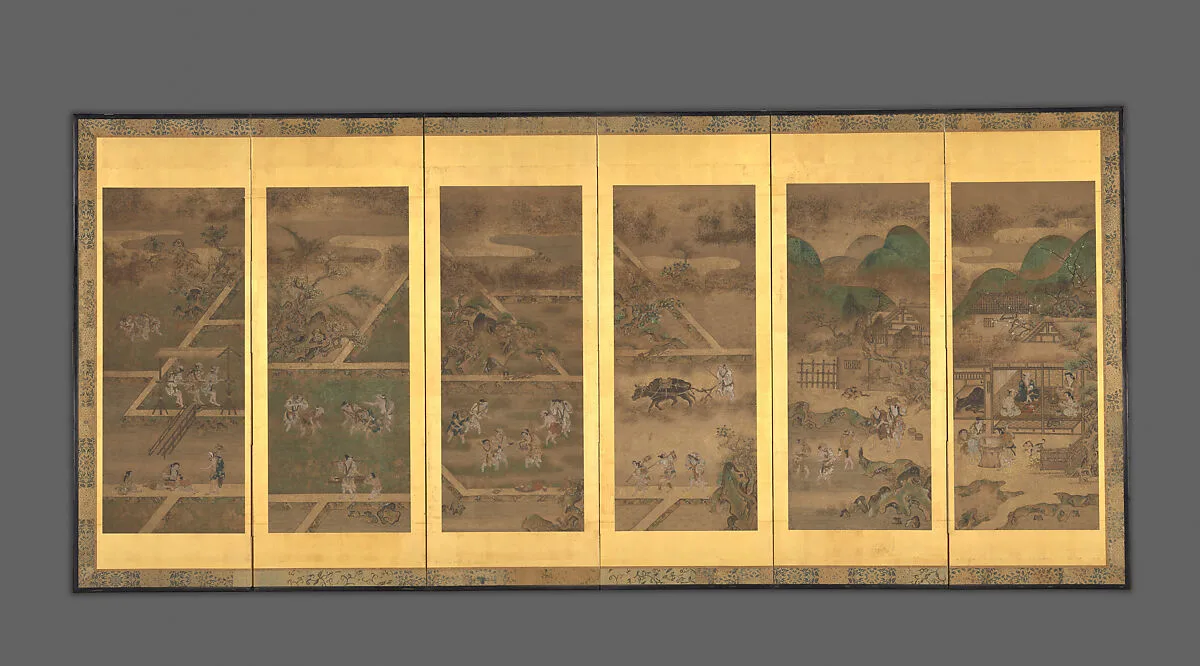
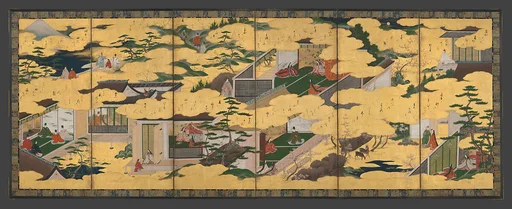
Rice continues to be the main staple of Japanese diet. During the Edo period, rice production became especially significant: feudal lords (daimyō) measured their wealth by it and peasants were required to pay taxes with it. This screen depicts the process of rice cultivation according to the classic Japanese tradition of presenting human activities through seasonal changes. On the farthest right panel, farmers share rice cakes and tea for the New Year in the early spring. The action then progresses from plowing to planting to harvesting, culminating on a snowy day in the winter when the rice is baled and the warehouse filled. These screens offer a rare glimpse into the lifestyles of peasants and demonstrate how daily activities dictated their material needs.
- Artist
- Unknown
- Date
- late 17th–early 18th century
- Medium
- Pair of six-panel folding screens; ink and color on paper
- Culture
- Japan
- Department
- Asian Art
- Credit line
- Gift of Mrs. E. H. Harriman, 1929