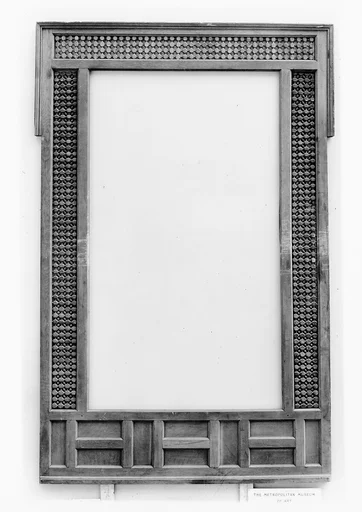
Mashrabiyya Screen
Unknown
15th–16th century · Wood; turned · Islamic Art
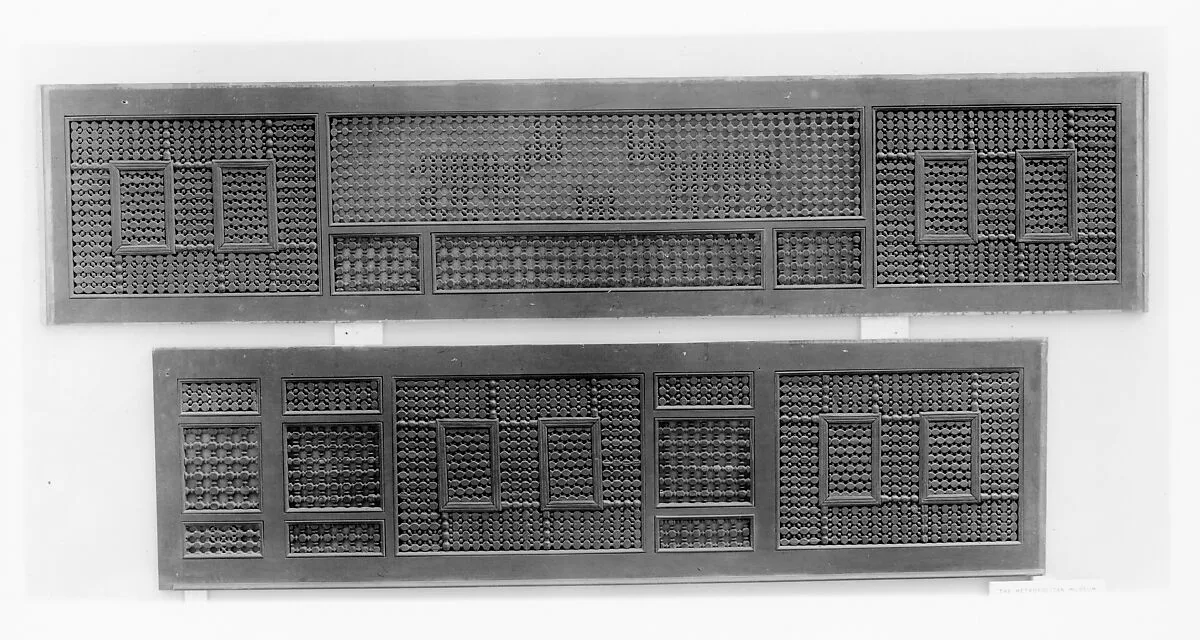
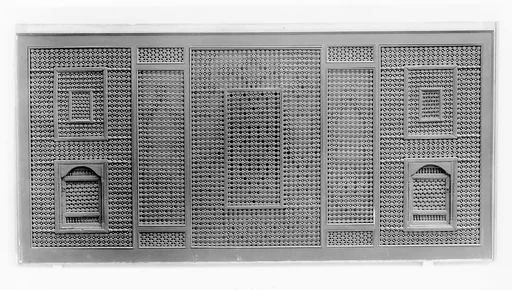
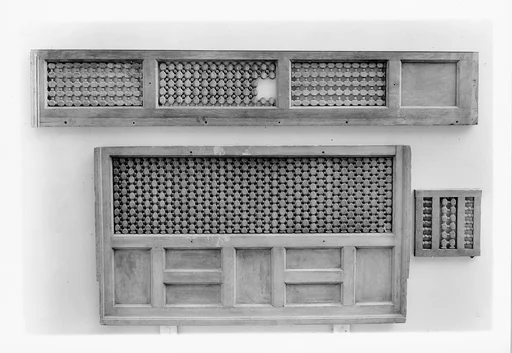
Turned-wood screens, called mashrabiyyas, were a characteristic feature of Cairo’s cityscape. Used inside and outside buildings, for balconies, windows, and partition screens, mashrabiyyas were an ideal way to filter bright sunlight and provide ventilation while maintaining privacy. To make these screens, short pieces of turned wood were inserted into polygonal joints, often at 45-degree angles, creating a lattice. Medieval examples tended to be tightly worked, often with minute inlay. Later mashrabiyyas sometimes introduce a secondary pattern into the lattice pattern, as with the two animals found here. This piece is very similar in design and decorative motif to 11.86.3a.
- Artist
- Unknown
- Date
- 15th–16th century
- Medium
- Wood; turned
- Department
- Islamic Art
- Credit line
- Gift of S.S. Howland, 1910