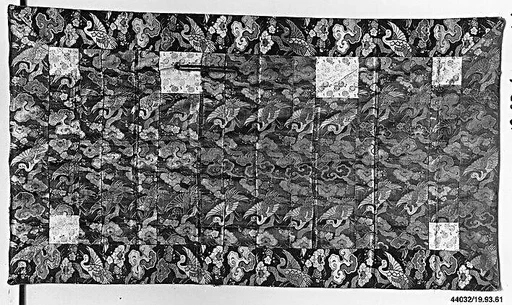
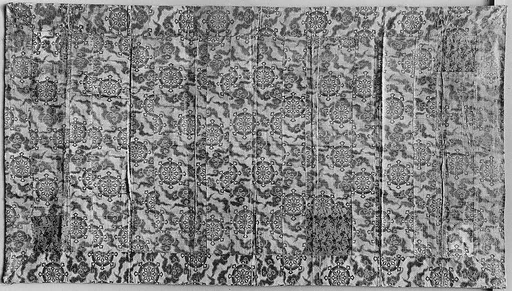
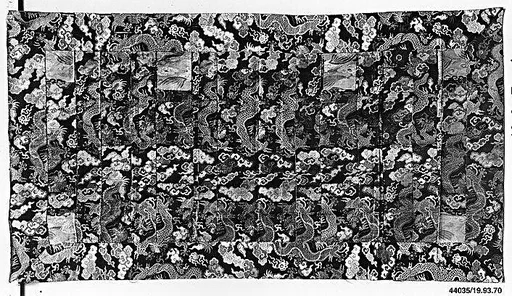
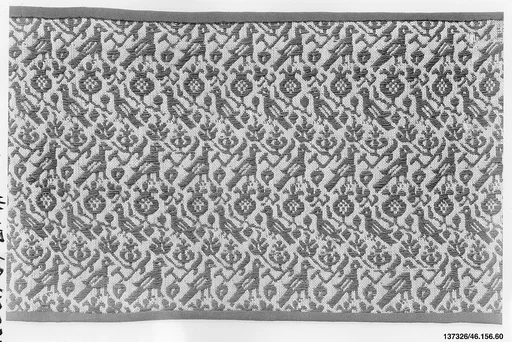
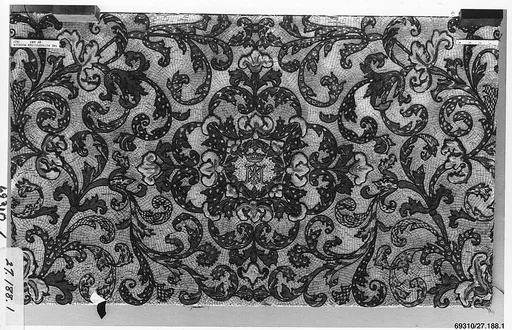
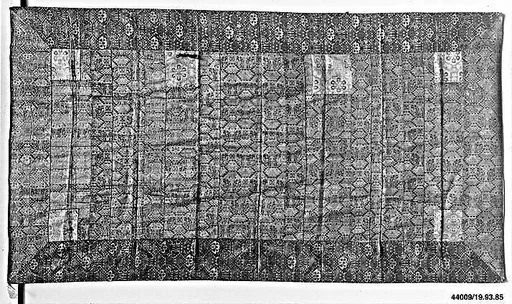
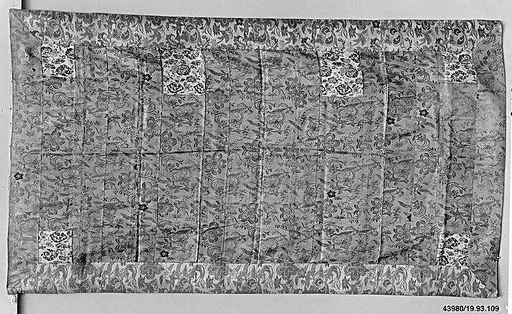
七条袈裟 牡丹模様|Seven-Panel Buddhist Monk’s Vestment (Shichijō kesa) with Peony Patterns in Undulating Columns
Unknown
ca. early 18th century · Twill-weave silk with supplementary weft patterning · Asian Art
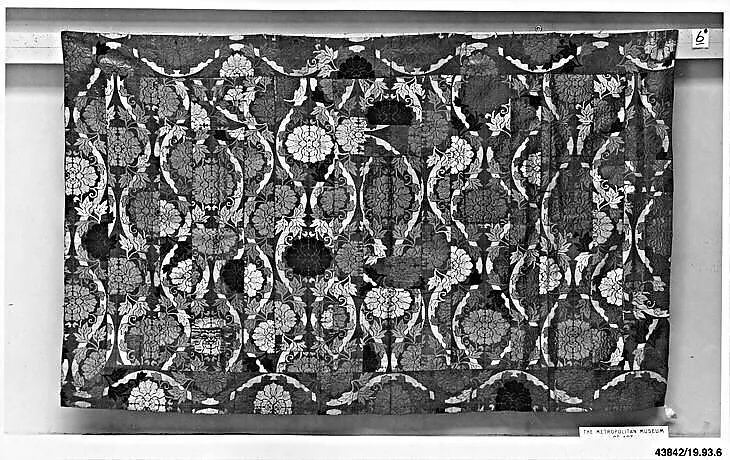
The bestowal of the Buddhist master’s vestment (kesa) upon the disciple represents the transmission of the dharma (teaching). This is especially true in Zen Buddhism, as only the master can recognize that the disciple is on the way to—or has reached—enlightenment. Kesa thus indicate the rank of the owner within the religious hierarchy, and are treasured vestments associated with those who wore them. As a reminder of the Buddha’s simple, patched garment, small rectangular pieces of fabric are sewn together to form one kesa, worn diagonally over the left shoulder. This vestment has been created from cut-up pieces of a Noh costume (karaori), which was perhaps a religious offering.
- Artist
- Unknown
- Date
- ca. early 18th century
- Medium
- Twill-weave silk with supplementary weft patterning
- Culture
- Japan
- Department
- Asian Art
- Credit line
- Purchase, Joseph Pulitzer Bequest, 1919