Honoré de Balzac
Auguste Rodin
1891 · Terracotta · European Sculpture and Decorative Arts
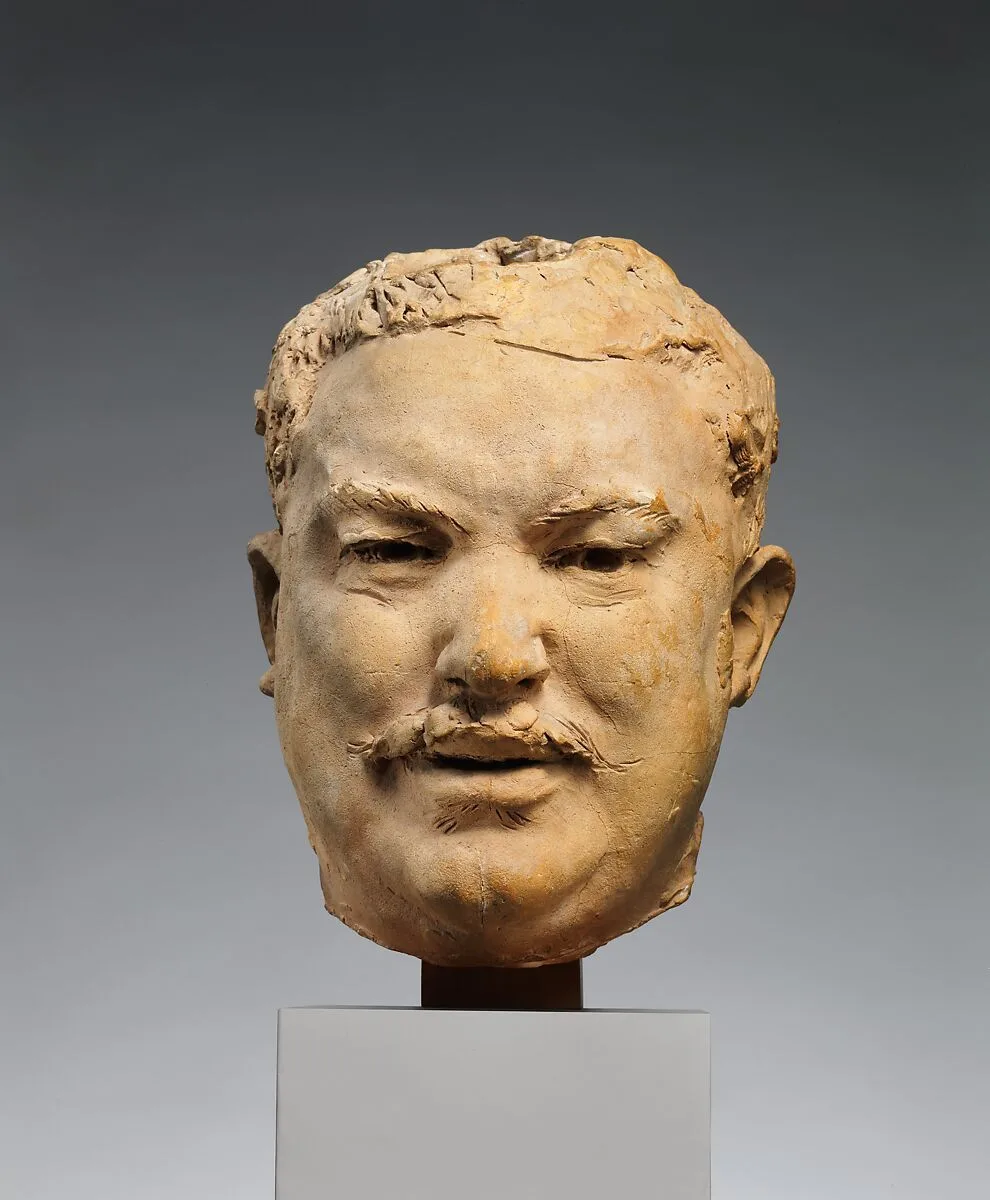
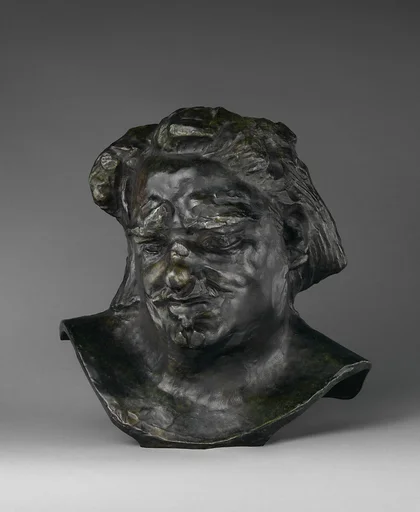
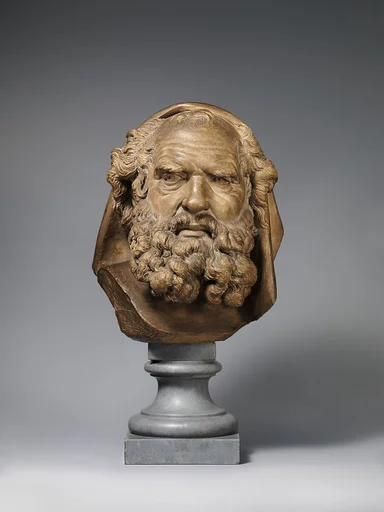
In 1891, the Société des Gens de Lettres commissioned Rodin to create a monument to Balzac, who had died in 1850, for the Palais-Royal in Paris. Rodin made numerous preparatory studies. As the head evolved from a lifelike portrait to the huge, craggy, masklike face of the final version, Rodin made several trips to Tours, where Balzac had lived - Rodin had refused to execute a superficially accurate likeness based on photographs of the deceased writer. There, he hoped to find men with facial characteristics similar to those of Balzac to serve as models for the author's portrait. This original terracotta represents one of the models, a man named Estager, whom Rodin identified as the "Conductor of Tours." Etrager’s hefty features, furrowed brow, and penetrating expression echo Balzac’s. The sculptor made several sketches for the face before transforming it into an abstracted mask. The final version of the monument, finished in 1898, depicts Balzac wrapped in the monk's robe he liked to wear when he was writing. More of a symbol than a portrait, the statue shocked the Société and they rejected it. The first cast in bronze was erected in Paris in 1939, eighteen years after Rodin's death, at the crossing of the boulevards Montparnasse and Raspail.
- Artist
- Auguste Rodin
- Date
- 1891
- Medium
- Terracotta
- Culture
- French
- Department
- European Sculpture and Decorative Arts
- Credit line
- Rogers Fund, 1912