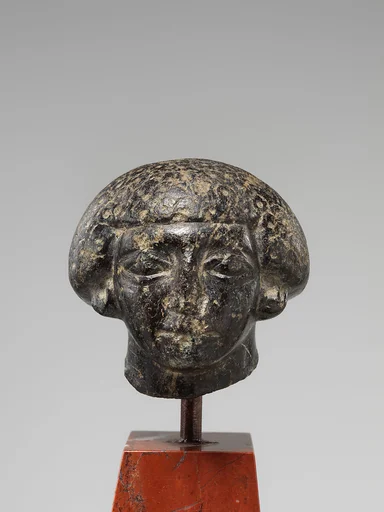
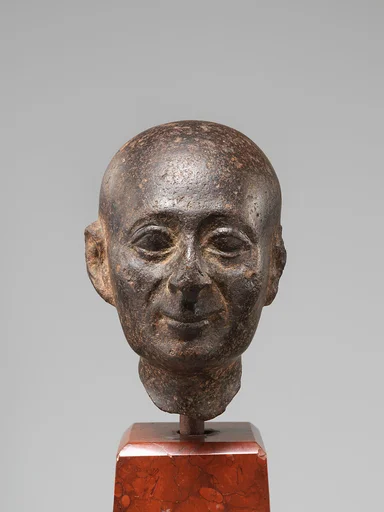
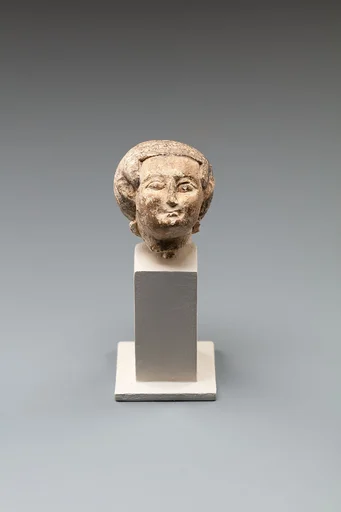
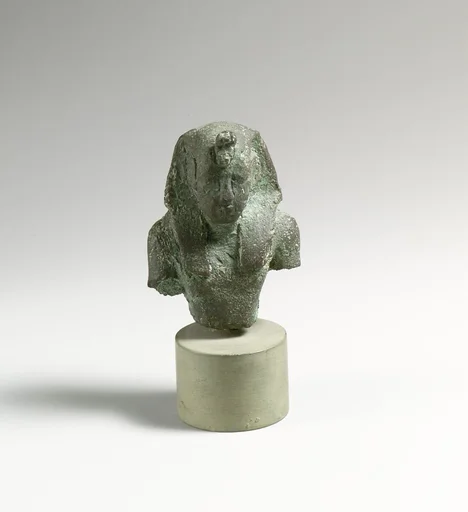
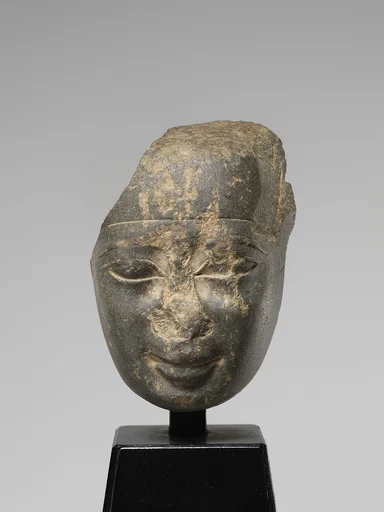
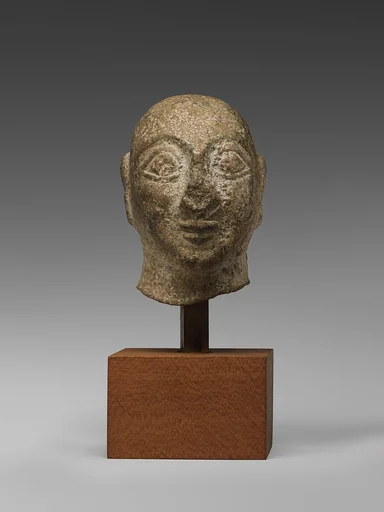
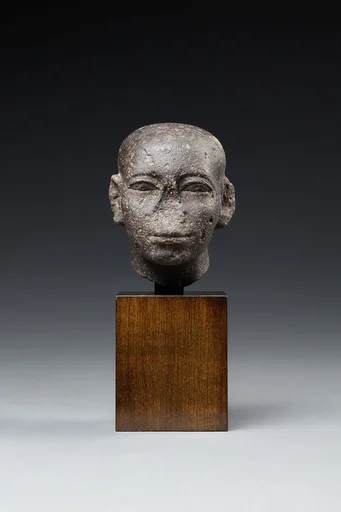
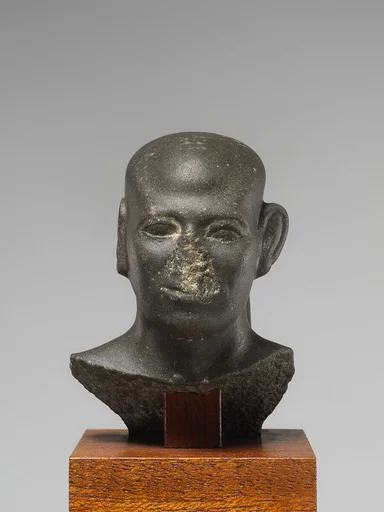
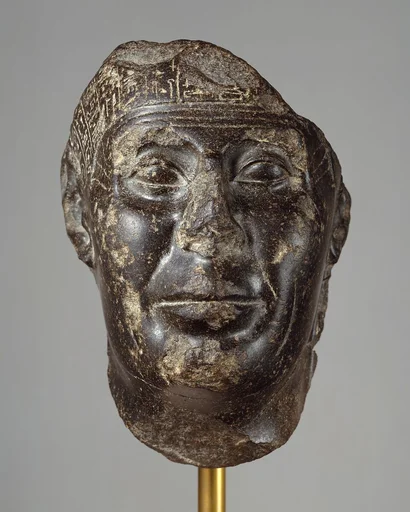
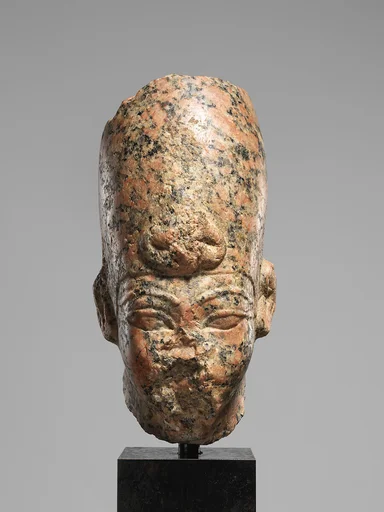
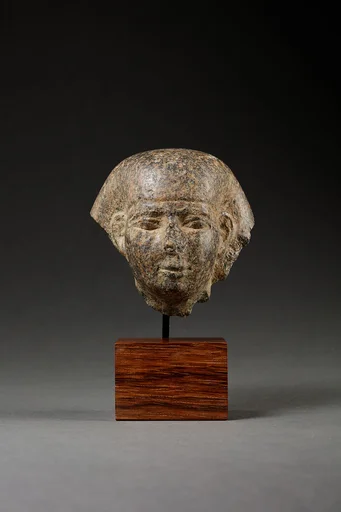
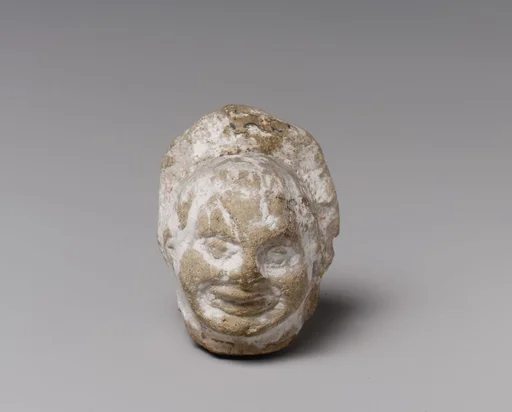
Bald-headed Man Wearing Gold Collars
Unknown
ca. 1295–1186 B.C. · Steatite or schist · Egyptian Art
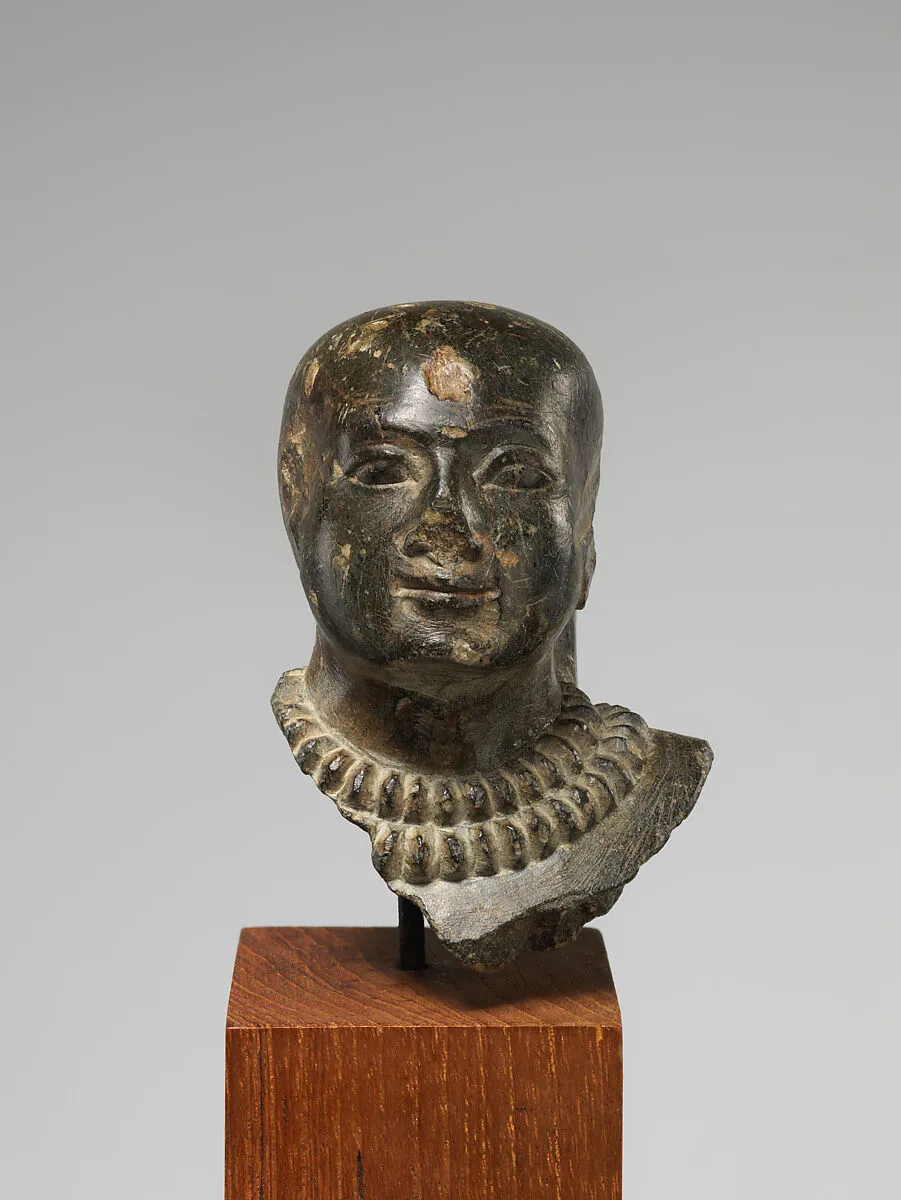
This head came from a small statue of a bald-headed man that was most likely placed in a funerary shrine to receive offerings or graced a temple so the individual resided in a god’s presence. The back pillar displays the beginning of a classic offering formula used on statues for both of those locations, but a small statue of a similar type was found in a deposit associated with a large temple. The double collar of ring beads, known as shebyu, indicates that the statue represented a favored official. The deliberate damage to the nose and both ears indicate evidence of a potentially iconoclastic episode
- Artist
- Unknown
- Date
- ca. 1295–1186 B.C.
- Medium
- Steatite or schist
- Department
- Egyptian Art
- Credit line
- Bequest of Nanette B. Kelekian, 2020