Chasuble, stole and maniple
Unknown
second quarter 18th century · Silk, metal · European Sculpture and Decorative Arts
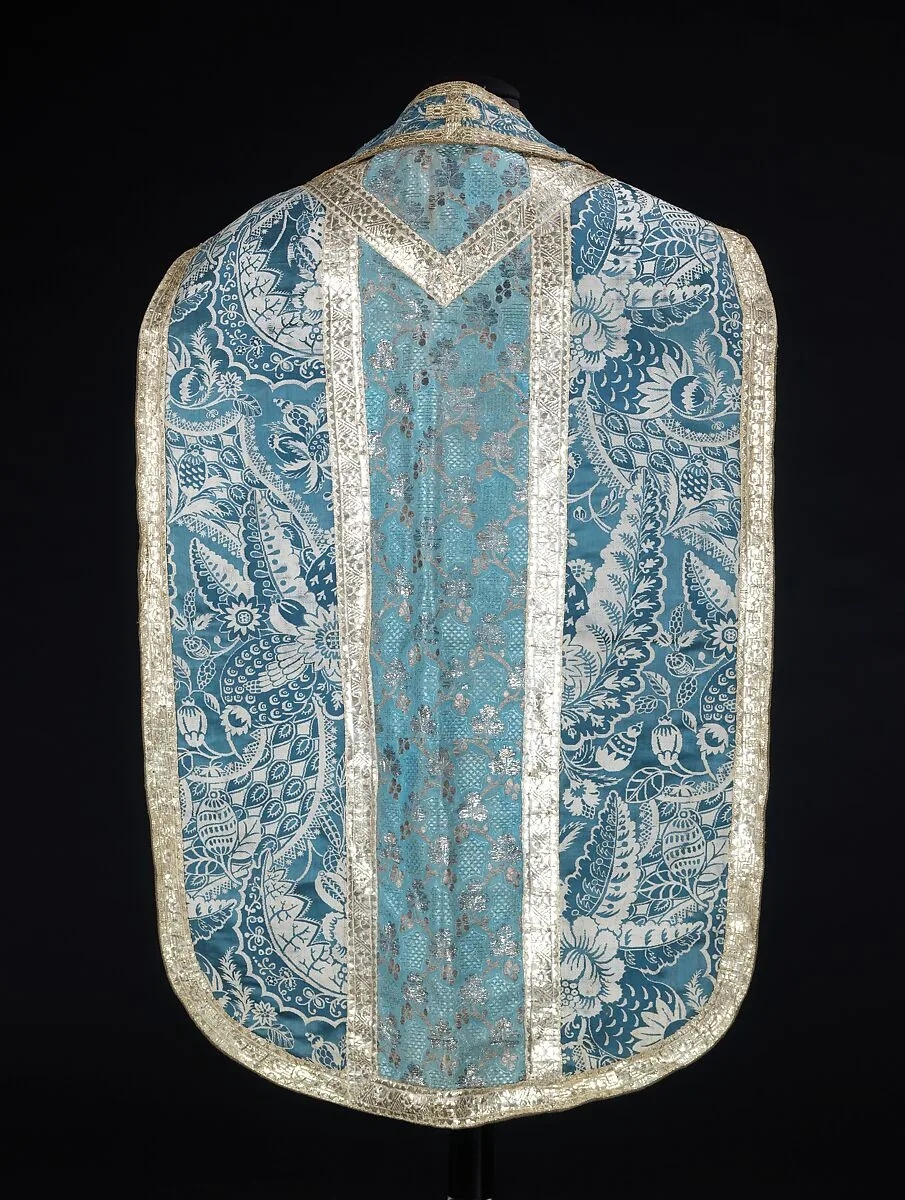
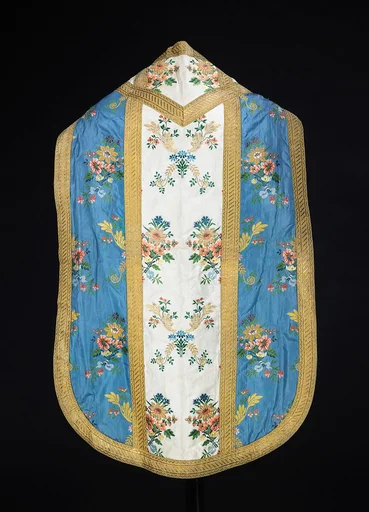
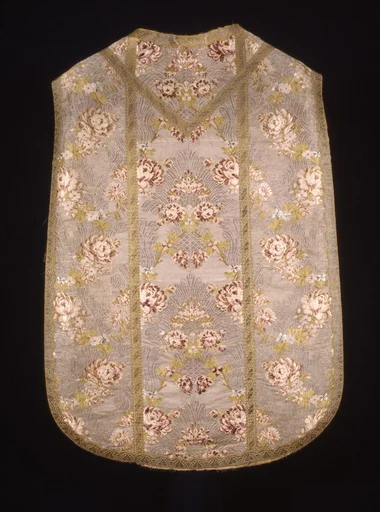
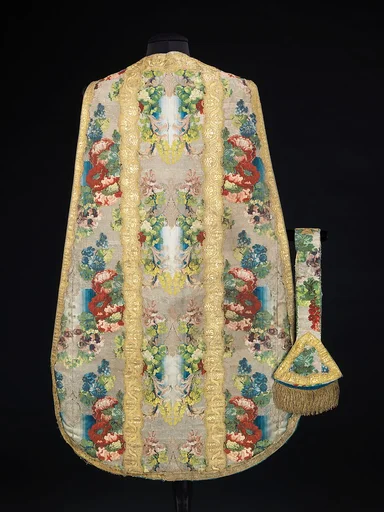
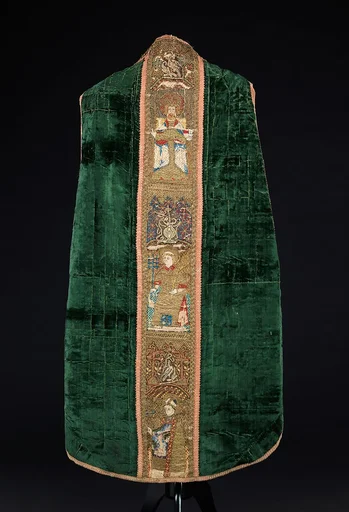
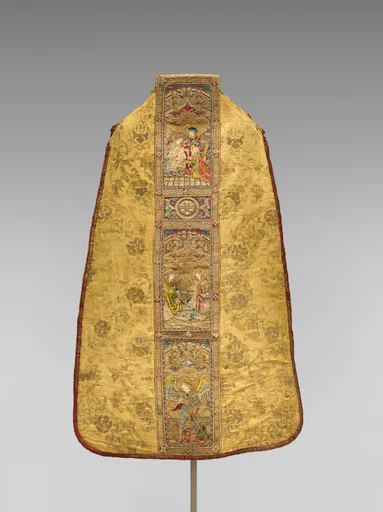
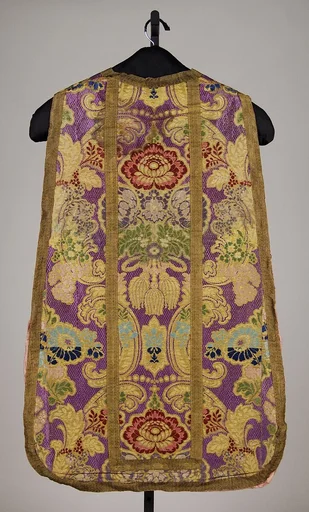
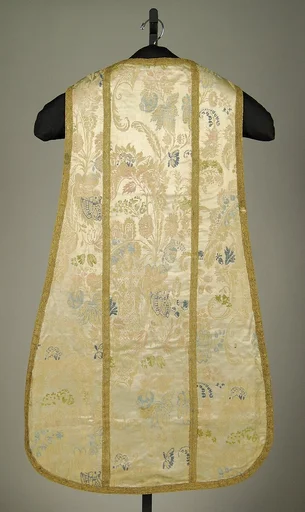
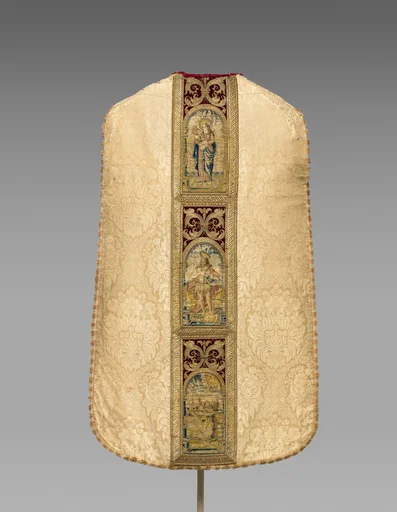
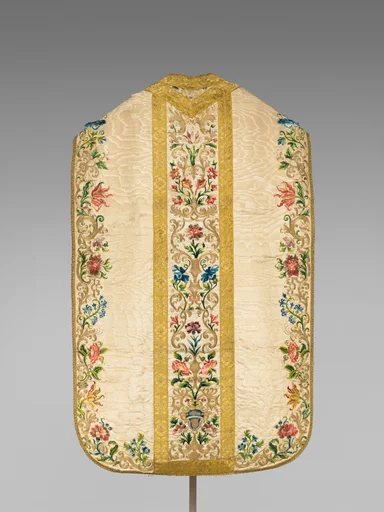
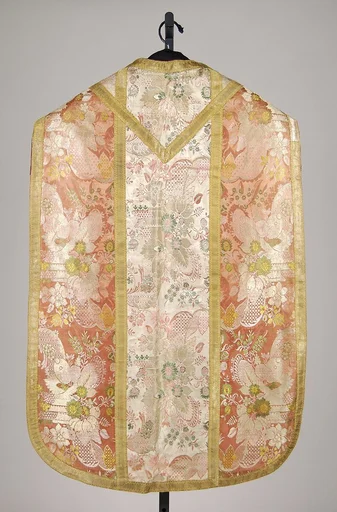
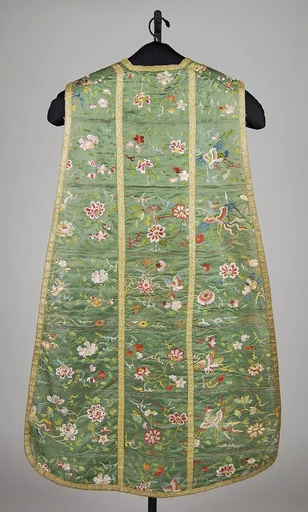
Although the shape of the garment in this vestment set implies that it was assembled at the turn of the eighteenth and nineteenth centuries, the two types of silk from which it is made were both produced considerably earlier and have been repurposed here. The central strip on both front and reverse of the tabard-like chasuble is a fine example of so-called "bizarre silk", datable to around 1700-1720, decorated with delicate, silver-coated lancé strips. The boldly-patterned, deeper blue silk damask flanking this was perhaps reused wall hanging, woven around 1730-40. It has been carefully patched to create the current shapes, explaining why the pattern is not symmetrical as would be more conventional for this period had a bolt of brand-new damask been used. This is an interesting example, therefore, of treasured textiles repurposed.
- Artist
- Unknown
- Date
- second quarter 18th century
- Medium
- Silk, metal
- Culture
- French
- Department
- European Sculpture and Decorative Arts
- Credit line
- Brooklyn Museum Costume Collection at The Metropolitan Museum of Art, Gift of the Brooklyn Museum, 2009; Gift of Mrs. Chester Dale, 1964