Chasuble
Unknown
ca. 1720, partially cut, patched and reshaped in the 19th century · Silk, metallic · European Sculpture and Decorative Arts
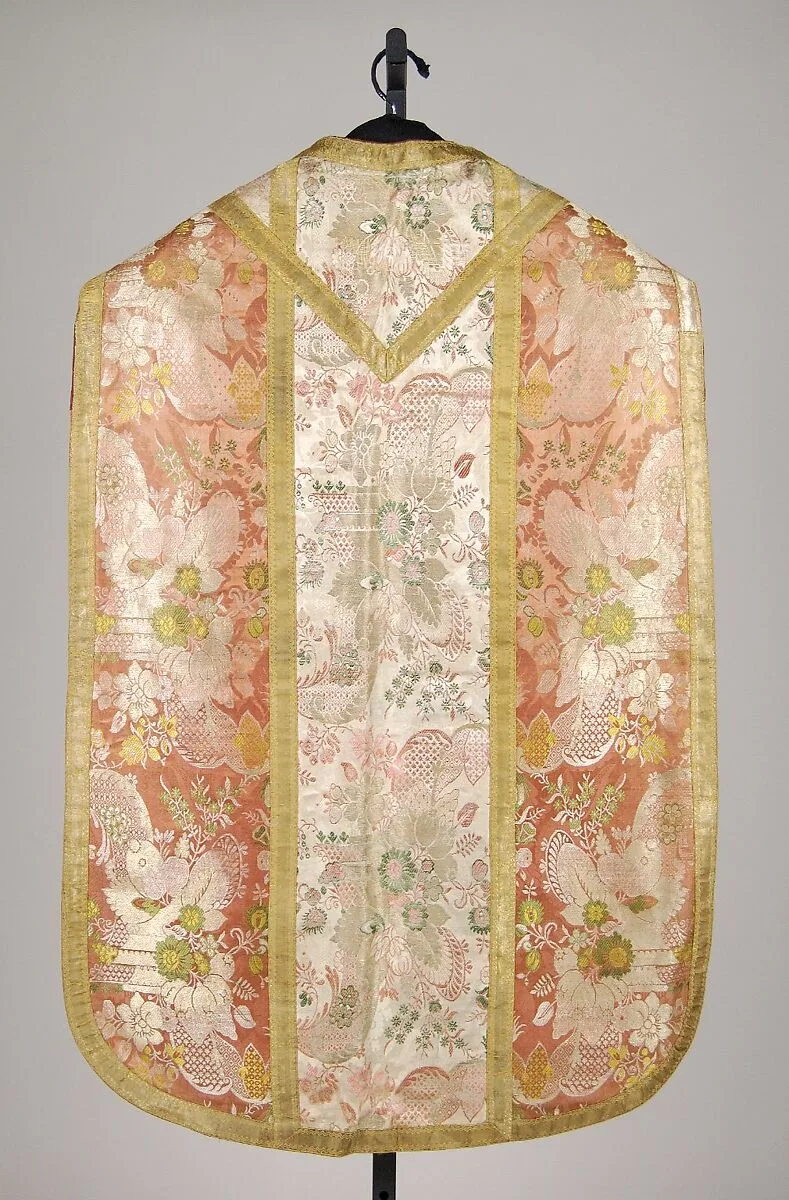
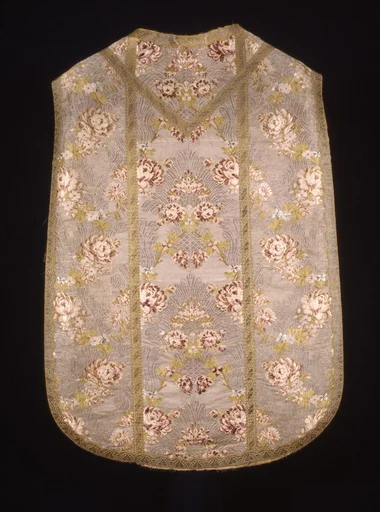
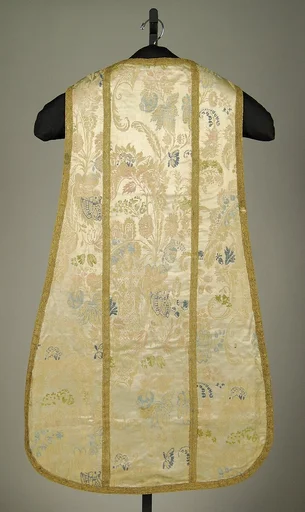
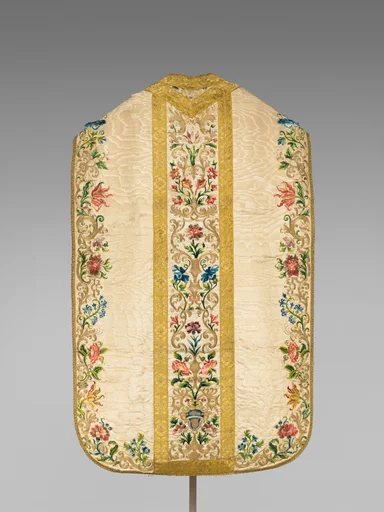
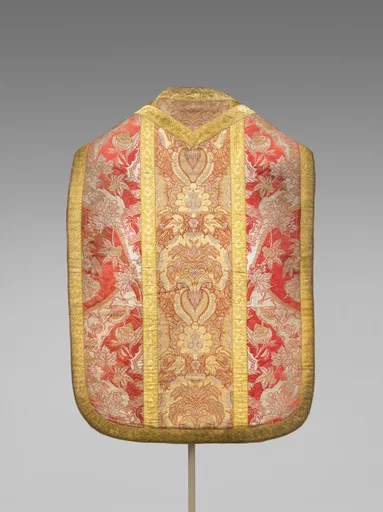
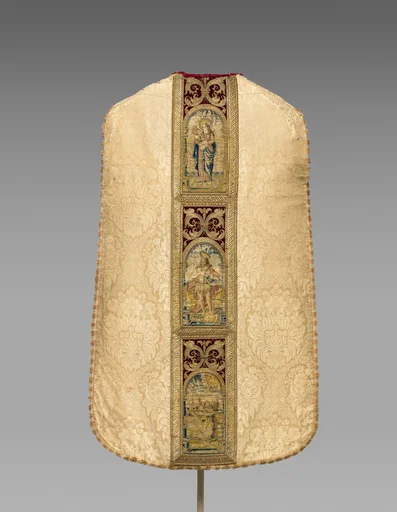
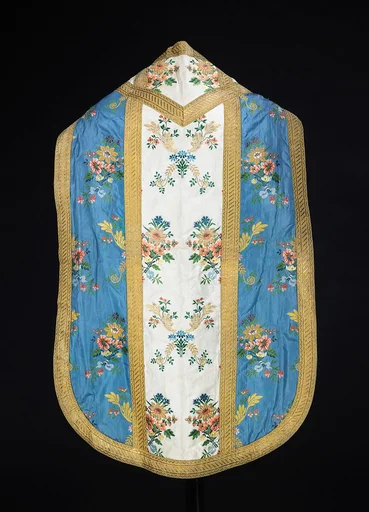
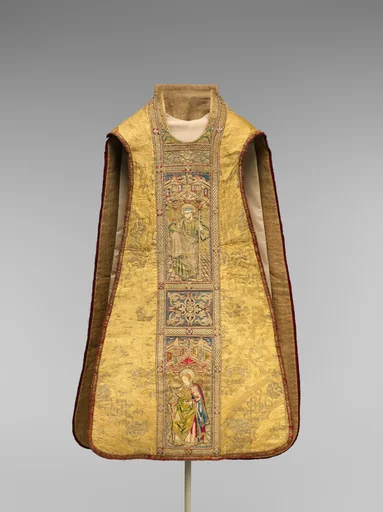
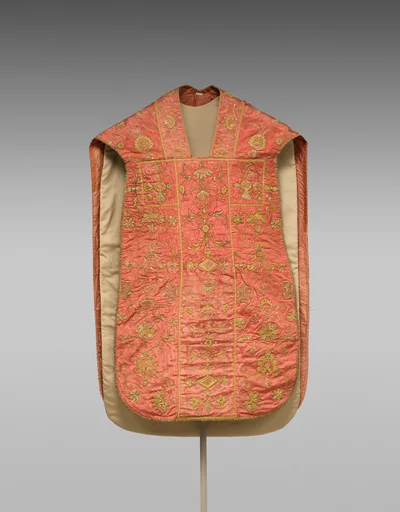
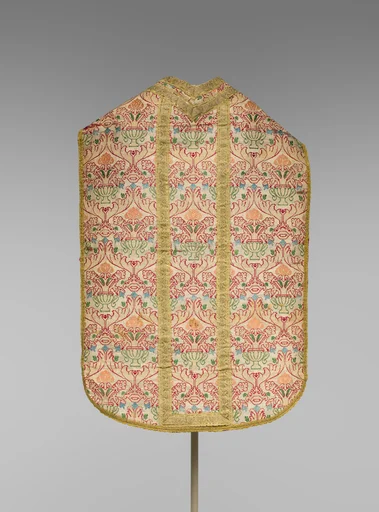
This Chasuble- the tabard-like garment worn by a Roman Catholic priest over his clothes when conducting church services- is distinguished by its panels of very beautiful and well-preserved "bizarre" silk. This short-lived style of figurative silk, woven in France, Italy and England, inventively juxtaposed floral and nautical motifs in varying scales, emulating the decorative fabrics imported to Europe from Iran and India. Though the front of the chasuble has been awkwardly cut, patched and reshaped in the nineteenth century to meet modern fashions, the back of the garment preserves the original shape. In the central panel on the Chasuble's back, the same silk is shown in reverse, thereby flipping the palette from white elements on a coral ground to coral on a white ground.
- Artist
- Unknown
- Date
- ca. 1720, partially cut, patched and reshaped in the 19th century
- Medium
- Silk, metallic
- Culture
- French or Italian
- Department
- European Sculpture and Decorative Arts
- Credit line
- Brooklyn Museum Costume Collection at The Metropolitan Museum of Art, Gift of the Brooklyn Museum, 2009; Gift of Mrs. Chester Dale, 1964