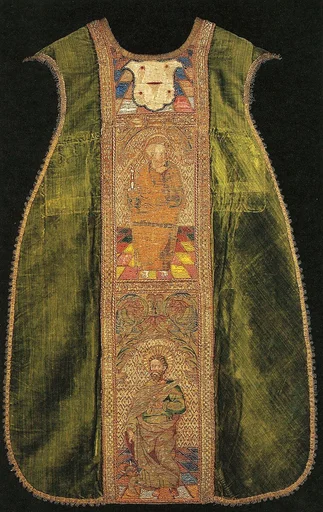
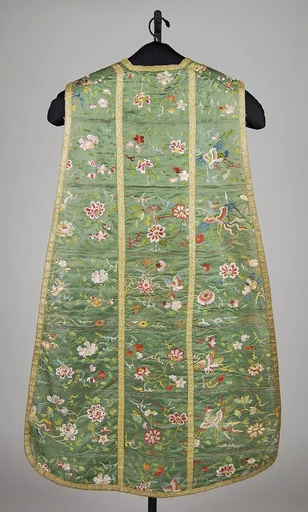
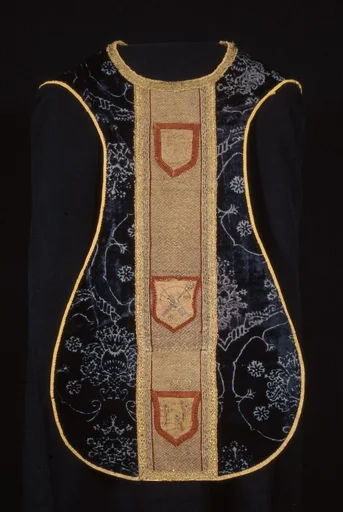
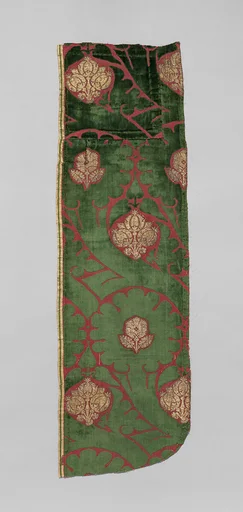
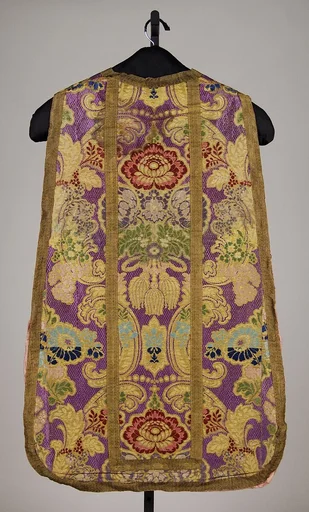
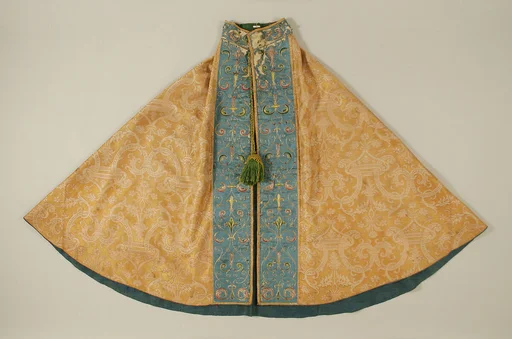
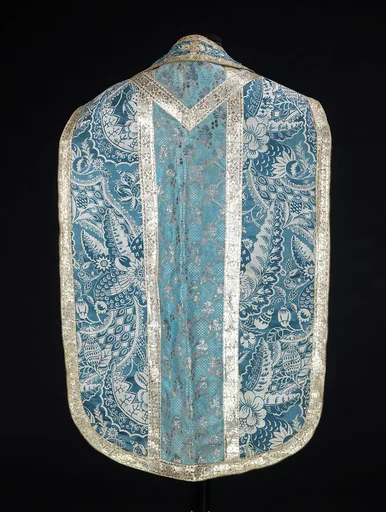
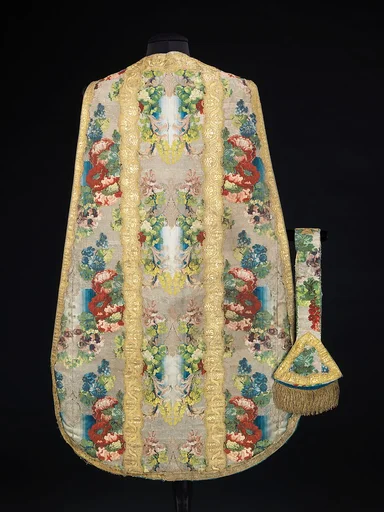
Chasuble
Unknown
first quarter 15th century · Silk, metal, linen · European Sculpture and Decorative Arts
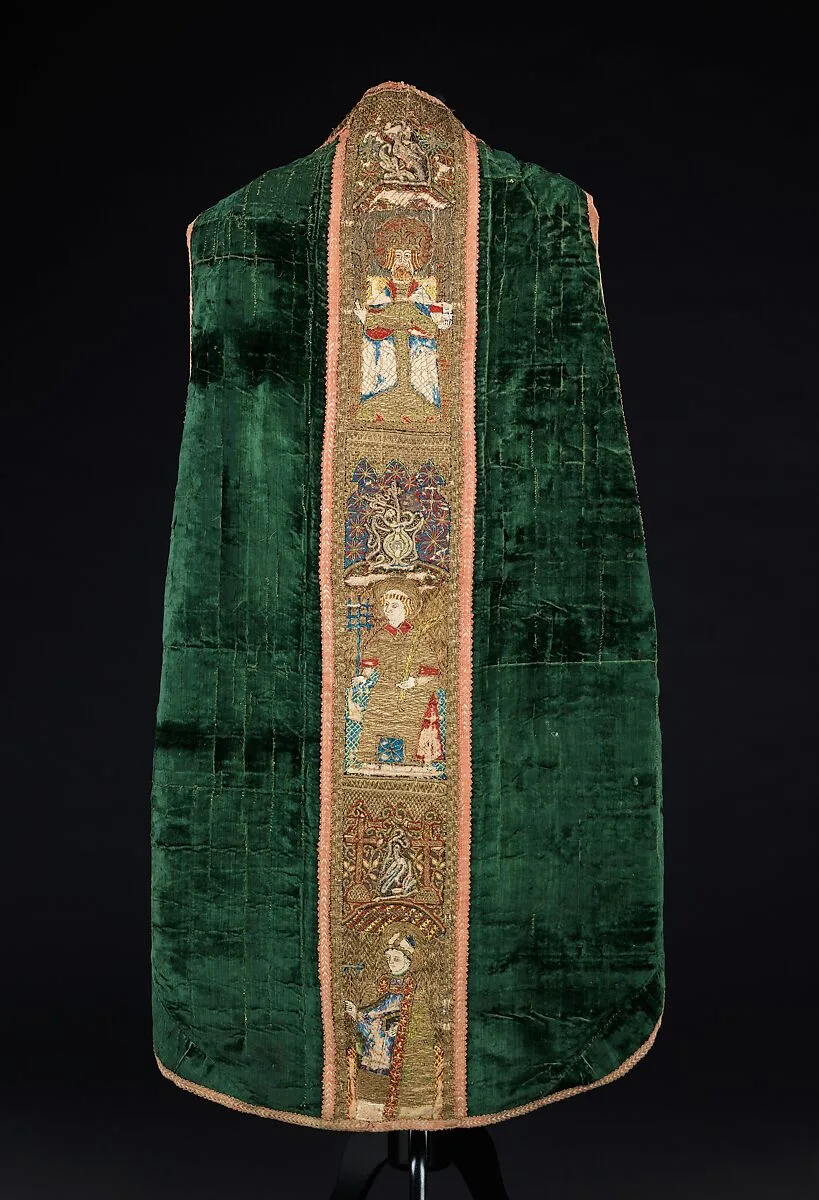
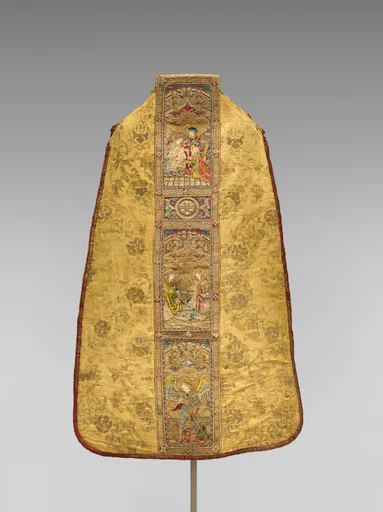
This garment is almost certainly a dealer's composite object, assembled at the end of the nineteenth century: though resembling a priestly chasuble, it is unconventionally large, and combines a very low quality, thin, and relatively modern patched velvet with an older set of embroideries. The embroideries, suffering substantial losses and considerable later intervention, are nonetheless of some interest due to their raised work technique: exposed cords, particularly visible in the architectural elements, were once wrapped with thread. The use of this type of stuffed figurative embroidery on vestments was particularly prevalent in eastern Europe, often executed to a considerably higher standard than displayed here.
- Artist
- Unknown
- Date
- first quarter 15th century
- Medium
- Silk, metal, linen
- Culture
- Italian
- Department
- European Sculpture and Decorative Arts
- Credit line
- Brooklyn Museum Costume Collection at The Metropolitan Museum of Art, Gift of the Brooklyn Museum, 2009; Gift of the Rembrandt Club, 1911