Chasuble
Unknown
16th century · Silk, metal, linen · European Sculpture and Decorative Arts
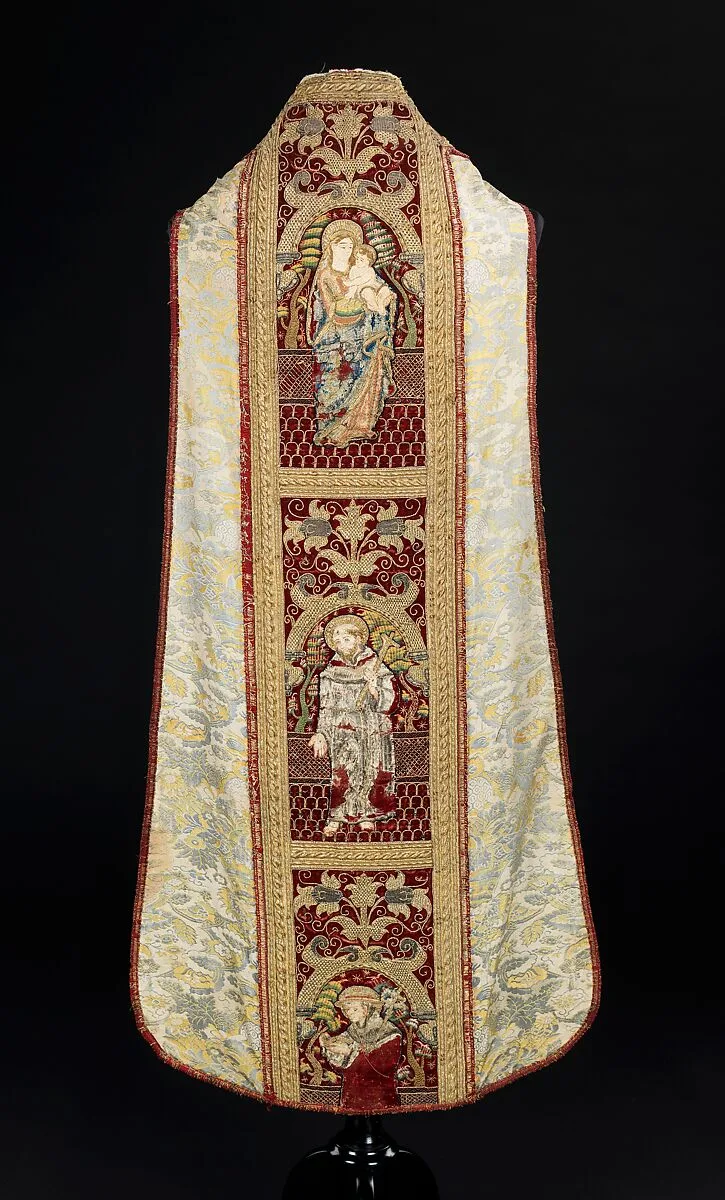
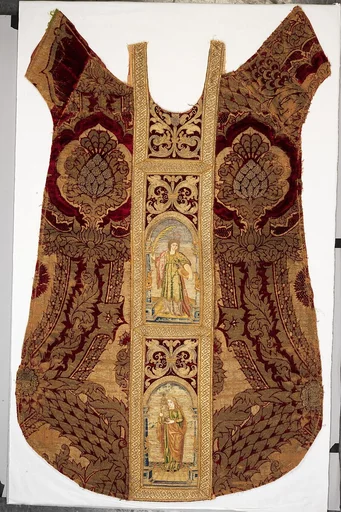
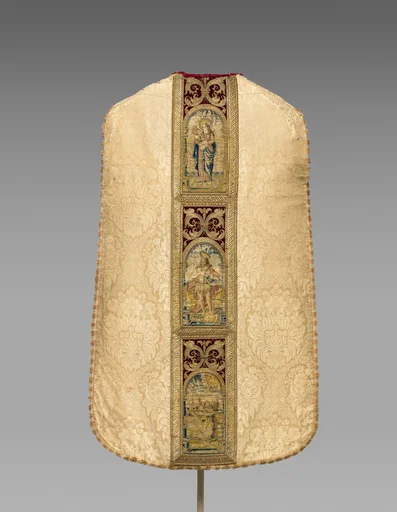
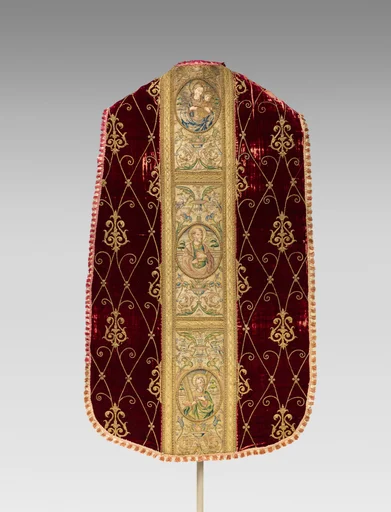
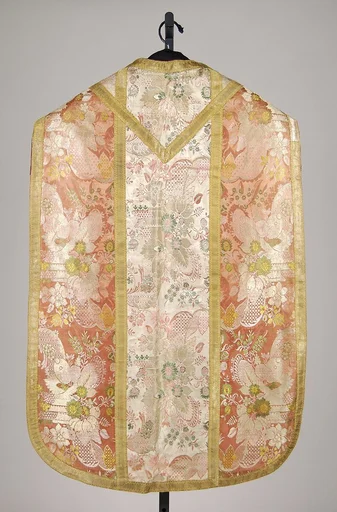
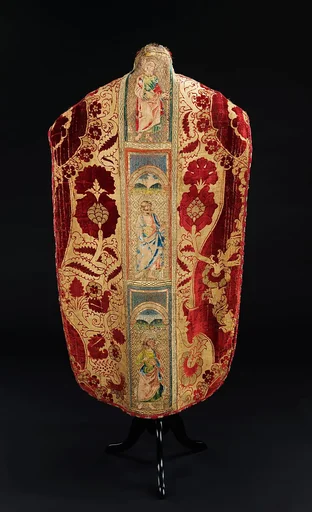
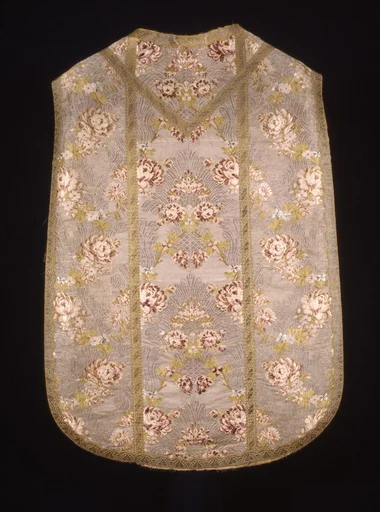
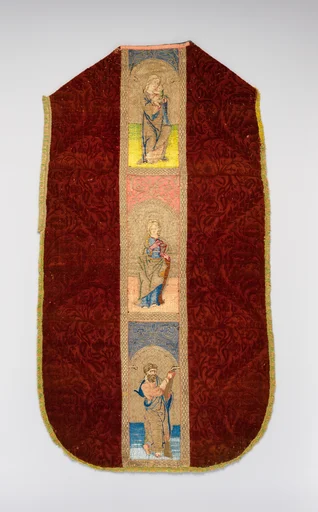
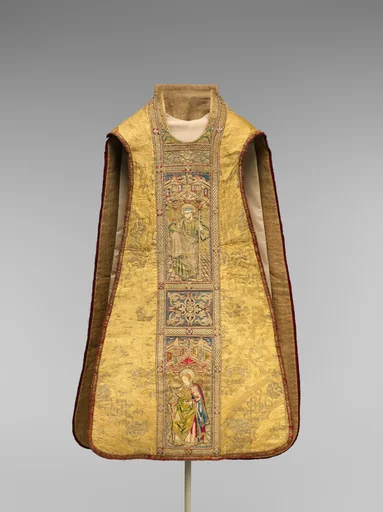
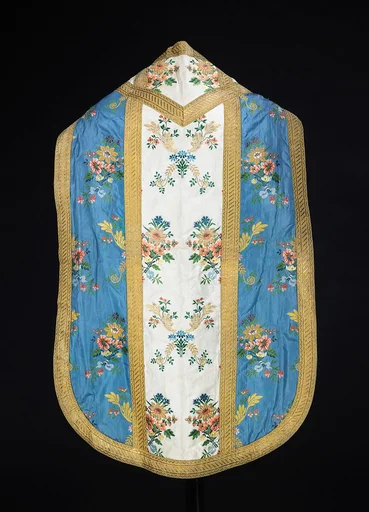
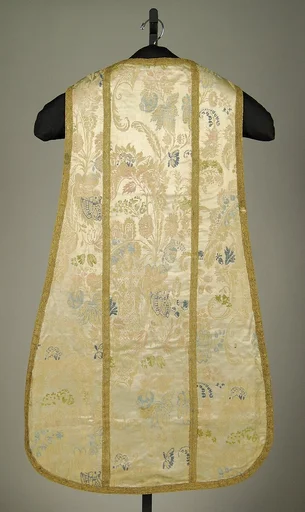
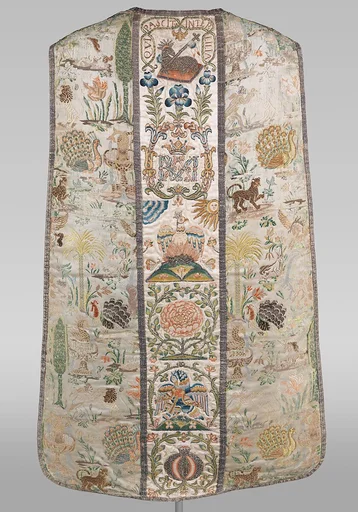
This intriguing object is a composite: at some point in their history, embroidered orphreys- attributed 17th-Century, Spanish- have been cut down and applied to an eighteenth-century silk support- attributed either Chinese made for export, or a British imitation thereof. The raw materials and the execution of the embroideries are rather modest, with twisted threads couched in place, and a very thinly piled red velvet support emulating pricier production. The silk, in contrast, is very fine, though mechanically woven. The embroidered orphreys represent Christian figures of devotion: on the front, a monk saint (perhaps Dominic or Francis) holding the Christ Child, and Christ at the Cross (amputated at the thighs); on the reverse, the Virgin and Child, the same or another monk saint, and Saint Jerome (whose panel has also been roughly cut at thigh level). The later, figurative silk, conversely, is decorated with a secular repeat pattern of clouds, wickerwork, and baskets of flowers. In its current iteration, this garment is a chasuble (the tabard worn by a Catholic priest over his alb gown when conducting church services), although its very long, narrow shape is highly unusual.
- Artist
- Unknown
- Date
- 16th century
- Medium
- Silk, metal, linen
- Culture
- Italian
- Department
- European Sculpture and Decorative Arts
- Credit line
- Brooklyn Museum Costume Collection at The Metropolitan Museum of Art, Gift of the Brooklyn Museum, 2009; Gift of the Rembrandt Club, 1911