Chasuble
Unknown
16th century · Silk and metal thread · European Sculpture and Decorative Arts
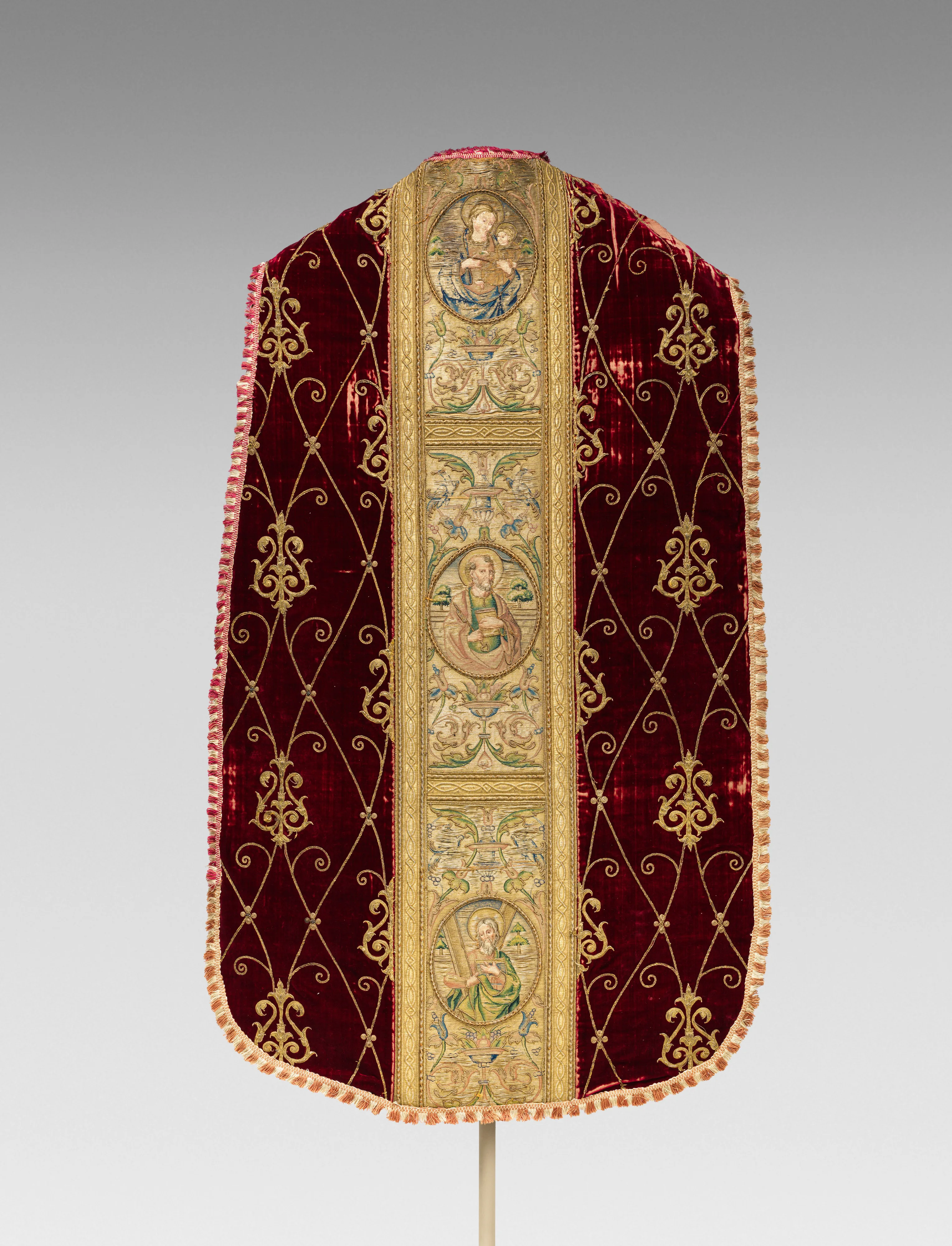
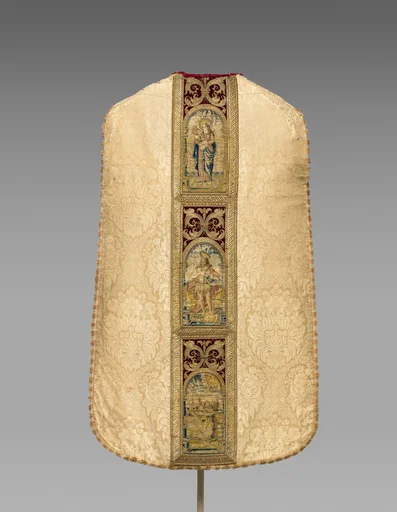
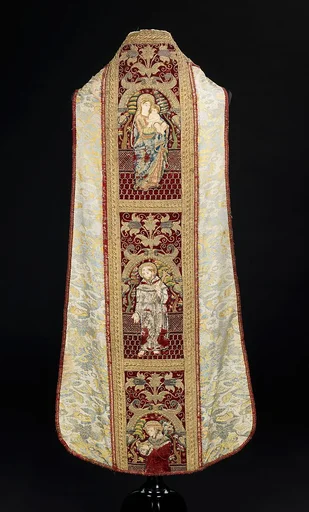
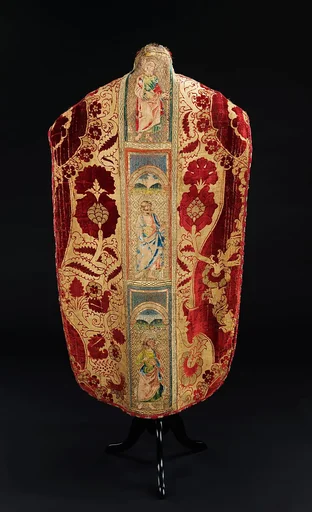
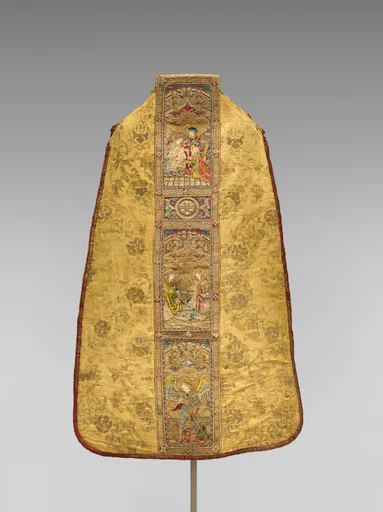
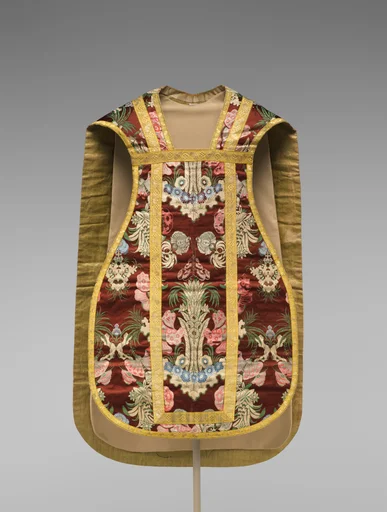
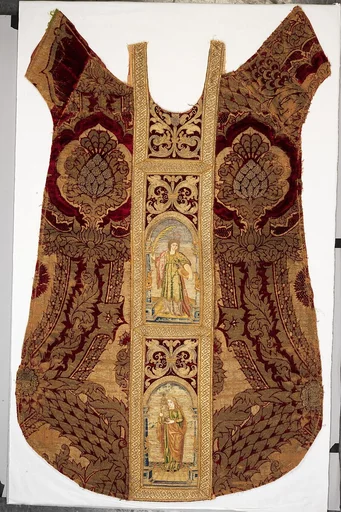
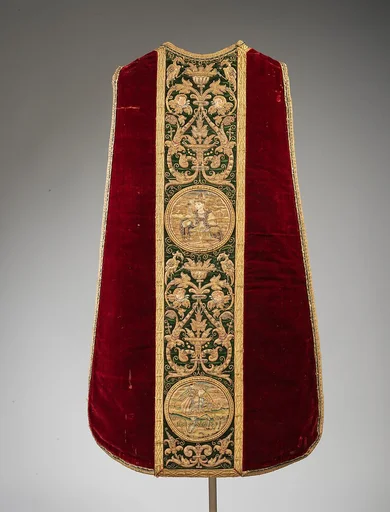
Though, at first glance, this chasuble– the tabard-like garment worn by a Catholic priest during church services– resembles sixteenth-century work, it can be attributed to artisans working in the mid-nineteenth century. The velvet is thin, low quality and relatively modern; gold-colored braid has been stitched to it to evoke the much more complicated multiple-piled patterning of a Renaissance 'cloth of gold'. The embroidery of the central orphrey panel is well-executed, using the same techniques as much earlier works, but the designs reveal a nineteenth-century sweetness in their aesthetic, especially facial features, and the raw materials are, again, of much lower grade quality, resulting in the degradation around the chest area, a result of wear-and-tear from when this was worn by the priest.
- Artist
- Unknown
- Date
- 16th century
- Medium
- Silk and metal thread
- Culture
- Italian or Spanish
- Department
- European Sculpture and Decorative Arts
- Credit line
- Gift of J. Pierpont Morgan, 1916