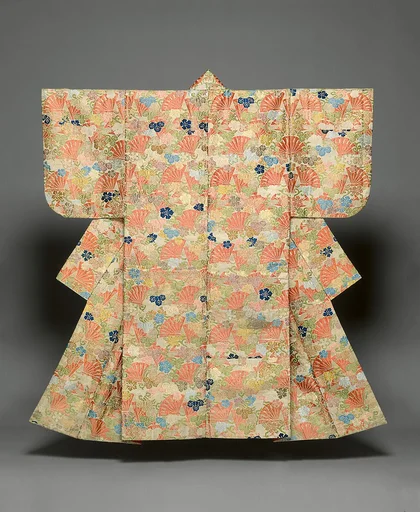
白繻子地丸文散模様縫箔|Noh Costume (Nuihaku) with Scattered Crests
Unknown
second half of the 18th–19th century · Silk embroidery and gold leaf on silk satin · Asian Art
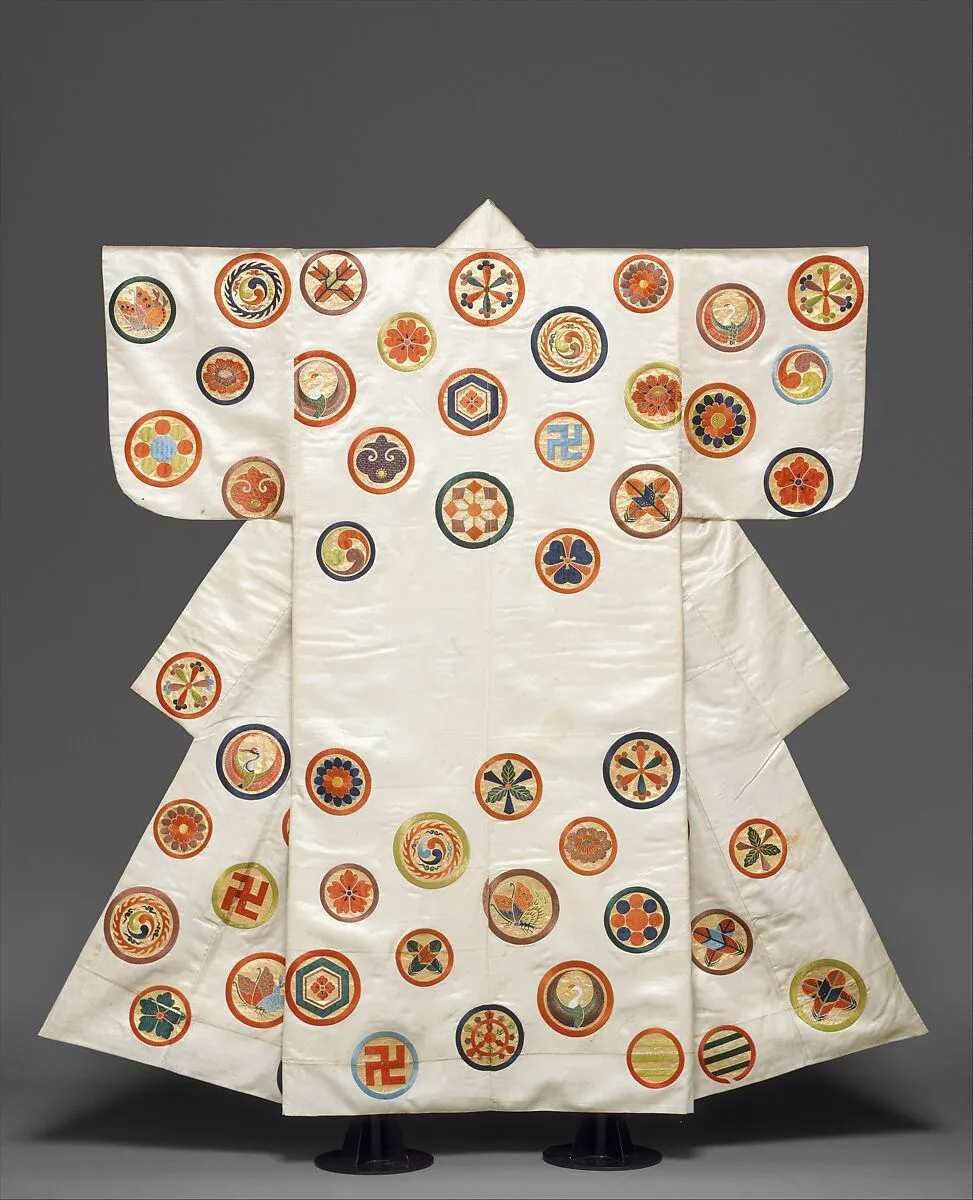
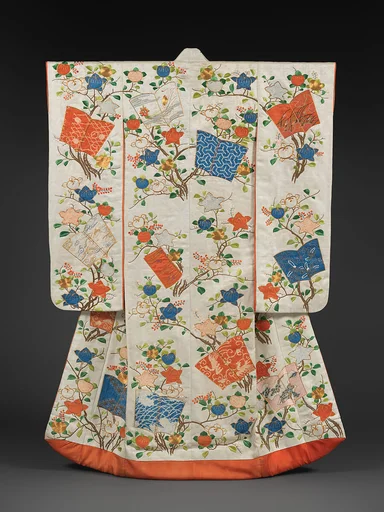
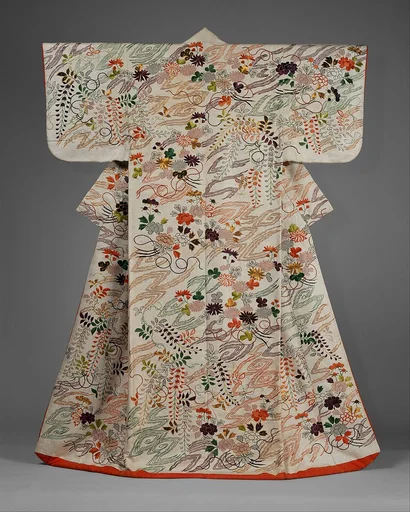
There are over twenty different crests of varying size on this robe. Some of the designs have Buddhist significance, such as the manji (reverse swastika) and the circular “wheels of Buddhist law.” Others have auspicious symbolism or are purely decorative. These colorful crests with gold-leaf backgrounds (monzukushi) are customarily embroidered on white, black, red, or indigo Noh costumes made from satin. These costumes, called Nuihaku, are mainly worn by male actors playing young female protagonists. The waist area is left blank in a style known as koshi-ake (literally, “blank waist”) as these robes are often worn turned down at the waist.
- Artist
- Unknown
- Date
- second half of the 18th–19th century
- Medium
- Silk embroidery and gold leaf on silk satin
- Culture
- Japan
- Department
- Asian Art
- Credit line
- H. O. Havemeyer Collection, Bequest of Mrs. H. O. Havemeyer, 1929