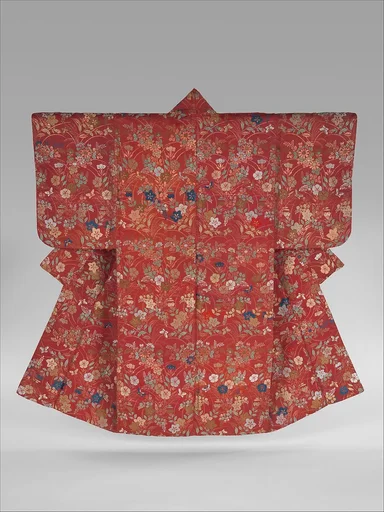
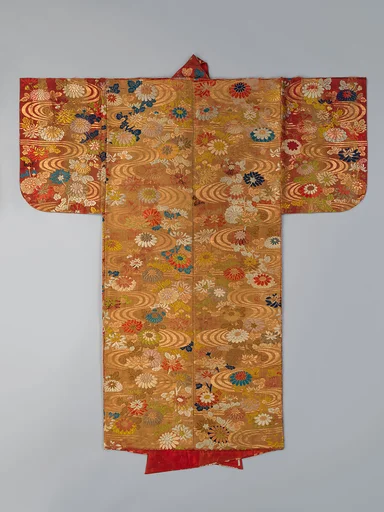
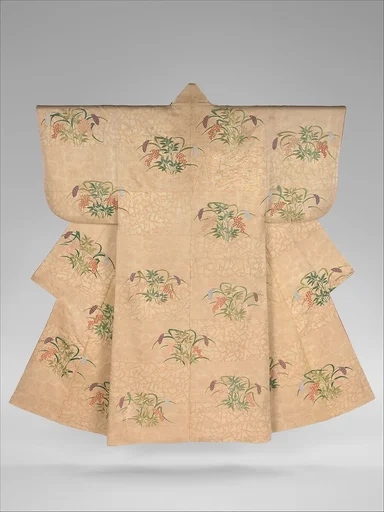
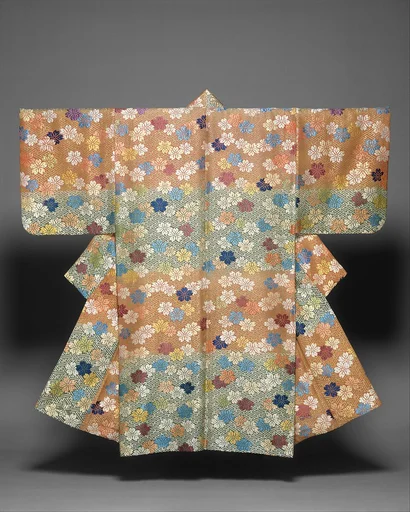
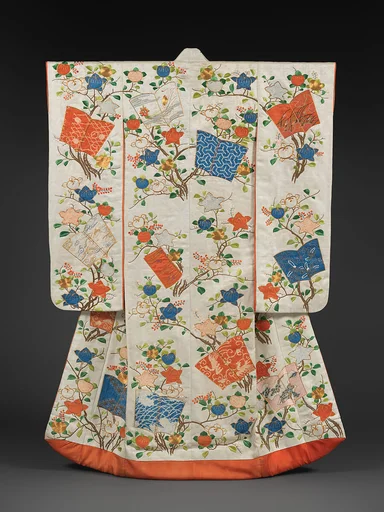
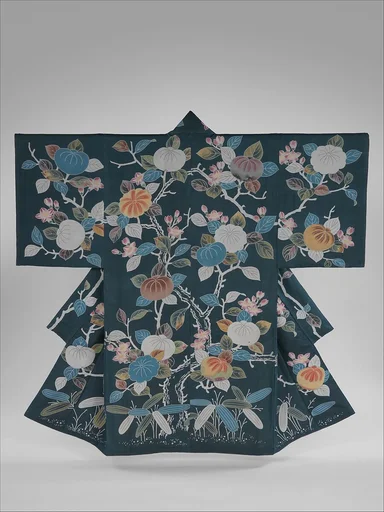
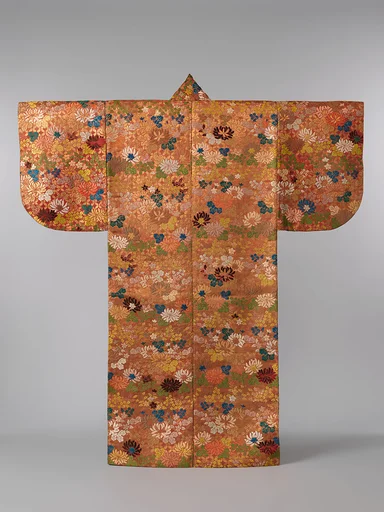
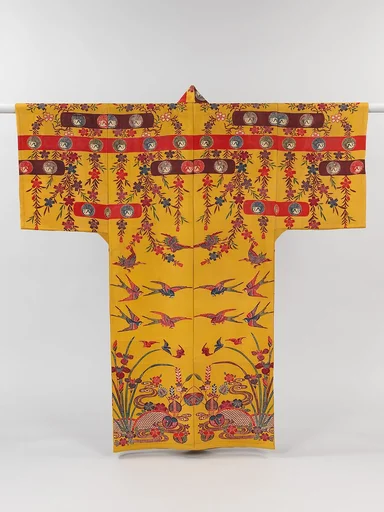
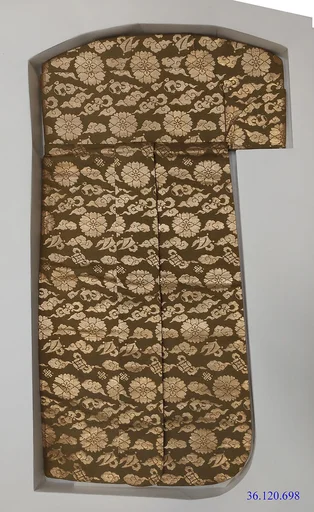
白地檜扇夕顔模様唐織|Noh Costume (Karaori) with Cypress Fans and Moonflower (Yūgao) Blossoms
Unknown
18th–early 19th century · Twill-weave silk with brocading in silk and supplementary-weft patterning in silk and metallic thread · Asian Art
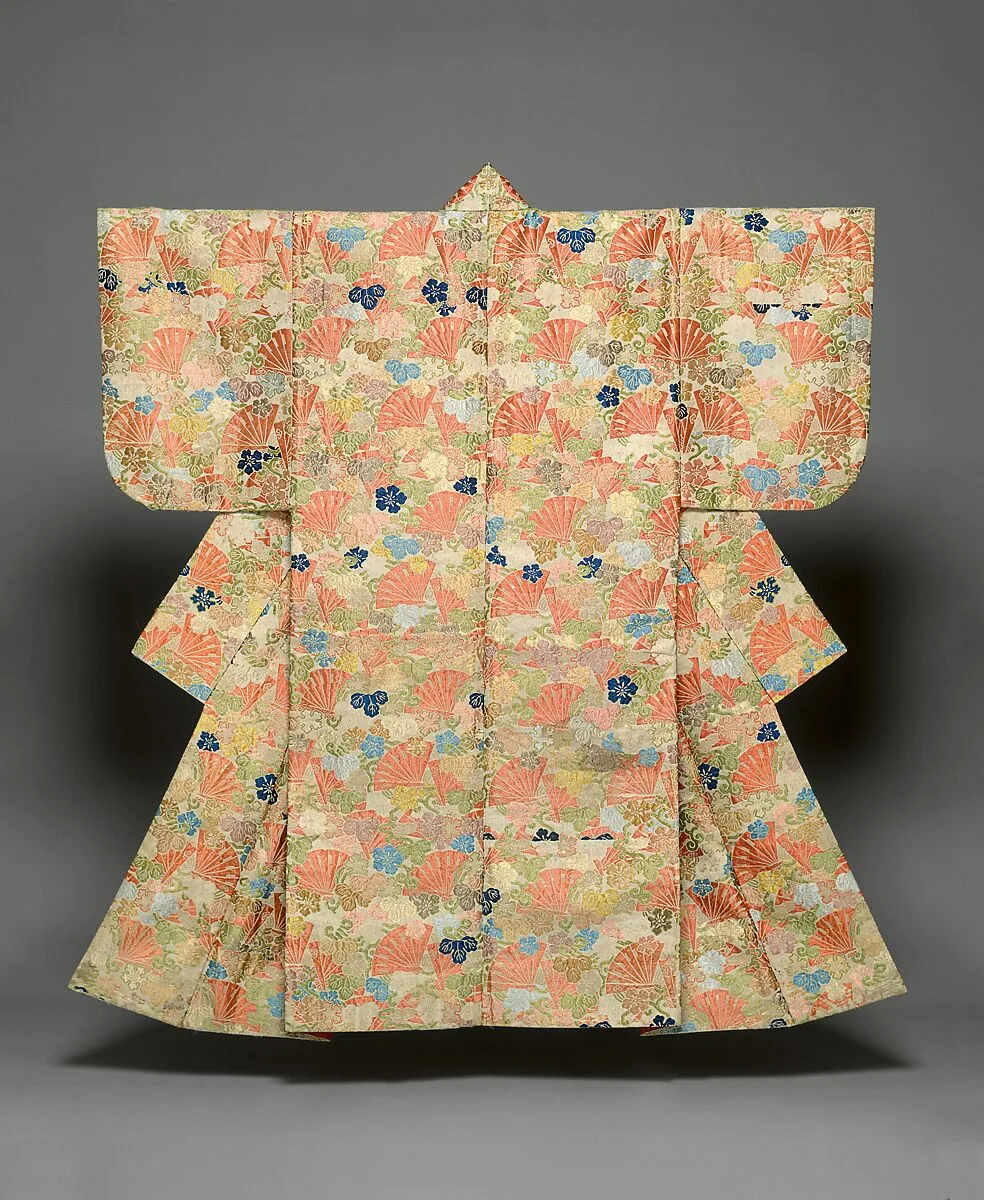
The pattern of a moonflower lying on an open cypress fan evokes Chapter 4 of The Tale of Genji, “The Lady of the Evening Faces” (Yūgao), and Genji’s tragic love affair with the woman known as Yūgao. She comes to Genji’s attention when he notices moonflowers, literally “evening faces” (yūgao), growing on the vine outside her humble abode—the same motif Ogata Kenzan depicted on his tea bowl displayed nearby. Seeing Genji’s carriage, the lady sends out a spray of the white flowers on a fan inscribed with a poem. During a subsequent tryst, Genji takes her to an abandoned mansion, where she is killed by the jealous spirit of Genji’s neglected lover, Lady Rokujō. The episode inspired a Noh play titled Yūgao, attributed to Zeami (ca. 1364–ca. 1443).
- Artist
- Unknown
- Date
- 18th–early 19th century
- Medium
- Twill-weave silk with brocading in silk and supplementary-weft patterning in silk and metallic thread
- Culture
- Japan
- Department
- Asian Art
- Credit line
- Gift of Dorothy F. Rolph, in memory of her sister, Helen L. Beloussoff, 1961