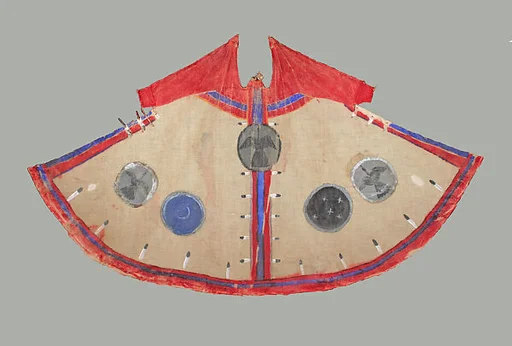
Model Tipi
Unknown
late 1860s–76 · Native-tanned skin, paint, beads, cloth, horsehair · Arts of Africa, Oceania, and the Americas
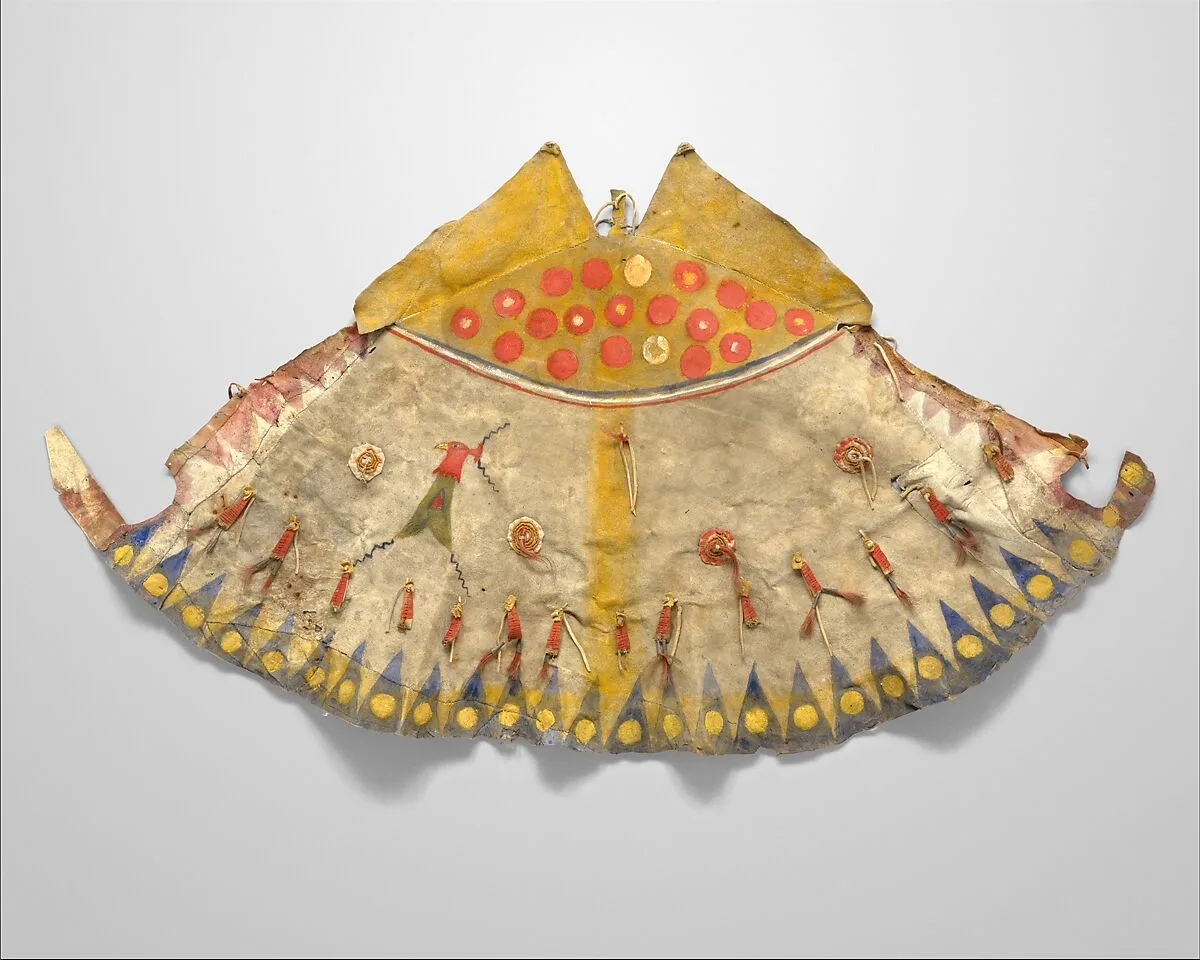
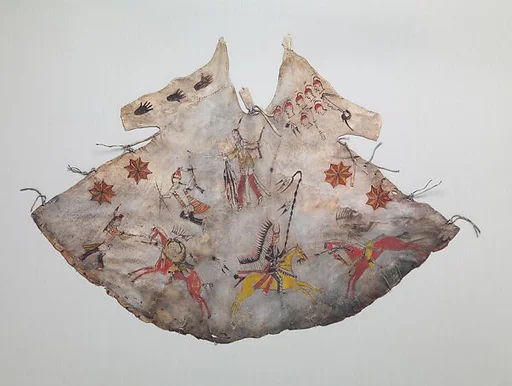
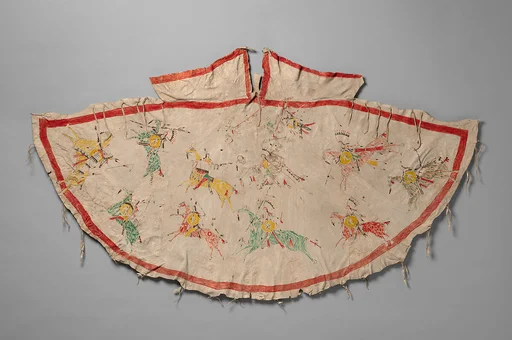
Native American tipis are made in many sizes. From the large “skin tents” reported by early sixteenth-century travelers to those made by children three hundred years later, tipis are identified with Plains peoples. Distinctive features of construction mark each group’s forms, and the ornamentation of exteriors was equally distinctive, with individual men frequently specializing in painting them. Warrior deeds and hunting scenes appear on small tipis, as they also do on large ones. Symbols of the earth—mountains, the four world directions, the sky, sun and moon, clouds and rainbows—and of animals held in high esteem, like buffalo and bear, are among tipi depictions. Images could also originate in personal visions. As the greatest number of tipis are plain, painted examples are particularly meaningful. Certain painted tipis had ritual significance relating to specific ceremonies. Such tipis kept their owners from calamity and ensured good fortune. Medicine bundles were kept in some of these dwellings, and the proper maintenance of the tipi and bundle ensured the welfare of the entire community. It was an honor to own a medicine tipi, but it came with the responsibility to observe all rituals associated with it.
- Artist
- Unknown
- Date
- late 1860s–76
- Medium
- Native-tanned skin, paint, beads, cloth, horsehair
- Culture
- Blackfoot
- Department
- Arts of Africa, Oceania, and the Americas
- Credit line
- Ralph T. Coe Collection, Gift of Ralph T. Coe Foundation for the Arts, 2011