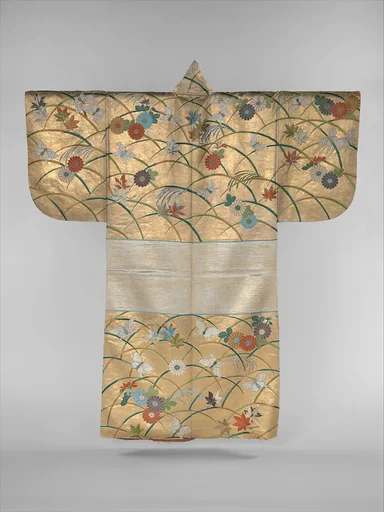
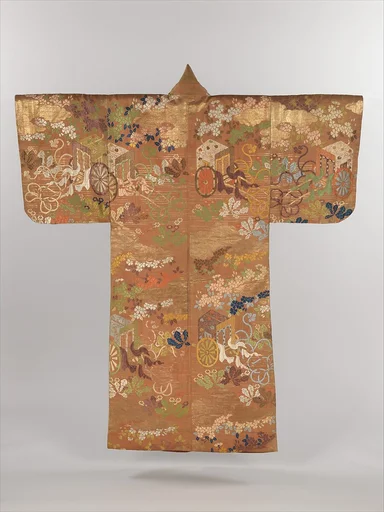
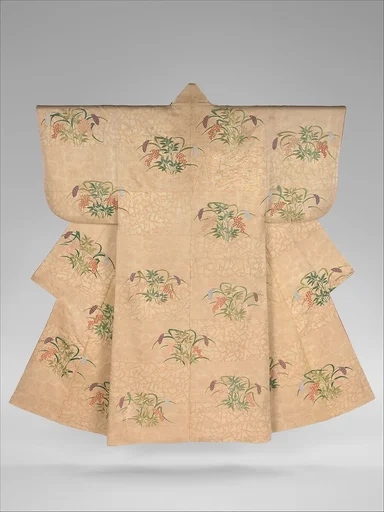
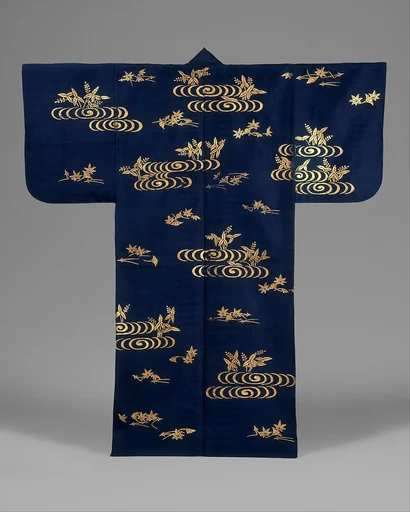
胴箔地牡丹鳳凰模様縫箔|Noh Costume (Nuihaku) with Phoenixes and Peonies
Unknown
second half 18th century · Plain-waive silk with gold leaf and silk-thread embroidery · Asian Art
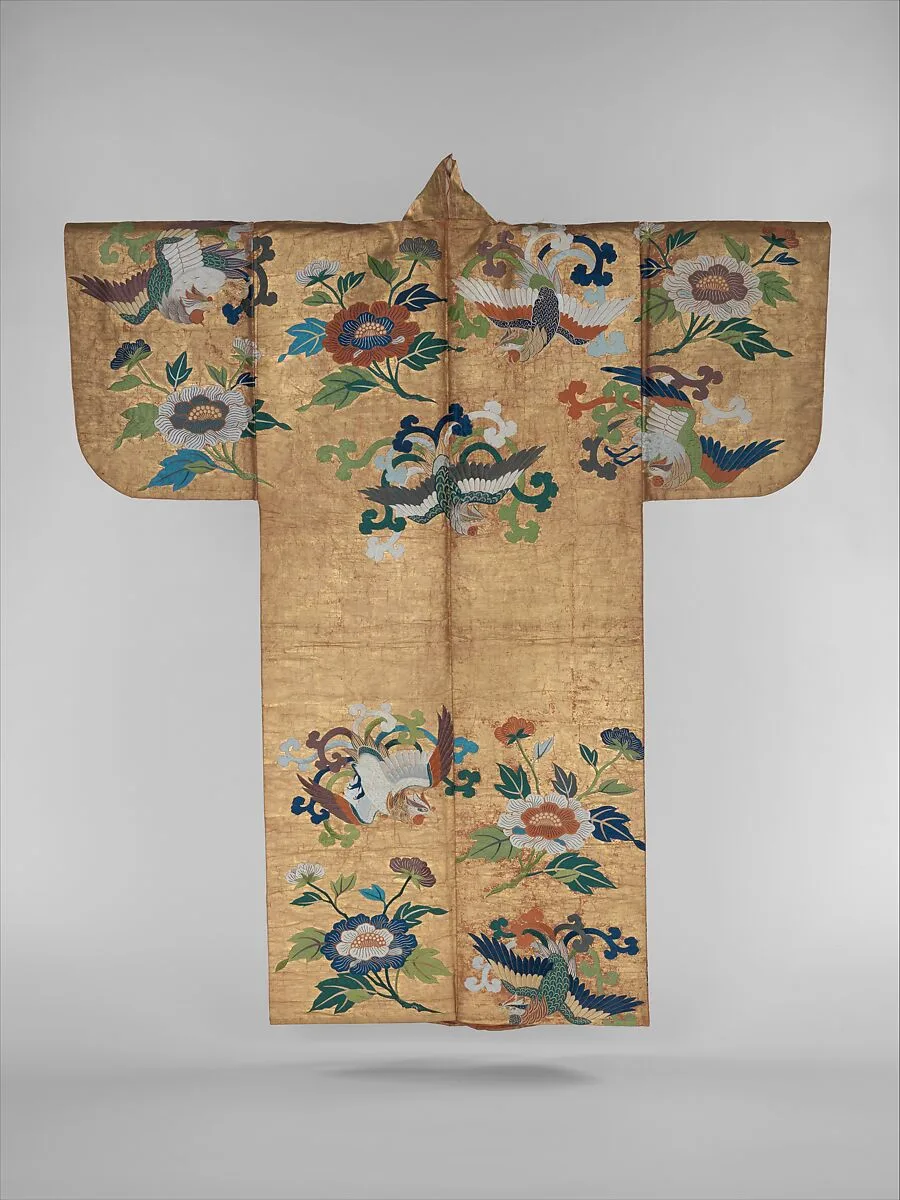
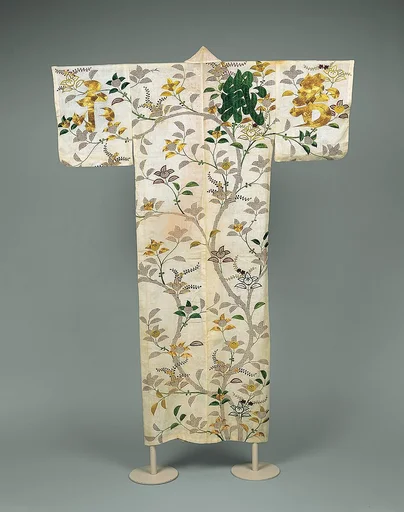
Nuihaku robes are elegant Noh costumes with very fine embroidery applied on a metal-leaf ground. Mainly used in plays featuring young female protagonists, they are worn around the waist beneath sumptuous outer robes. In the Momoyama (1573–1615) and early Edo periods, before outer robes became lavish garments, nuihaku were the most splendid part of the costume and were themselves used as outer robes. This exquisite example in the “phoenix flying through peonies” pattern is embellished with phoenixes, auspicious symbols of prosperity, fidelity, and good deeds as well as with peonies, the “king of flowers,” representing good fortune and honor. The composition is based on a design created by Maruyama Ōkyo (1733–1795), a prolific Kyoto-based painter whose style incorporated Western naturalism into East Asian painting traditions.
- Artist
- Unknown
- Date
- second half 18th century
- Medium
- Plain-waive silk with gold leaf and silk-thread embroidery
- Culture
- Japan
- Department
- Asian Art
- Credit line
- Purchase, Joseph Pulitzer Bequest, 1932