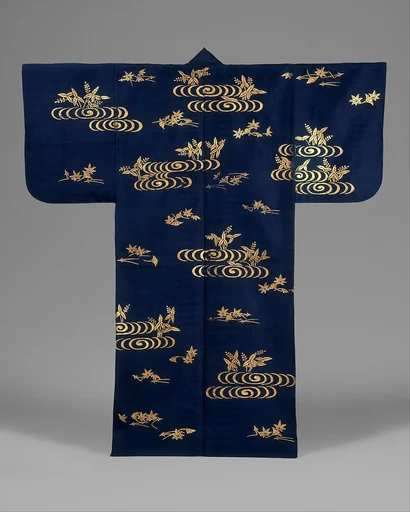
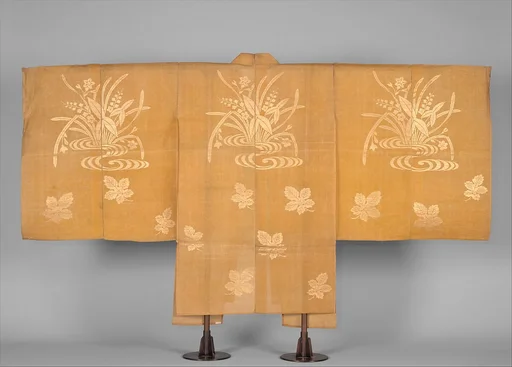
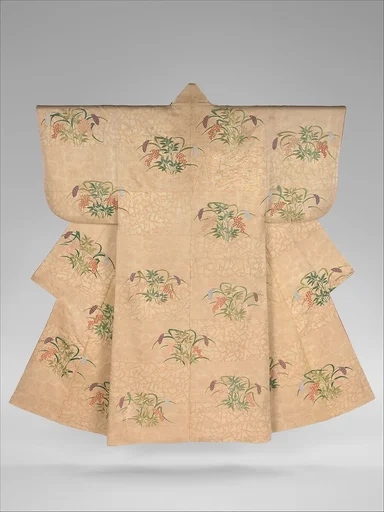
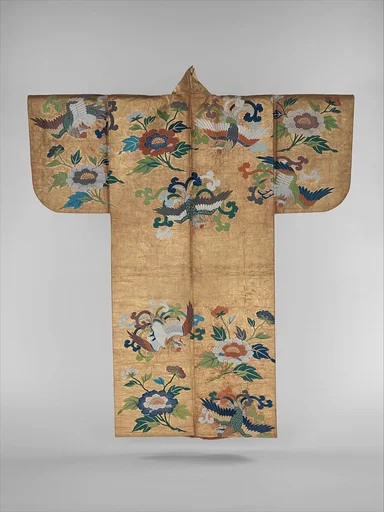
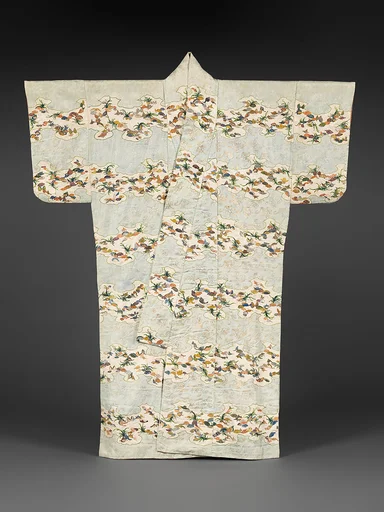
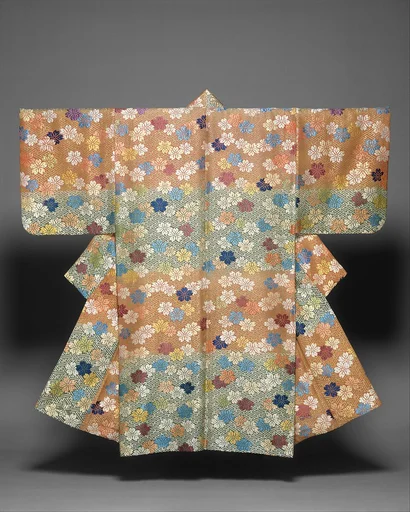
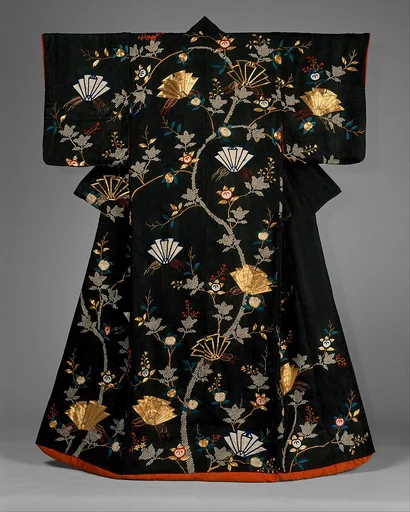
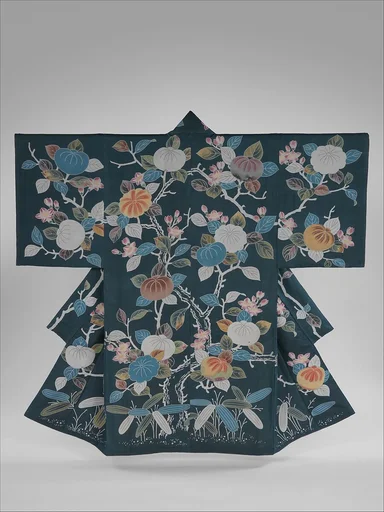
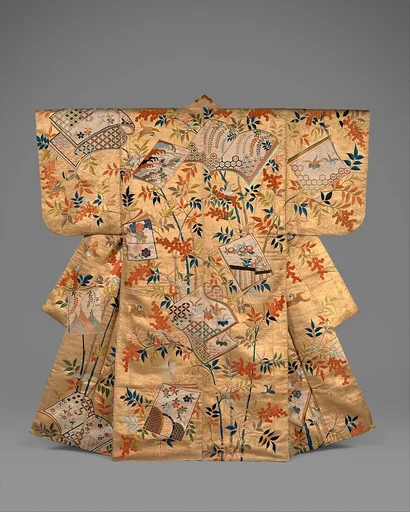
胴箔地薄菊紅葉蝶模様縫箔|Noh Robe (Nuihaku) with Butterflies, Chrysanthemums, Maple Leaves, and Miscanthus Grass
Unknown
second half of the 18th century · Silk satin with silk embroidery and gold leaf · Asian Art
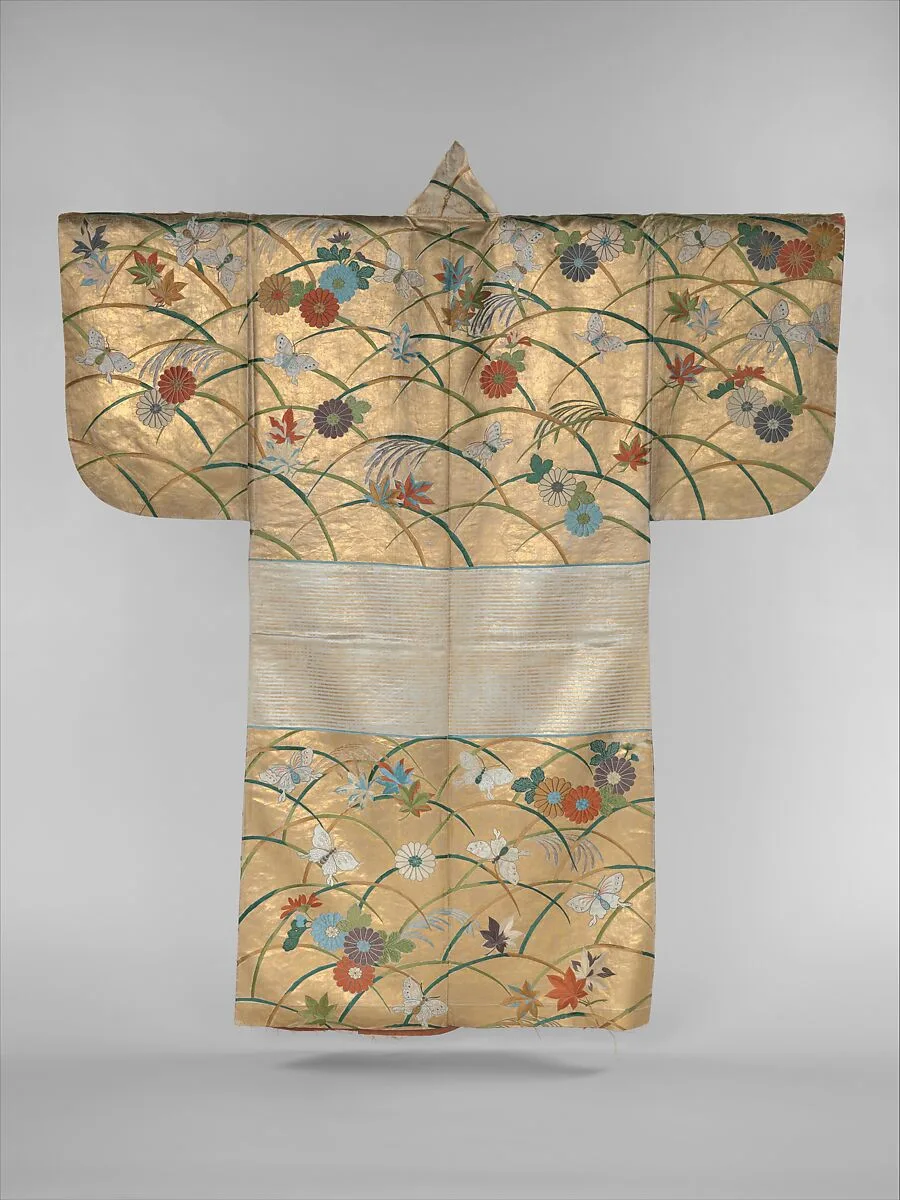
The term nuihaku is a compound word made up of two textile techniques: embroidery (nui) and application of metallic leaf (haku). Elegant costumes like this one were mainly used for roles of young female protagonists in Noh plays. In the Edo period, landscapes and autumn grasses associated with poetry and classical literature became popular motifs for this type of robe. On this example combining spring and autumn imagery, playful butterflies fly over colorful chrysanthemum flowers, scattered maple leaves, and curving miscanthus grass. The waist area is left undecorated—in the seventeenth century these garments were used as outer robes and were often worn turned down at the waist. The style of the design and the embroidery recall Momoyama-period (1573–1615) robes, as well as folding screens and Kōdaiji maki-e lacquers with similar compositions.
- Artist
- Unknown
- Date
- second half of the 18th century
- Medium
- Silk satin with silk embroidery and gold leaf
- Culture
- Japan
- Department
- Asian Art
- Credit line
- Purchase, Joseph Pulitzer Bequest, 1932