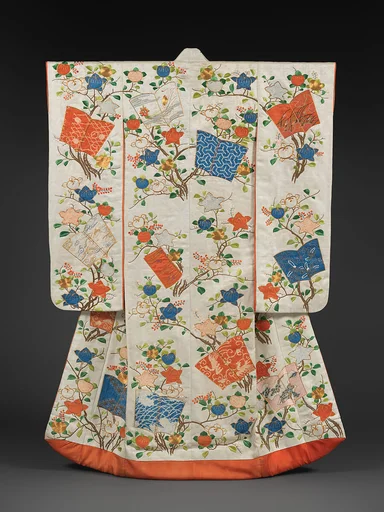
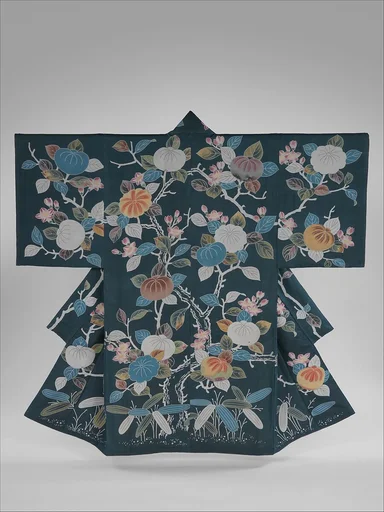
黒綸子地橘蝶熨斗模様打掛|Outer Robe (Uchikake) with Mandarin Oranges and Folded-Paper Butterflies
Unknown
late 18th–early 19th century · Tie-dyed satin damask with silk embroidery and couched gold thread · Asian Art
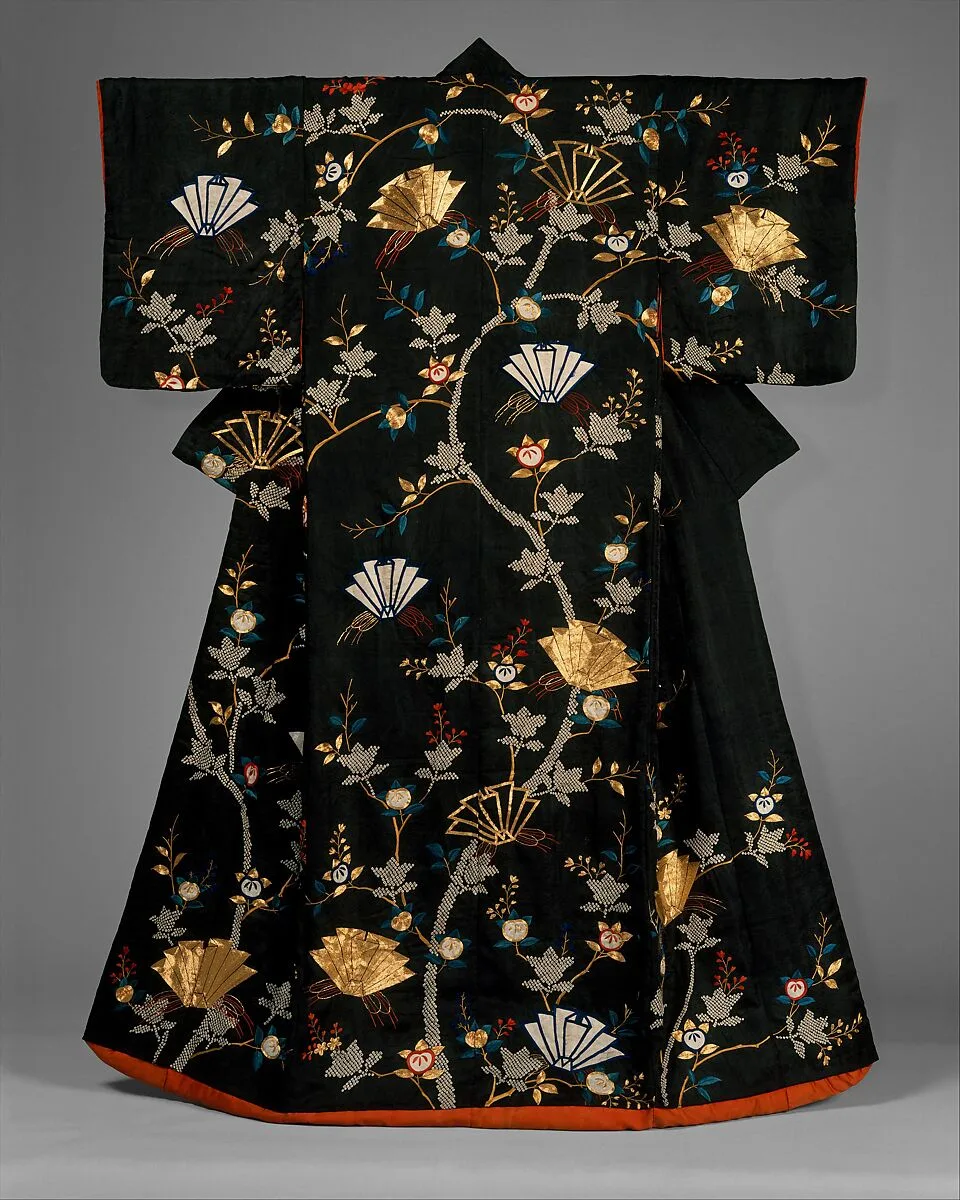
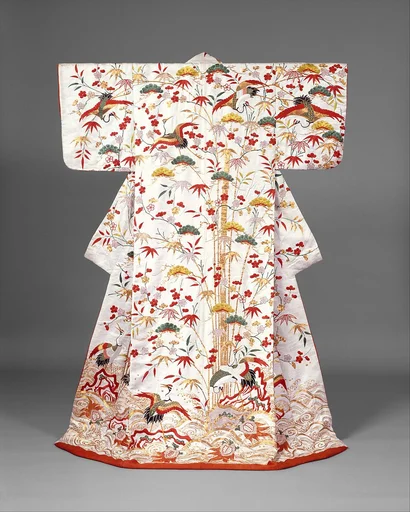
The outer robe, or uchikake, was worn without a sash over a kosode on formal occasions. Originating in the Kamakura period (1185–1333) as a robe for highranking samurai ladies, it later was used more widely as formal winter attire. In traditional marriage ceremonies, an uchikake is worn over a wedding kimono. Extra padding is inserted into the hem to provide a seamless flow of the train. Wedding uchikake are decorated with auspicious motifs, such as the folded-paper butterflies depicted here in pairs, male and female, to represent the newly wedded couple. Folded-paper butterflies attached to thin strips of paper were also used to adorn presents and may be the origins of this pattern. “Butterfly” in Japanese is pronounced chō, which sounds like the word for “long” (長), so the motif also symbolizes a long and happy marriage. The evergreen mandarin orange tree (tachibana) is executed in tie-dye (shibori) on a patterned black silk satin damask (rinzu) ground. Teal, red, and gold details are added in embroidery and gold couching.
- Artist
- Unknown
- Date
- late 18th–early 19th century
- Medium
- Tie-dyed satin damask with silk embroidery and couched gold thread
- Culture
- Japan
- Department
- Asian Art
- Credit line
- Gift of Ilse Bischoff, 1976