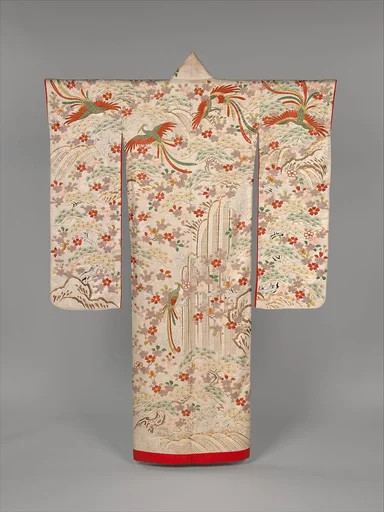
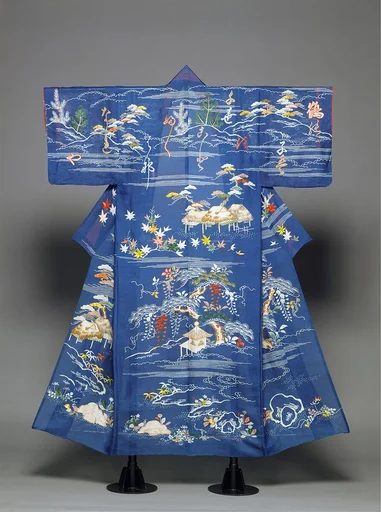
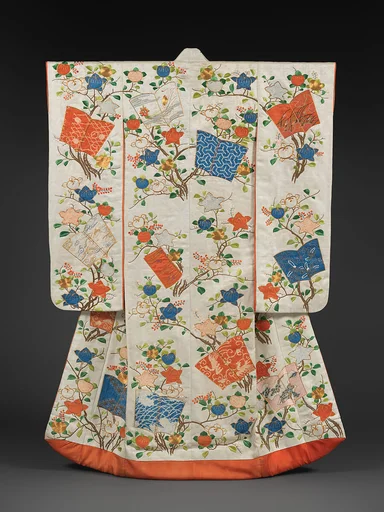
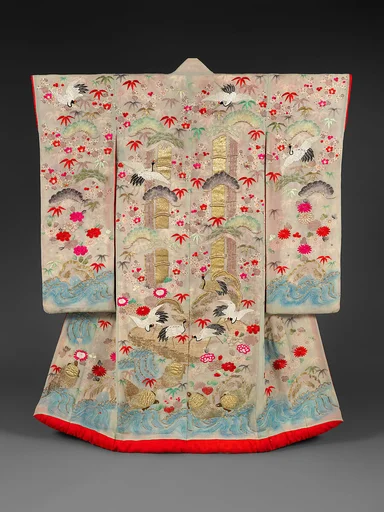
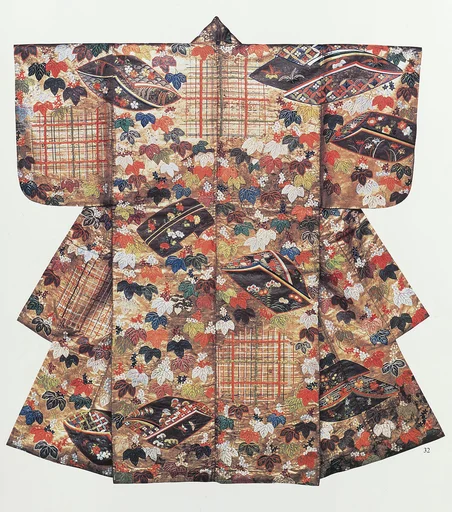
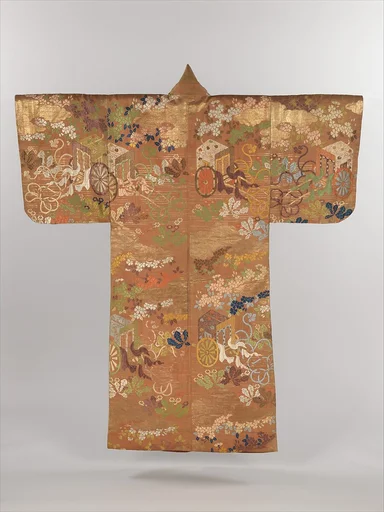
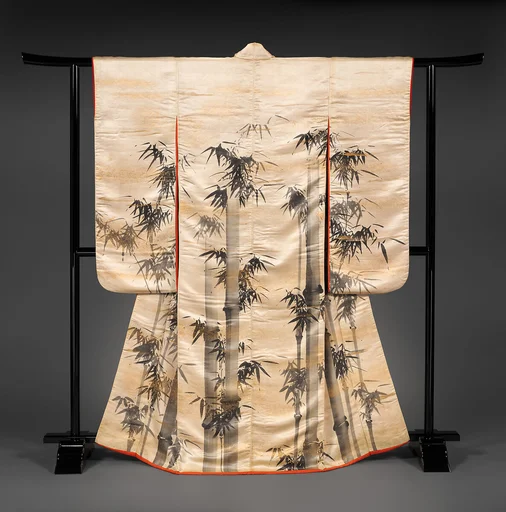
白綸子地松竹梅鶴亀模様打掛|Outer Robe (Uchikake) with Mount Penglai
Unknown
late 18th century–first half 19th century · Figured satin-weave silk (rinzu) with paste-resist dyeing, stencil-dyed dots, and silk- and gold-thread embroidery · Asian Art
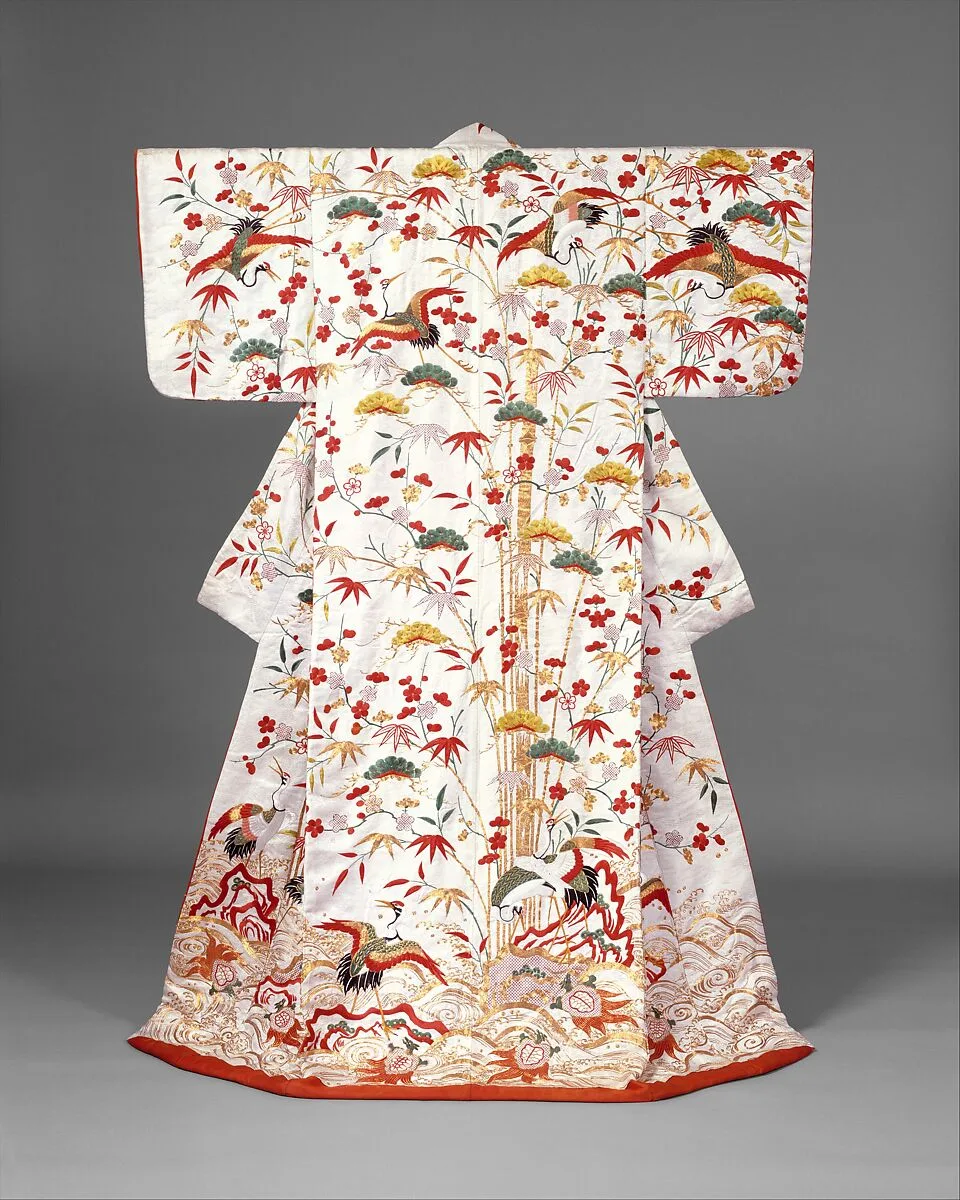
Symbols from Chinese lore, present in Japanese art since ancient times, converge in the decoration of this outer robe. The crane and tortoise are emblematic of longevity, an auspicious theme for a robe worn on formal occasions, primarily during weddings. When the animals are shown on rocky islands amid waves, as here, they signify Mount Penglai (or Hōrai in Japanese), a realm of the immortals believed to lie off the southeast coast of China. The bamboo plants, evergreen pine boughs, and plum flowers—beloved as the first to bloom each year—constitute the mythic islands’ “Three Friends of Winter,” another emblem of endurance that augments the favorable symbolism. Most likely this white robe was a part of a set of three that would have included red and black versions as well.
- Artist
- Unknown
- Date
- late 18th century–first half 19th century
- Medium
- Figured satin-weave silk (rinzu) with paste-resist dyeing, stencil-dyed dots, and silk- and gold-thread embroidery
- Culture
- Japan
- Department
- Asian Art
- Credit line
- Gift of Dr. and Mrs. Jonas M. Goldstone, 1970