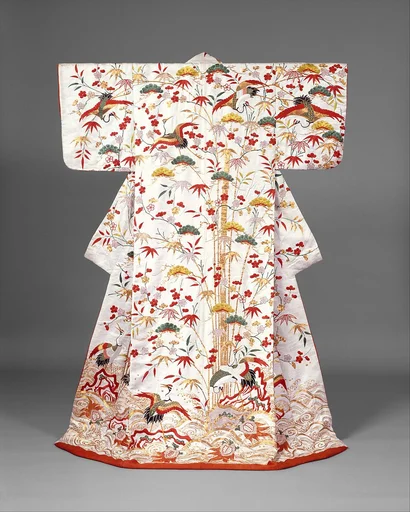
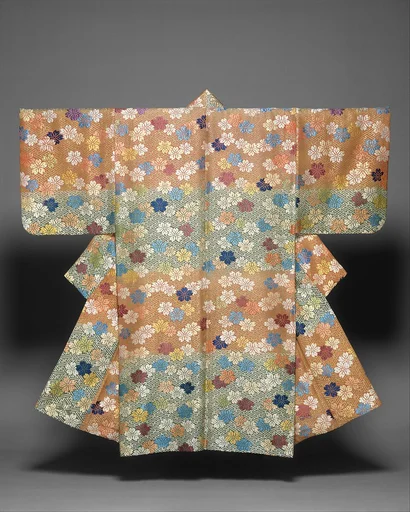
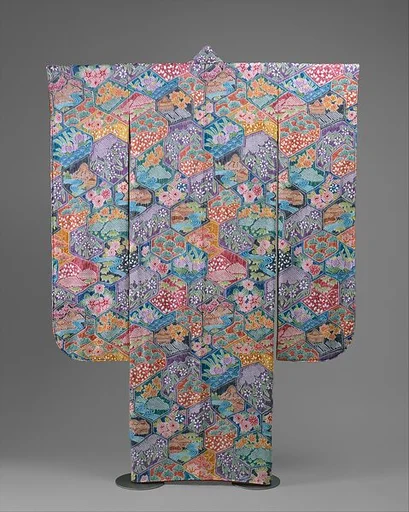
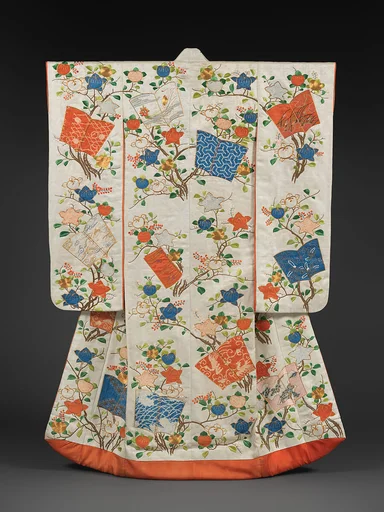
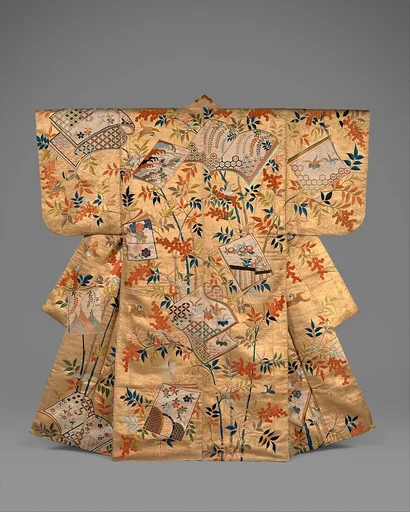
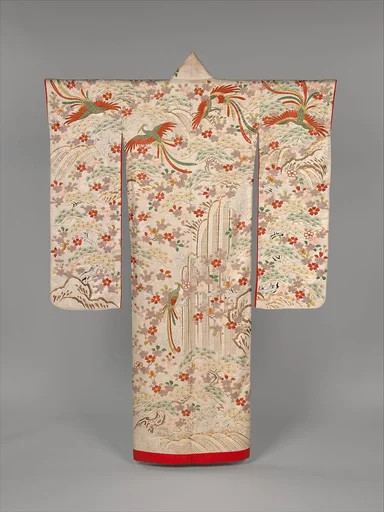
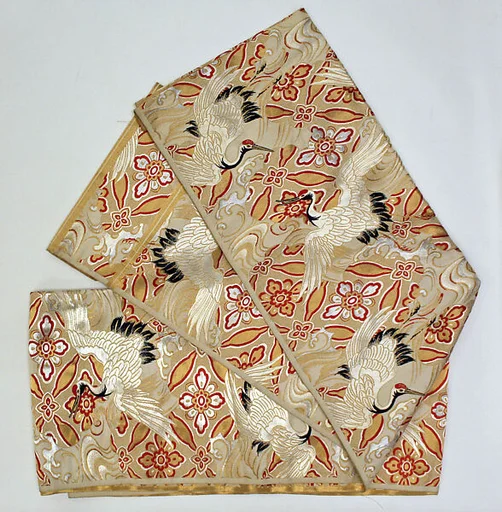
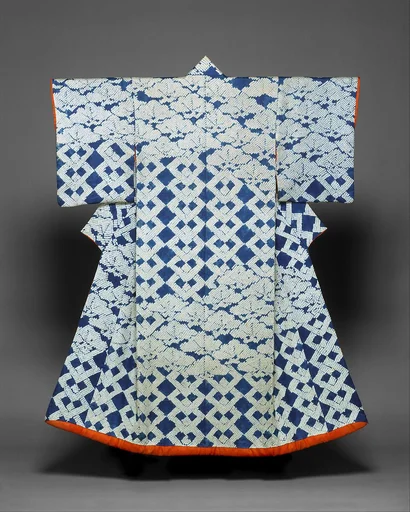
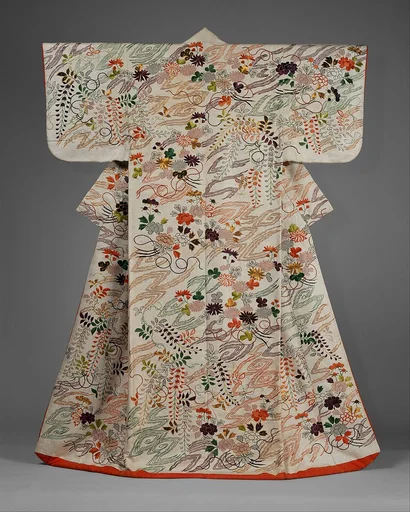
胴箔地蔦香包下地窓模様縫箔|Noh Costume (Nuihaku) with Ivy, Incense Wrappers, and Bamboo Blinds
Unknown
first half of the 18th century · Silk embroidery and gold leaf on silk satin · Asian Art
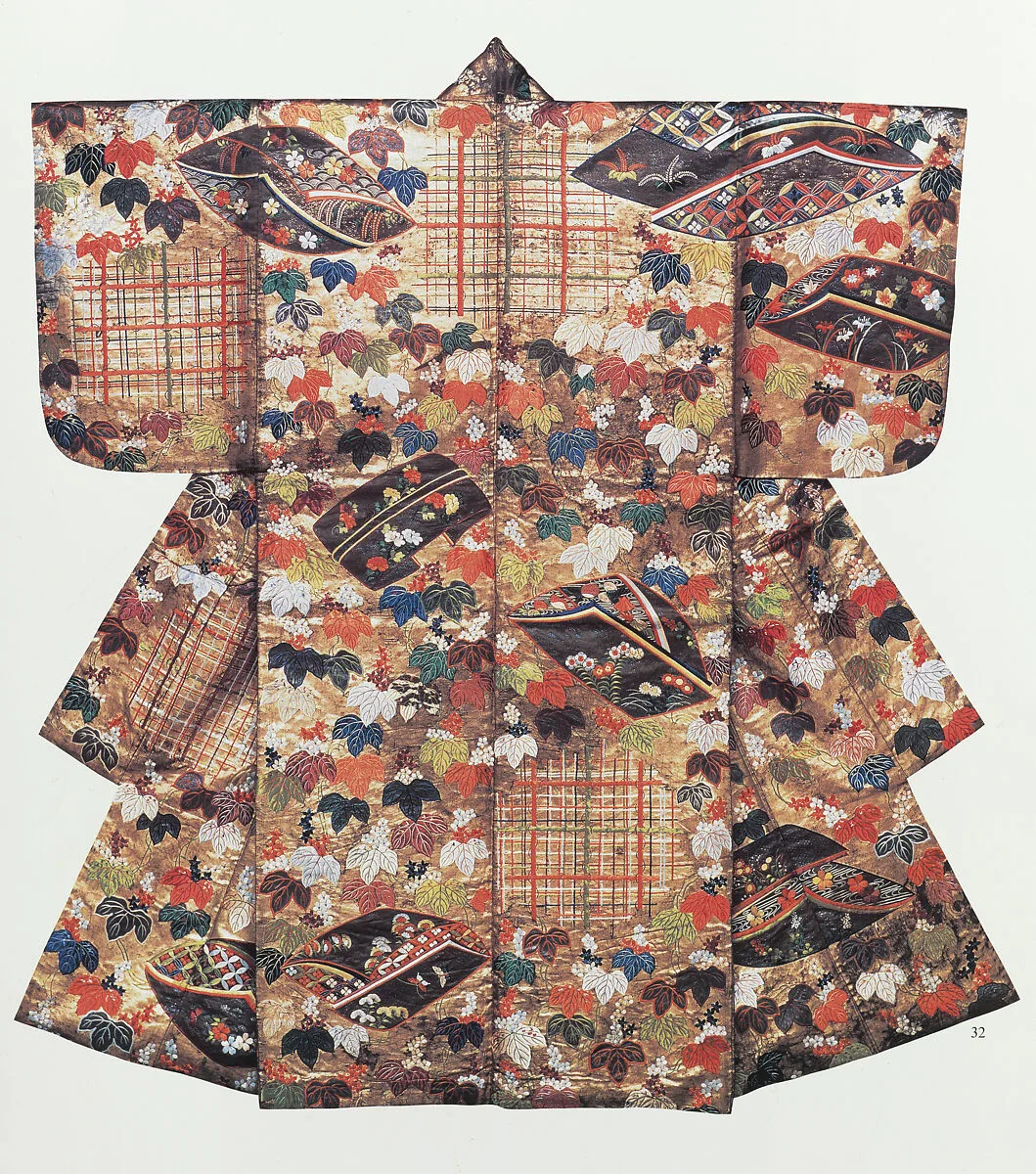
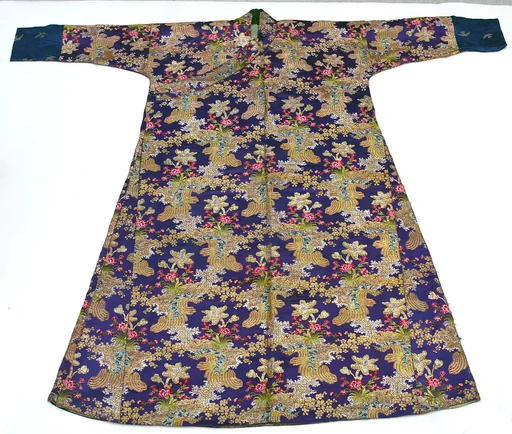
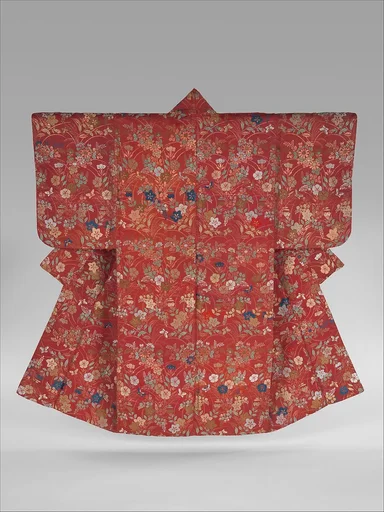
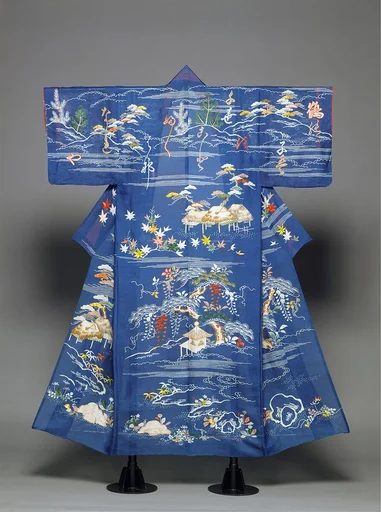
Garments decorated with nuihaku, a technique combining embroidery and applied metallic leaf, were first made in the late fifteenth century. The technique became extremely popular on women’s kosode (garment with small sleeve openings) during the Momoyama period (1573–1615), particularly for creating naturalistic, complex patterns. Nuihaku garments were occasionally donated to outstanding Noh actors, and the term became synonymous with sumptuous Noh robes. The gold-leaf background on this robe suffuses the ivy, incense wrappers, and bamboo blinds with golden light. Elegant nuihaku, like this one, were worn wrapped around the waist as outer garments, mostly by actors playing female roles. On stage, actors could take advantage of the light-reflecting qualities of the applied metallic leaf.
- Artist
- Unknown
- Date
- first half of the 18th century
- Medium
- Silk embroidery and gold leaf on silk satin
- Culture
- Japan
- Department
- Asian Art
- Credit line
- Purchase, Joseph Pulitzer Bequest, 1932