Untitled
Unknown
second half of the 18th–19th century · Resist-dyed plain-weave silk gauze (ro) embroidered with silk and metallic thread · Asian Art
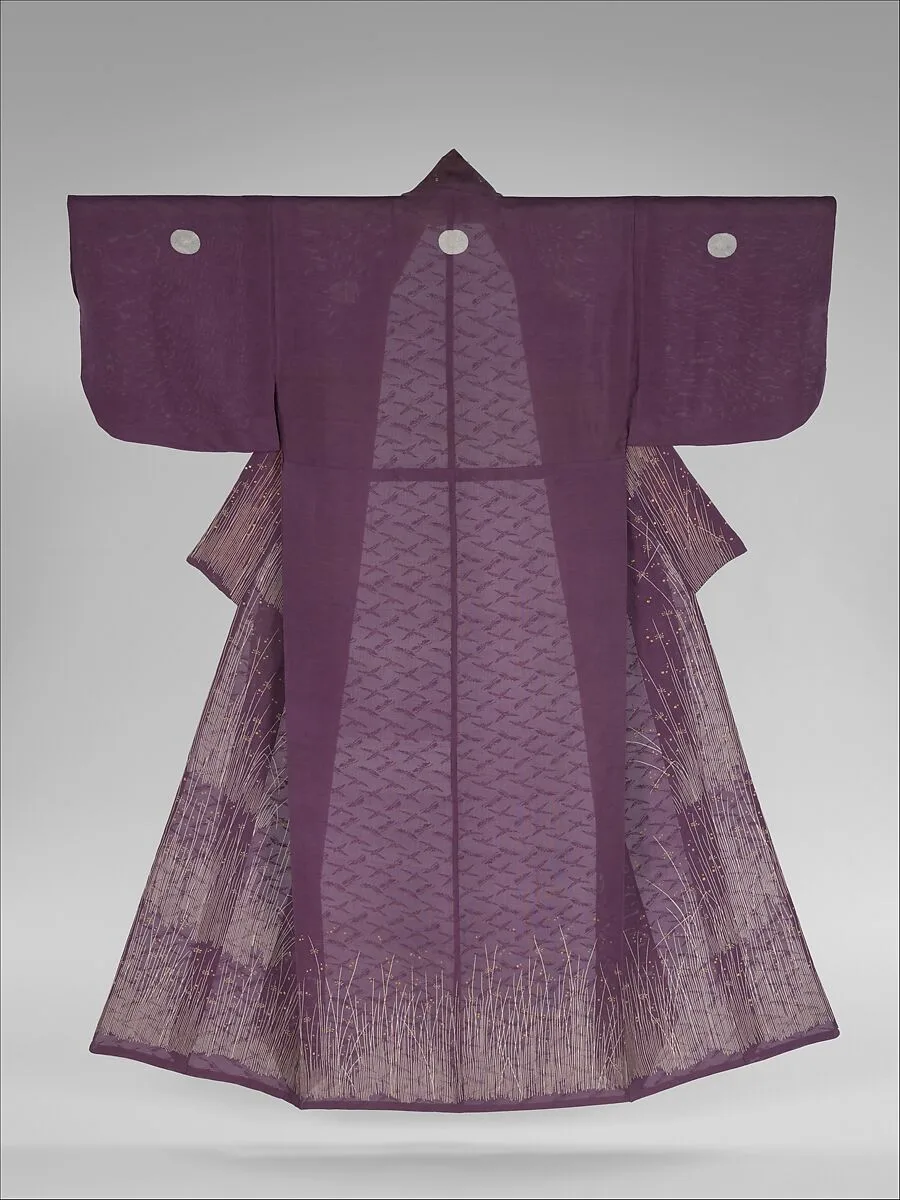
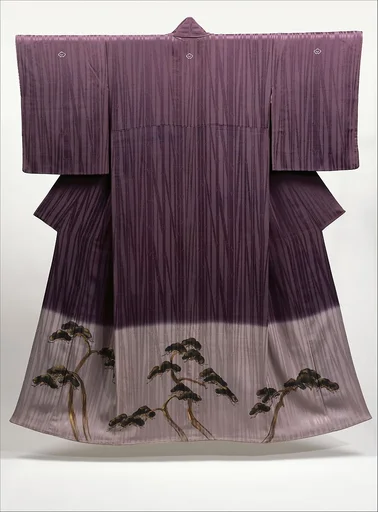
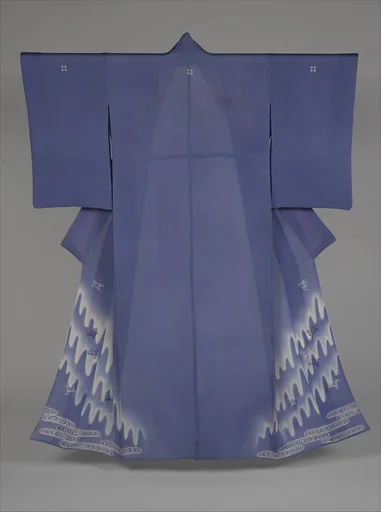
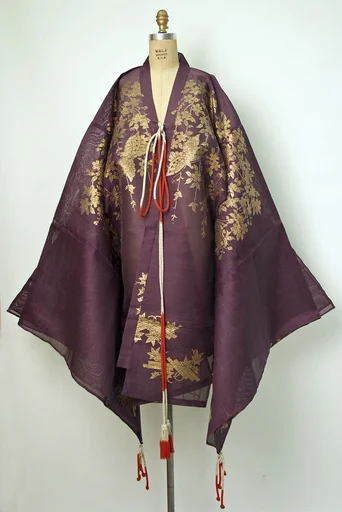
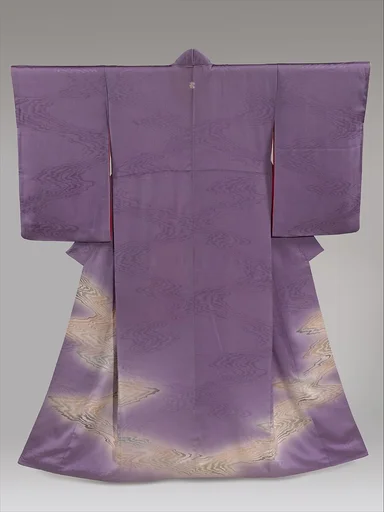
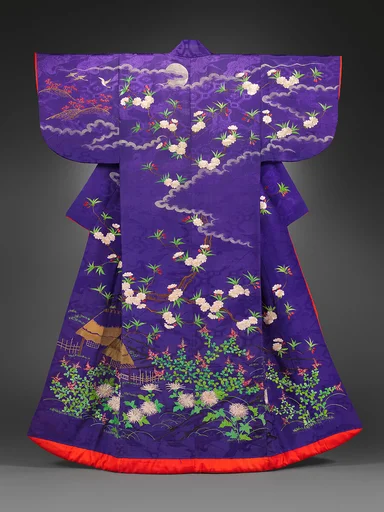
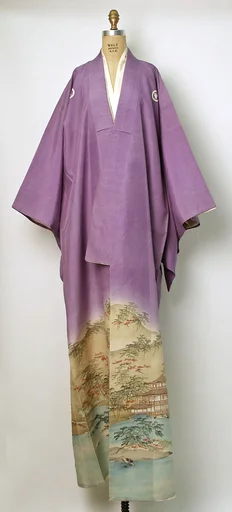
This elegant summer robe features a cooling design of grasses and drops of dew. The large circles reserved in white contain lightly painted peony crest patterns; however, from afar, the peony designs are not visible and the circles resemble the full moon above a grassy field—a classic autumnal theme. The robe displays two significant changes typical of the late Edo period. First, the focal point of the patterning has moved from the back of the garment to the front and hem edges. Second, in a departure from the brush-dyeing of the multicolored yūzen technique, which was common in the middle Edo period, a simpler procedure called shiro agari (literally, "finished in white") was used. Lines of paste were applied before the cloth was dip-dyed, and the paste resisted the dye; then, details were embroidered. The process of shiro agari resulted in the simplicity seen here—white lines representing grasses on a richly dyed purple background enhanced with touches of embroidery, such as the dewdrops couched in gold.
- Artist
- Unknown
- Date
- second half of the 18th–19th century
- Medium
- Resist-dyed plain-weave silk gauze (ro) embroidered with silk and metallic thread
- Culture
- Japan
- Department
- Asian Art
- Credit line
- Purchase, Roy R. and Marie S. Neuberger Foundation Inc. and several members of The Chairman's Council Gifts, 2000 Benefit Fund, and funds from various donors, 2001