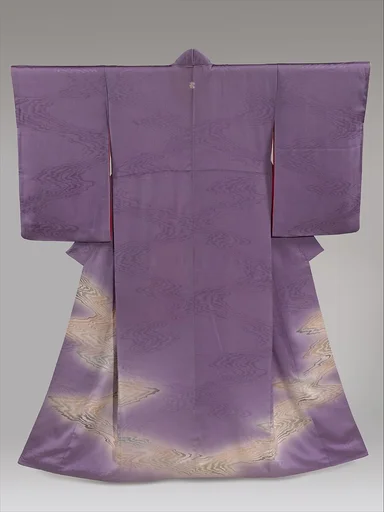
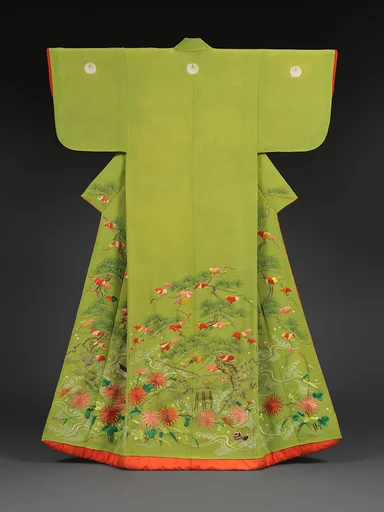
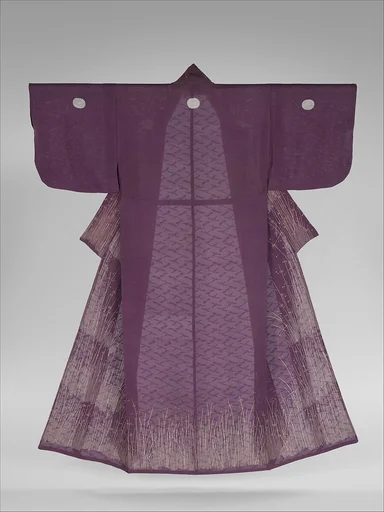
紫綸子地雲月雁桜萩菊模様小袖|Robe (kosode) with landscape and seasonal flowers
Unknown
mid-19th century · Figured silk satin with silk-and gold-thread embroidery · Asian Art
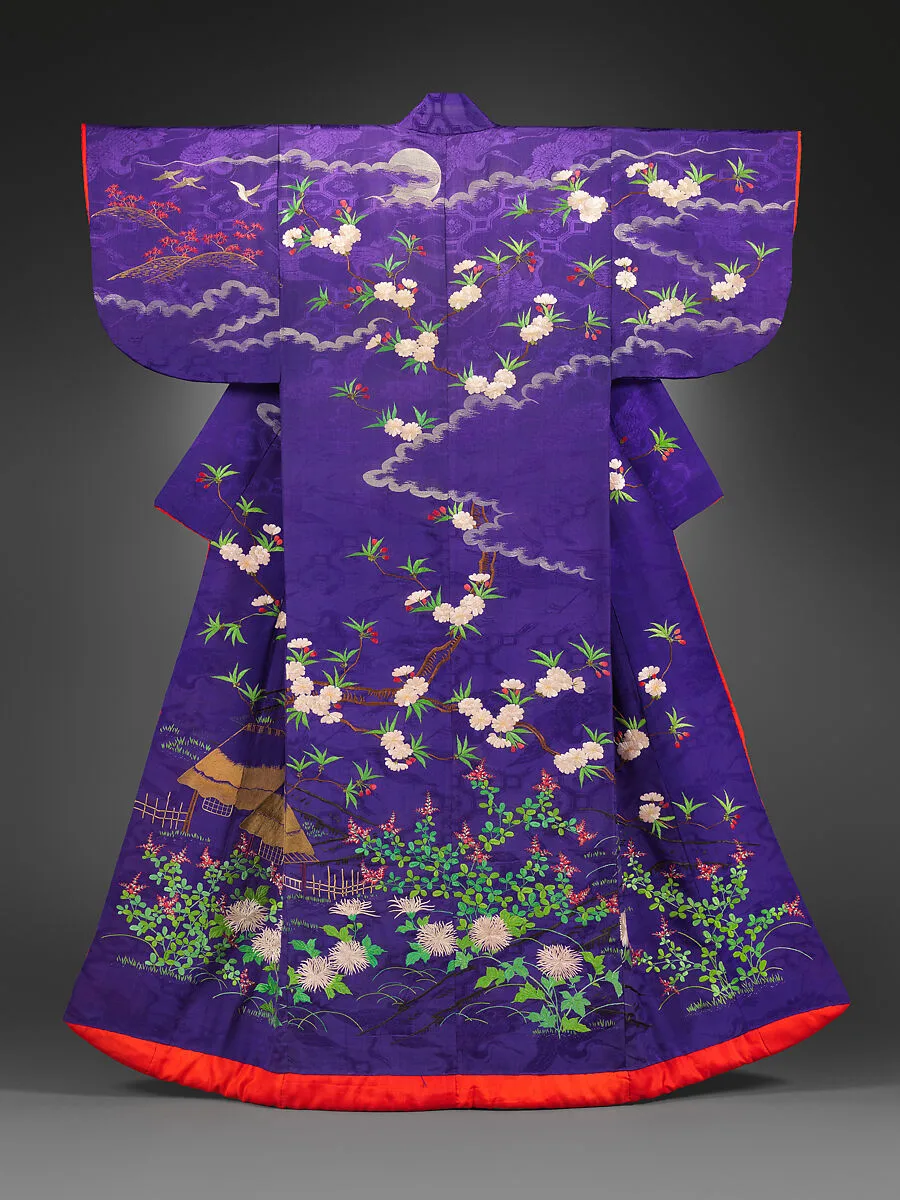
The opening of Japan’s ports to international trade in 1854, followed by the social and historical changes of the Meiji period, transformed the textile industry. From the 1880s, Empress Shōken (1849–1914) and her court promoted the adoption of Western-style fashion along with the development of domestic textile manufacture. This early Meiji-period robe was probably made for an aristocratic lady. Its purple figured satin fabric with cranes and geometric patterns was dyed with aniline pigment imported from the West. Strong purple, red, or green colors became popular, and purple in particular was reserved for high-ranking ladies. At the center of the composition is a landscape with a blossoming cherry tree, full moon, flying geese, maples and, around the hem, a thatched hut, autumn flowers, and grasses. These motifs are executed in very fine, beautifully stitched embroidery.
- Artist
- Unknown
- Date
- mid-19th century
- Medium
- Figured silk satin with silk-and gold-thread embroidery
- Culture
- Japan
- Department
- Asian Art
- Credit line
- Mary Livingston Griggs and Mary Griggs Burke Foundation Fund, 2018