寒山拾得図 (Kanzan Jittoku zu)|Hanshan and Shide
Kenkō Shōkei 賢江祥啓
mid- to late 16th century · Hanging scroll; ink on paper · Asian Art
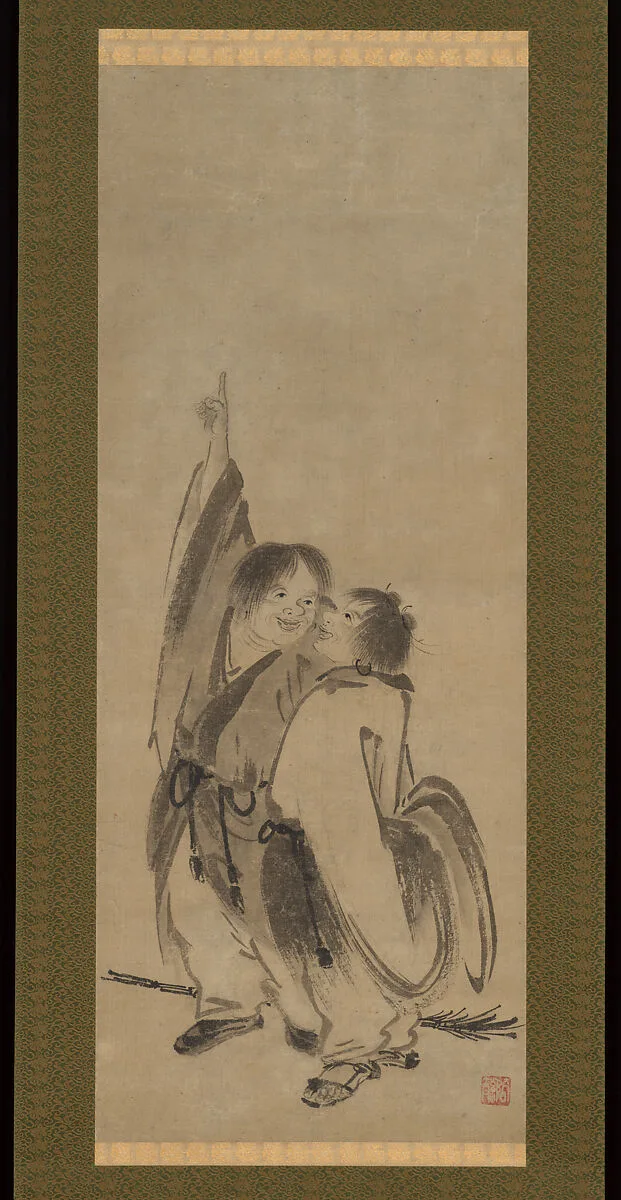
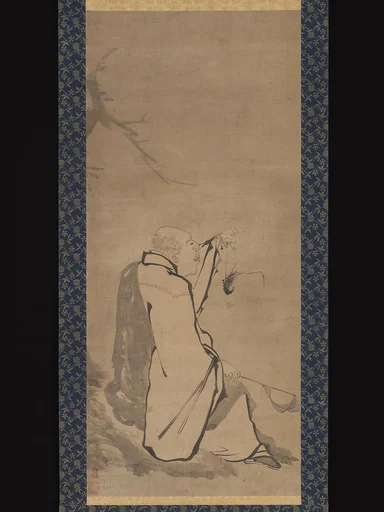
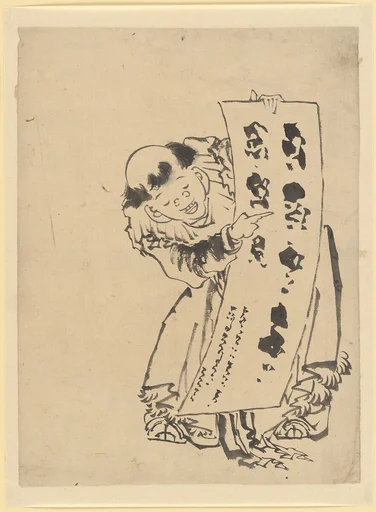
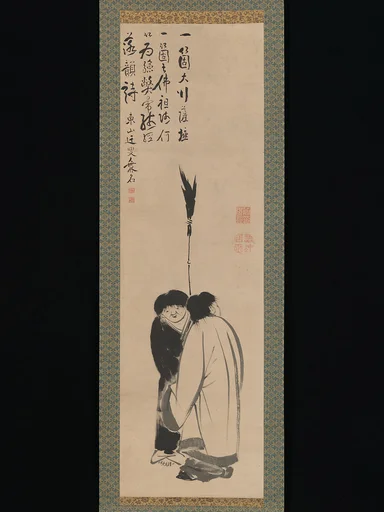
The eighth-century Chinese figures Hanshan and Shide (Kanzan and Jittoku, in Japanese) were Chan (Zen) Buddhist monks who held low-level positions at Guoqingsi, a temple on China’s sacred Mount Tiantai. Hanshan was a reclusive monk-poet, while Shide, his constant companion, is often shown carrying a broom, indicating his role as the temple’s custodian. This beloved pair of eccentric figures came to represent an iconoclastic aspect of Zen monastic practice and is among the most popular figural subjects in Japanese painting. This image of the monks shows them side by side, with Shide in front, hands held behind his back, while Hanshan behind him points to the sky and casts a knowing glance to his companion. Compositions like this one were derived from paintings held in Japanese collections that were believed to have been created by the Chinese Zen monk-painter Muqi 牧谿 (active ca. 1250–80). They proliferated in sixteenth-century eastern Japan, where they were frequently painted by followers of the master monk-painter Kenkō Shōkei 賢江祥啓 (active ca. 1478–ca. 1523). The present work is impressed with a seal reading Keison, a particularly prolific follower of Shōkei, but the seal has been determined to be forged.
- Artist
- Kenkō Shōkei 賢江祥啓
- Date
- mid- to late 16th century
- Medium
- Hanging scroll; ink on paper
- Culture
- Japan
- Department
- Asian Art
- Credit line
- Rogers Fund, 1957