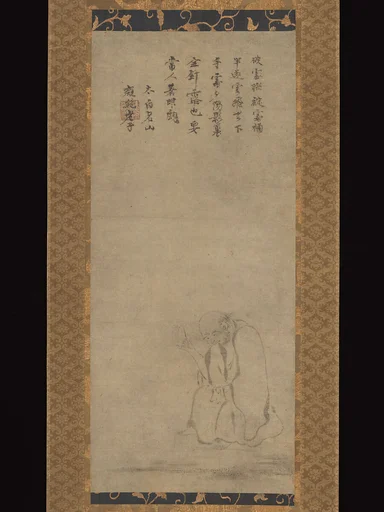
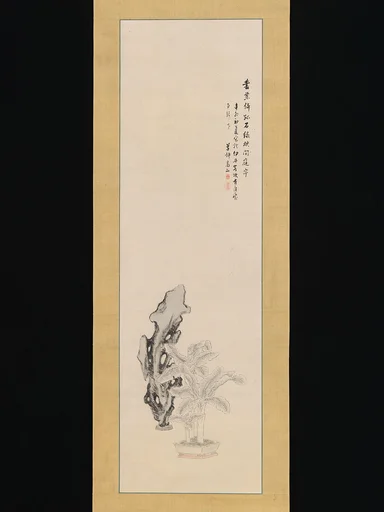
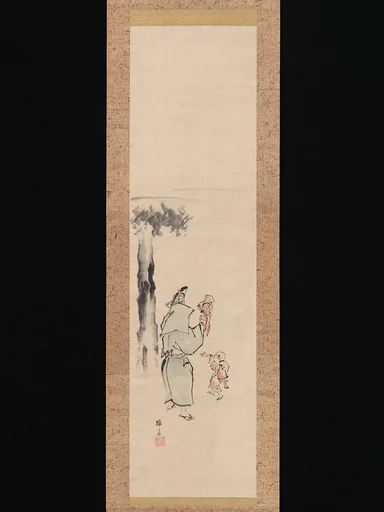
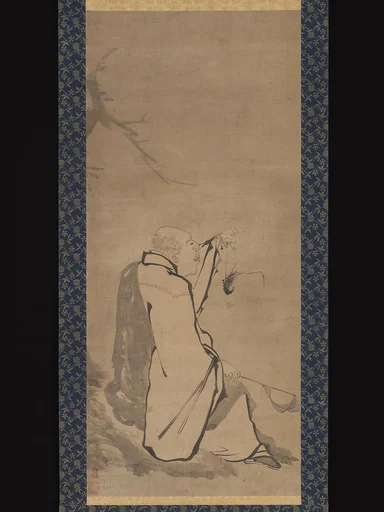
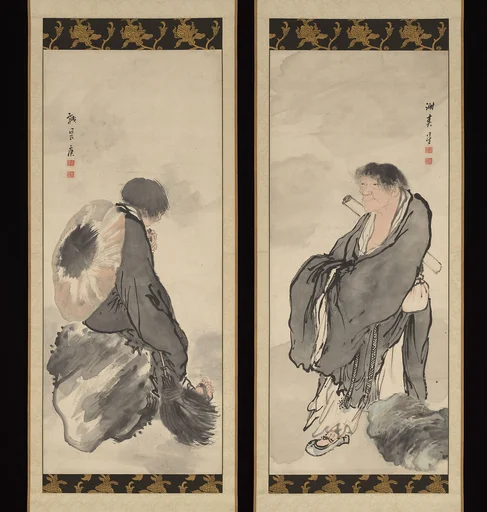
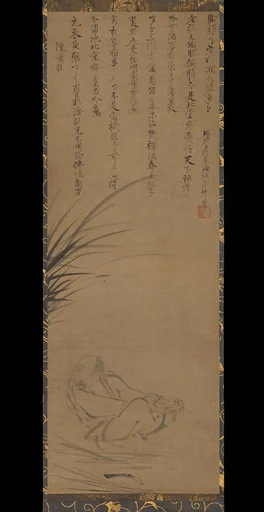
伊藤若冲筆 伝池大雅賛 寒山拾得 「 一箇大行薩埵、 一箇大佛袒師、 何以為驗 弊帚、殘經落韻詩」|Hanshan and Shide (Japanese: Kanzan and Jittoku)
Itō Jakuchū|Ike Taiga
late 18th century · Hanging scroll; ink on paper · Asian Art
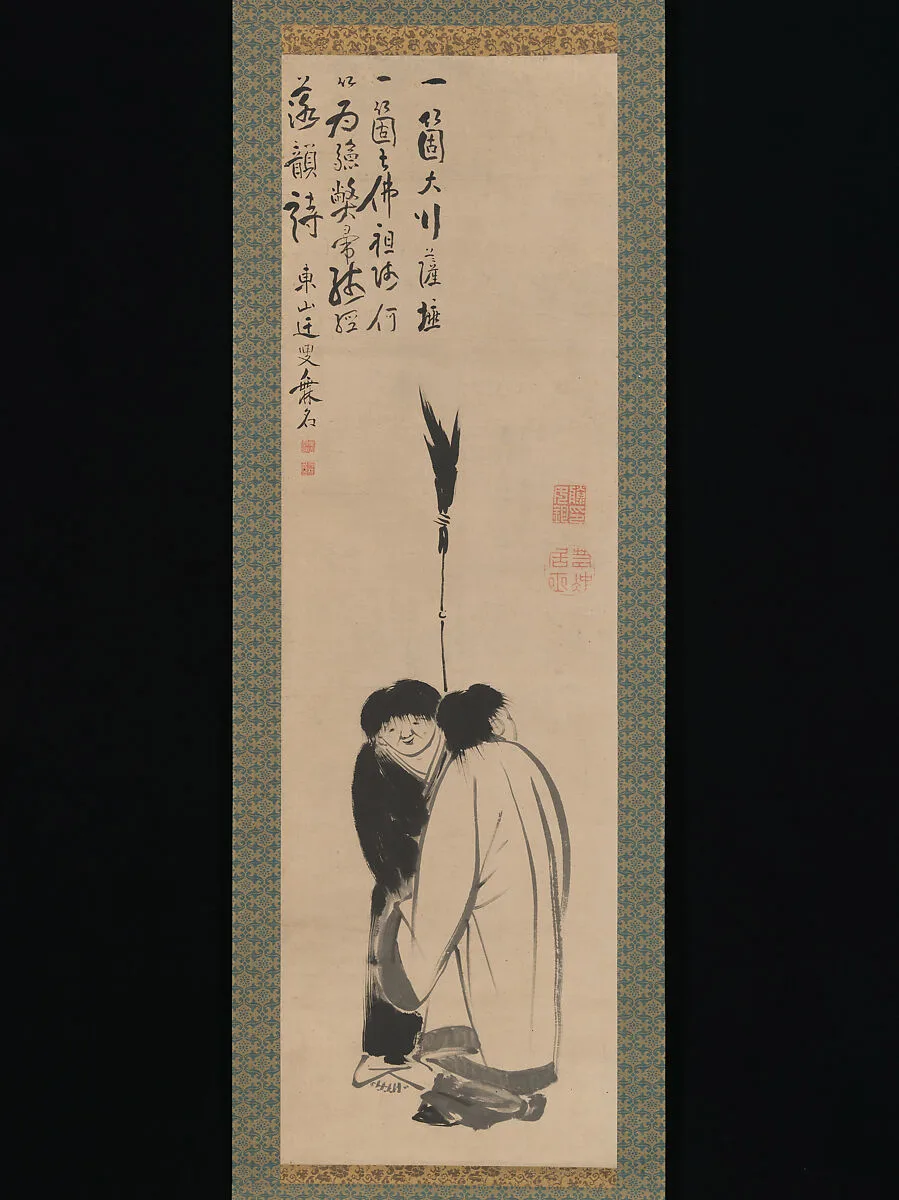
Hanshan and Shide (active late 8th–early 9th century) were Chan Buddhist monks who held low-level positions at Guoqingsi, a temple on China’s sacred Mount Tiantai. Turned away from the viewer here, Hanshan (“Cold Mountain”) was a reclusive monk-poet. Shide, his constant companion, carries a broom indicating his role as the temple’s janitor. The pair of figures came to represent an iconoclastic aspect of Chan (Japanese: Zen) monastic practice and was a popular theme in Japanese painting. In the Buddhist tradition, Hanshan and Shide were also honored as emanations of the bodhisattvas Monju and Fugen (Sanskrit: Manjushri and Samantabhadra), representing the virtues of wisdom and compassion. The inscription refers to this association: “One is the Bodhisattva of the Great Path. The other the Patriarch of the Great Buddha. What evidence is there? A broken broom, a tattered scripture, and unrhymed verse” (trans. Aaron Rio).
- Artist
- Itō Jakuchū|Ike Taiga
- Date
- late 18th century
- Medium
- Hanging scroll; ink on paper
- Culture
- Japan
- Department
- Asian Art
- Credit line
- Mary Griggs Burke Collection, Gift of the Mary and Jackson Burke Foundation, 2015