雲谷等顔筆 蜆子和尚図|Priest Xianzi
Unkoku Tōgan
second half 16th century–early 17th century · Hanging scroll; ink on silk · Asian Art
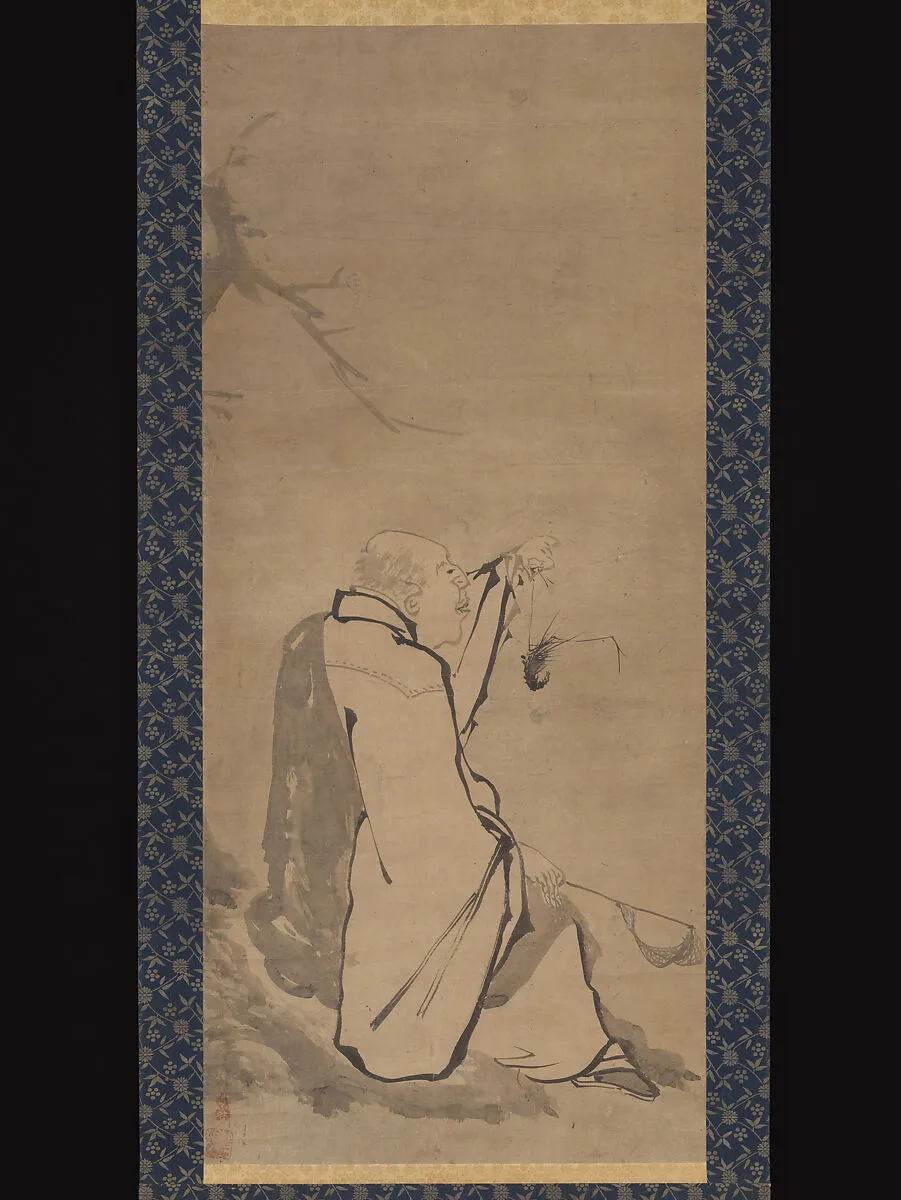
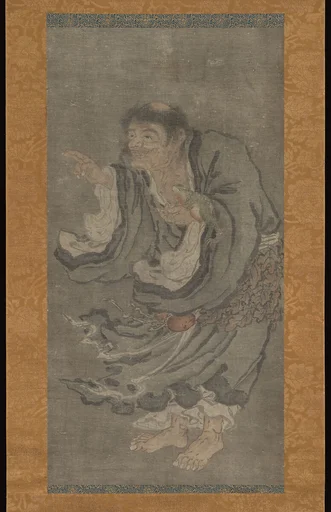
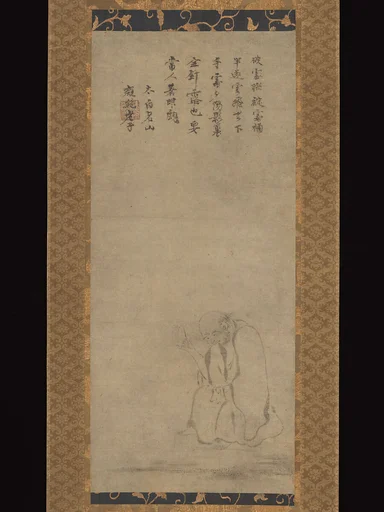
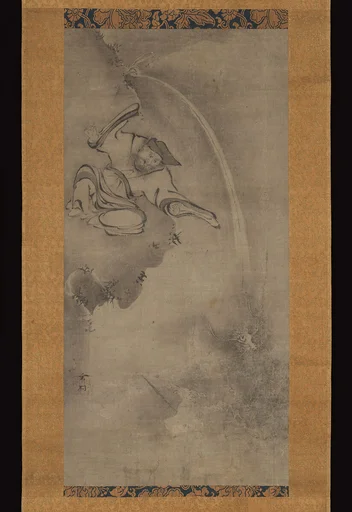
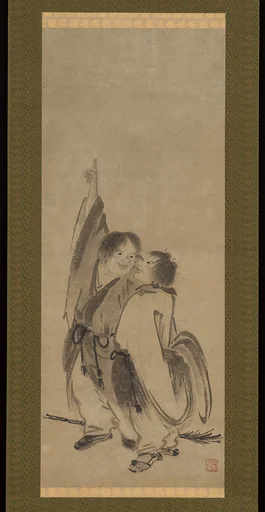
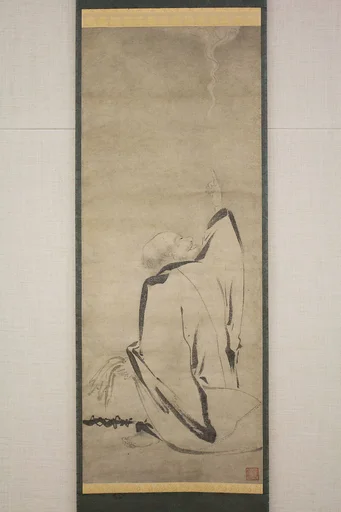
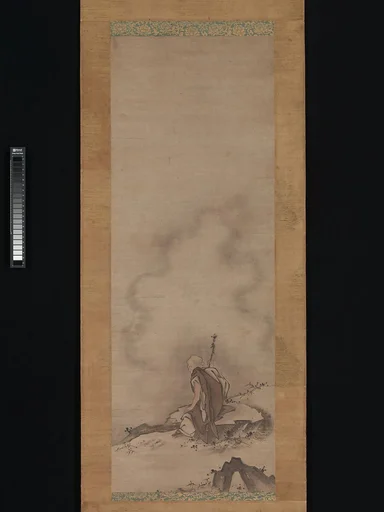
The seated figure of a Buddhist monk appears to be contemplating the large shrimp or crayfish he grasps in one raised hand while his other, holding a fishing net, rests on his knee. He is Kensu (Chinese: Xianzi), a semi-legendary eccentric priest of Tang dynasty China, who spent much of his time wandering along riverbanks, eating crayfish and clams. Kensu allegedly achieved enlightenment while catching a shrimp, in spite of Buddhist monastic strictures to maintain a vegetarian diet. The shrimp brandished by Kensu, and his fishing net, are attributes specifically associated with him, as are the ragged clothes and beatific expression. Tōgan was one of the great ink painting masters of the late sixteenth-early seventeenth century and founder of the Unkoku school. His mature work was strongly influenced by the style of the Muromachi period priest-painter Sesshū Tōyō (1420–1506). Tōgan’s subject matter was often drawn from Zen or Chinese themes, and he worked primarily in ink although, like other artists of the Momoyama period, he sometimes created screen paintings with gold leaf backgrounds.
- Artist
- Unkoku Tōgan
- Date
- second half 16th century–early 17th century
- Medium
- Hanging scroll; ink on silk
- Culture
- Japan
- Department
- Asian Art
- Credit line
- Mary and Cheney Cowles Collection, Gift of Mary and Cheney Cowles, 2019