Untitled
Unknown
19th century · Wool, cotton, silk, metallic thread, paper · Asian Art
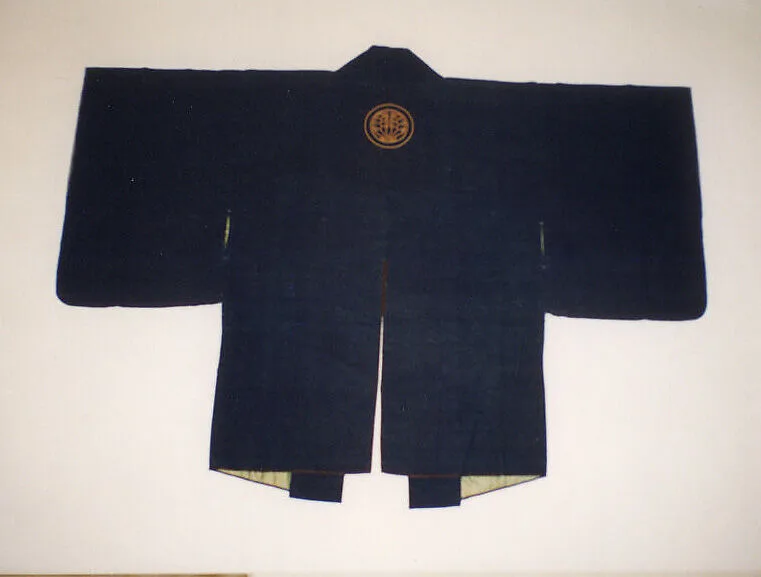
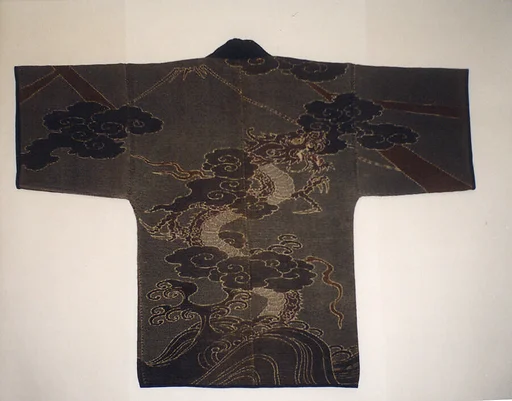
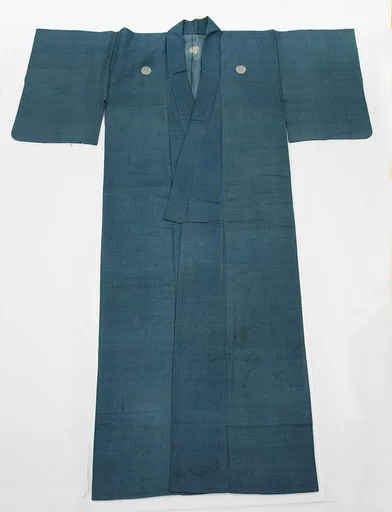
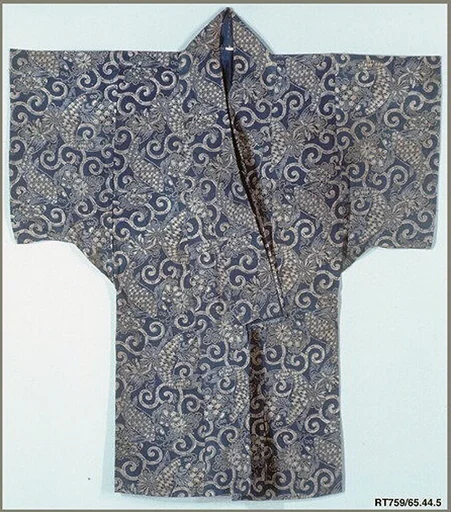
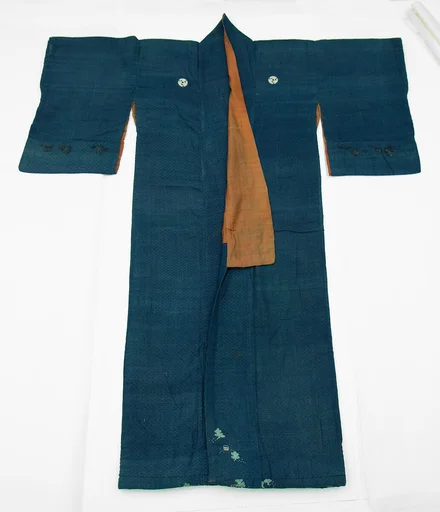
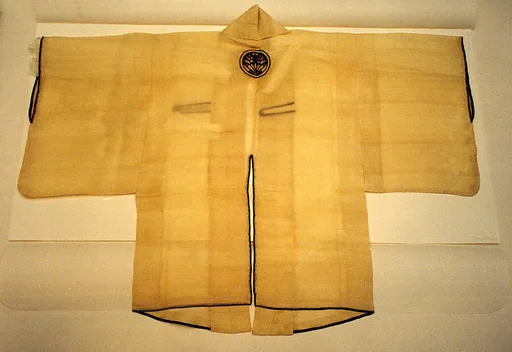
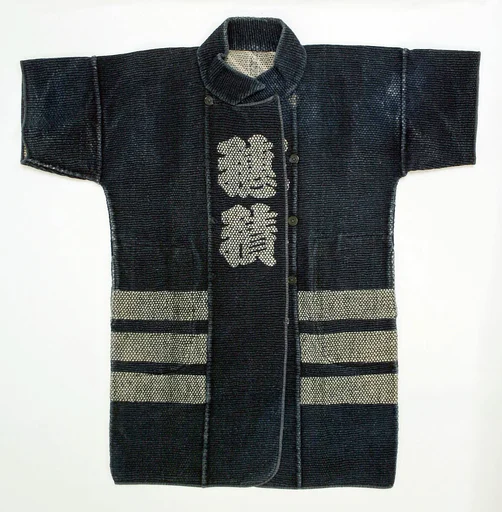
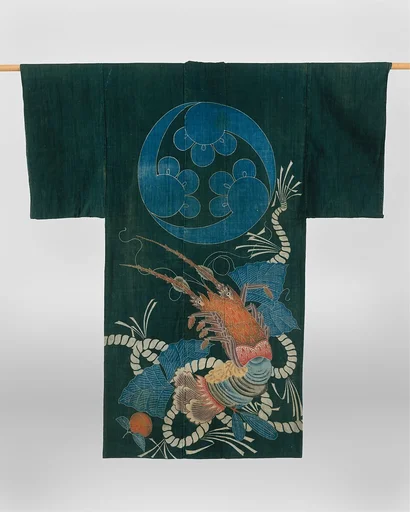
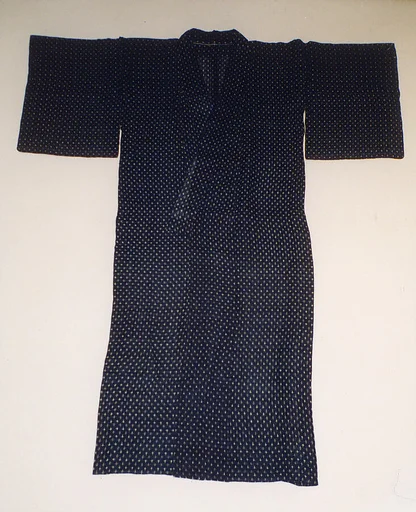
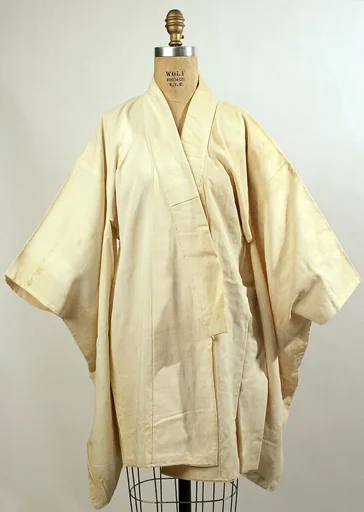
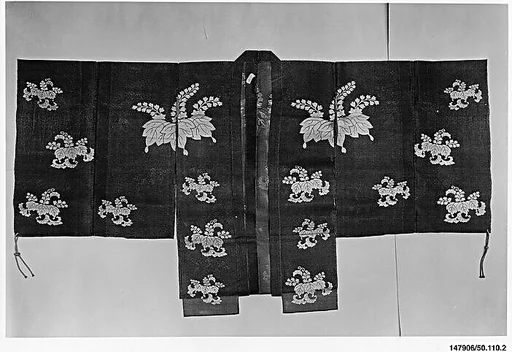
In the course of the Edo period, the commoners' fire brigades took on more and more of the responsibility and expense of fighting the fires that all too often turned Edo into an inferno. The samurai firefighters' focus was to protect Edo castle. This costume is made from a blend of cotton and wool. Wool was expensive and not commonly worn in Japan before the Meiji period (1868–1912); however, it can be seen in both battle jackets (jinbaori) and firefighting garments, including capelike hoods, for high-ranking samurai of the Edo period. Wool has self-extinguishing properties that help to protect the wearer from stray sparks and make it a good choice for firefighters' clothing. The crest (mon) seen here incorporates the Japanese ginger plant (myoga), as did the mon of more than seventy families during the Edo period. The particular family to which this version of the myoga crest belongs has not been identified.
- Artist
- Unknown
- Date
- 19th century
- Medium
- Wool, cotton, silk, metallic thread, paper
- Culture
- Japan
- Department
- Asian Art
- Credit line
- Gift of John B. Elliott through the Mercer Trust, 1999