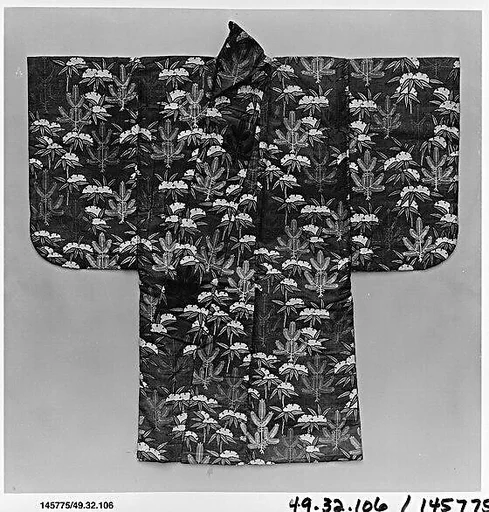
紫地桐模様長絹|Noh Costume (Chōken) with Paulownia
Unknown
18th century · Silk gauze (ro) brocaded with silk and metallic thread · Asian Art
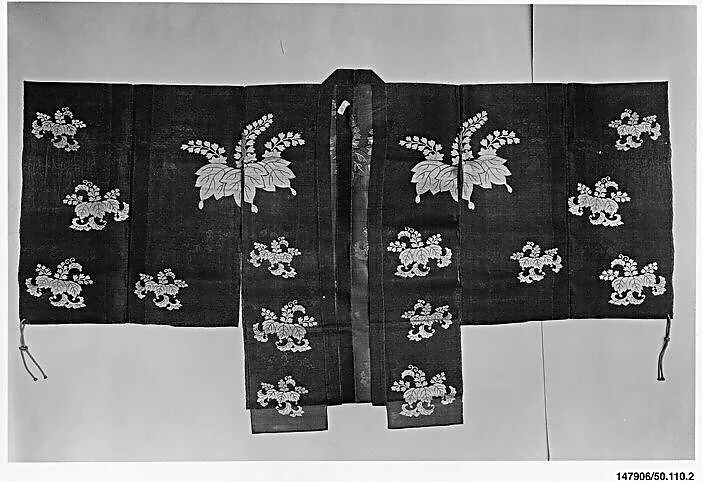
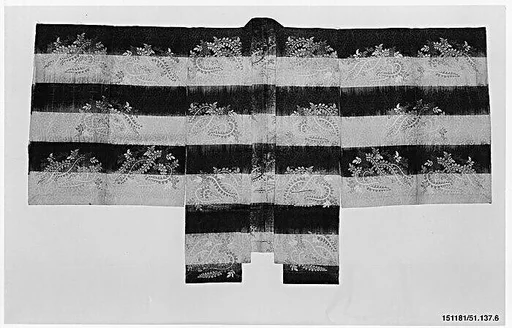
Probably originally a reference to a type of silk, chōken (literally “long silk”) were garments worn during the Muromachi period (1392–1573) by young boys of elite samurai families. High-ranking samurai gifted Noh actors with elegant chōken hitatare (long-sleeved jacket paired with a trouser-skirt) to use as Noh costumes; gradually the term came to mean Noh robes. Typically, chōken are made of silk gauze patterned with gold supplementary wefts. This robe is decorated with two sizes of paulownia flower in gold, white, peach, orange, and green on a purple gauze ground. Chōken were often used in dances by male actors playing elegant female characters, or as costumes for gentle male characters.
- Artist
- Unknown
- Date
- 18th century
- Medium
- Silk gauze (ro) brocaded with silk and metallic thread
- Culture
- Japan
- Department
- Asian Art
- Credit line
- Gift of Mrs. Howard Mansfield, 1950