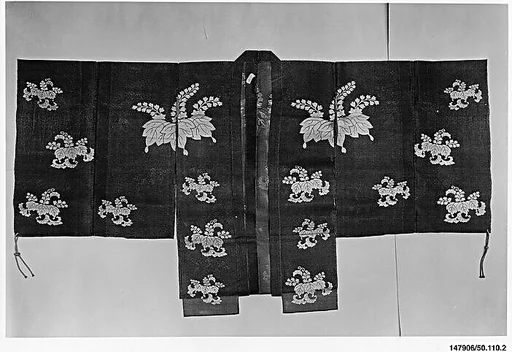
紅地若松雪持竹模様唐織|Noh Robe (Karaori) with Pattern of Young Pines and Snow-Covered Bamboo on a Red Ground
Unknown
19th century · Silk twill weave with supplementary weft patterning (karaori) · Asian Art
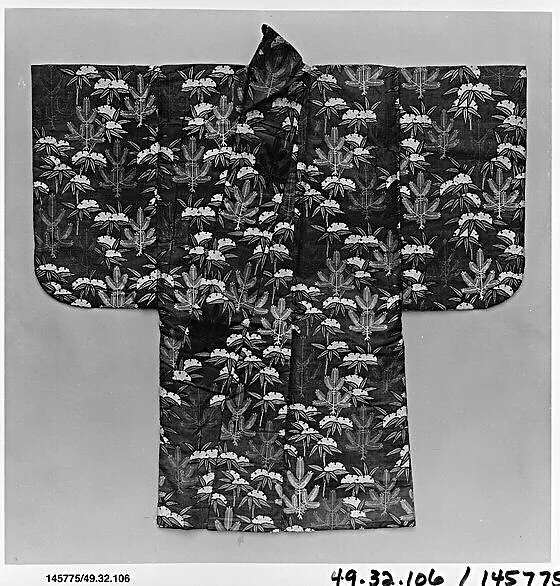
Green in the depth of winter, pine and bamboo are emblematic of that season and of long life. Together with the plum (not rendered here but perhaps suggested by the deep red color of the robe), these plants traditionally augur a felicitous new year. Pillowy soft snow mounded on branches was a common textile pattern of the Momoyama period (1573–1615), but in the Edo period snow usually took the more stylized form of the yukiwa (literally, "snow circle") motifs seen on the bamboo leaves on this robe. The small size of this Noh costume makes it appropriate for kokata (child actors), who played the roles of children and exalted personages such as the emperor.
- Artist
- Unknown
- Date
- 19th century
- Medium
- Silk twill weave with supplementary weft patterning (karaori)
- Culture
- Japan
- Department
- Asian Art
- Credit line
- Anonymous Gift, 1949