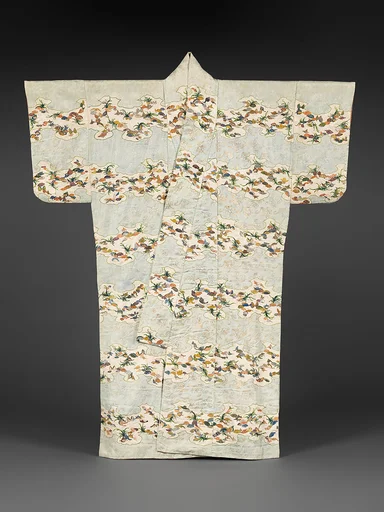
浅葱絹縮地葵桜水辺に鵜飼い模様単衣|Summer Robe (Hito-e) with Cormorant-Fishing Scene
Unknown
late 18th–early 19th century · Thin crepe silk (chijimi) with paste-resist dyeing, stencil-dyed dots (suri-bitta), hand-painted details, silk embroidery, and couched gold thread · Asian Art
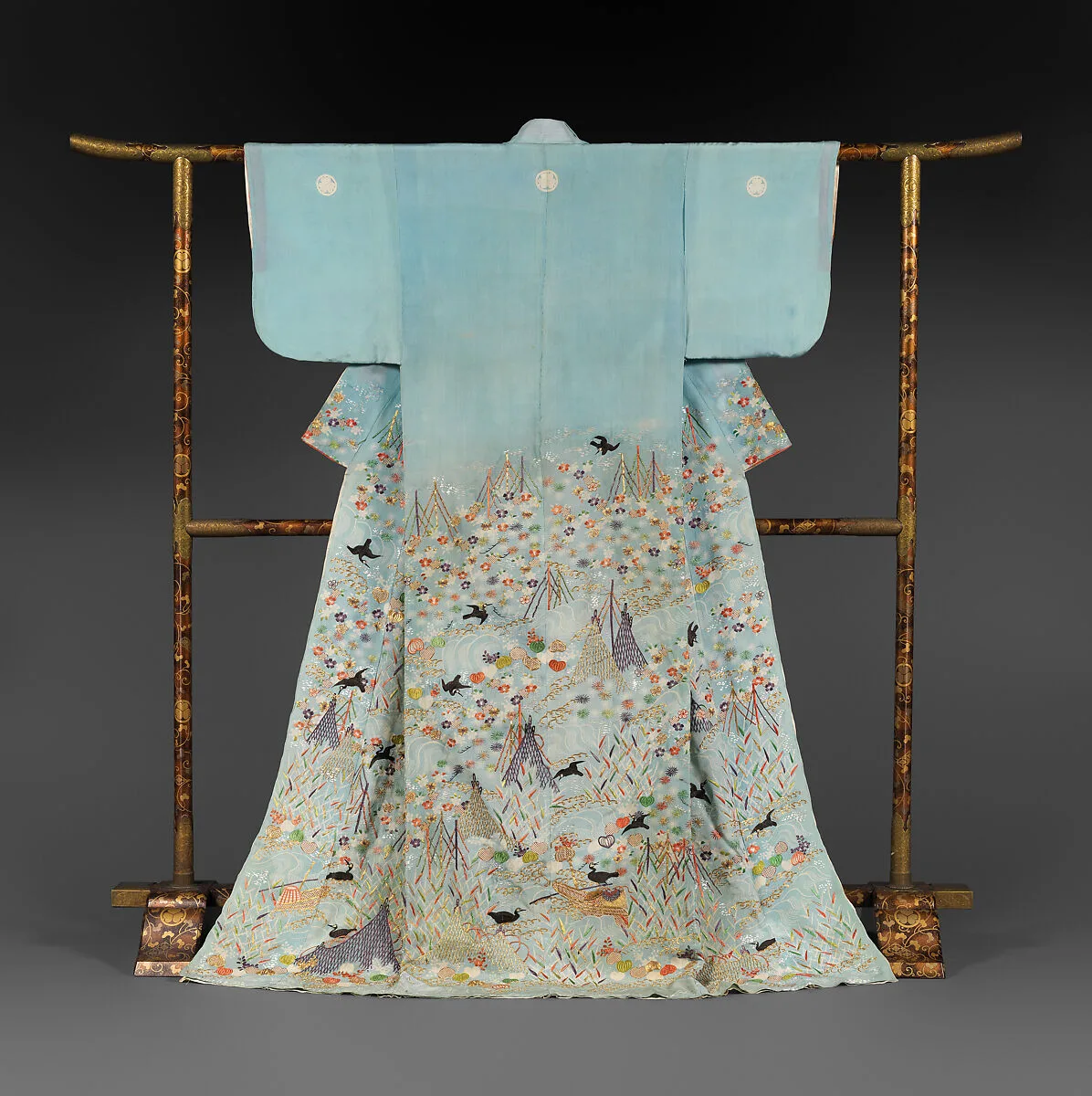
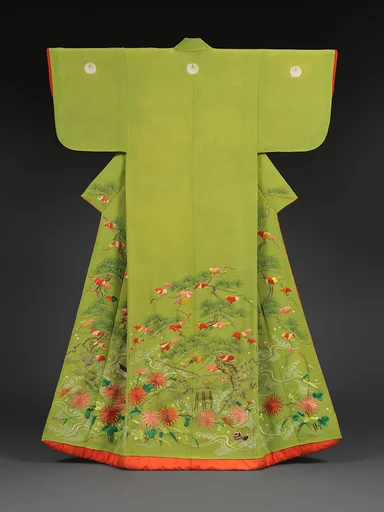
Unlined summer robes made from fine crepe silk were worn as the weather turned warm and humid, beginning in May. Here cormorants swim and fly among reeds and drying fishing nets; a boat with a fisherman’s straw raincoat and hat is also depicted. Meticulous goshodoki, or courtly style decoration, typically combined seasonal elements such as the robe’s scattered wild ginger leaves and cherry blossoms and its water scene with literary motifs recognizable to a well-educated upper-class woman. The fishing boat scene is itself a reference to the Noh play The Cormorant Fisher (Ukai). Crests of wild ginger leaves across the shoulders indicate that the owner was a princess from the Tokugawa shogun family. While the robe’s careful composition and delicate embroidery reflect the expensive tastes of a high-ranking samurai woman, simple stencil-dyed dots stand in for labor-intensive “fawn spot” tie-dye (kanoko shibori), a technique outlawed at the time for signifying personal extravagance.
- Artist
- Unknown
- Date
- late 18th–early 19th century
- Medium
- Thin crepe silk (chijimi) with paste-resist dyeing, stencil-dyed dots (suri-bitta), hand-painted details, silk embroidery, and couched gold thread
- Culture
- Japan
- Department
- Asian Art
- Credit line
- Gift of John C. Weber, 2019