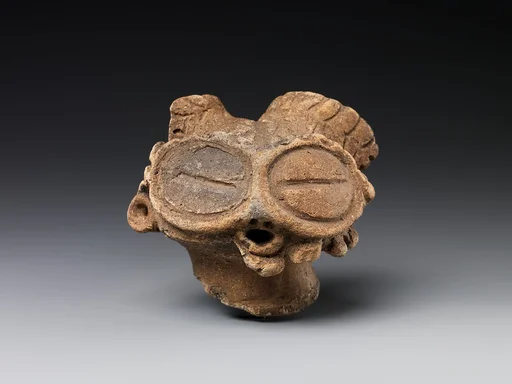
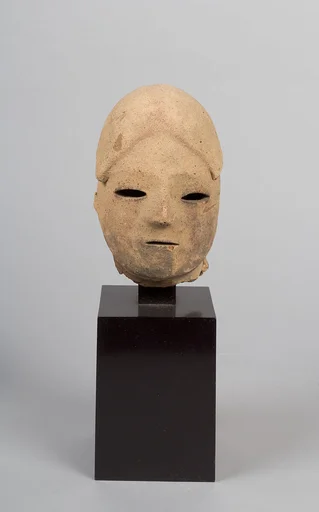
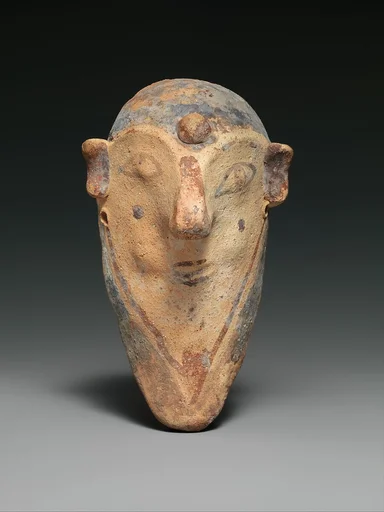
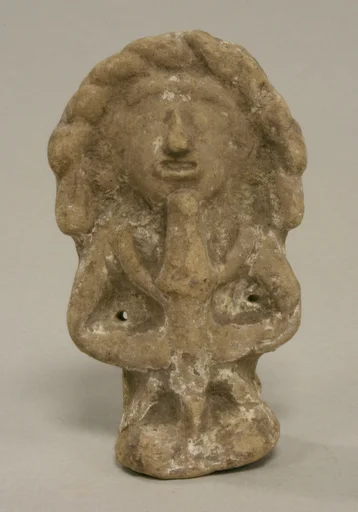
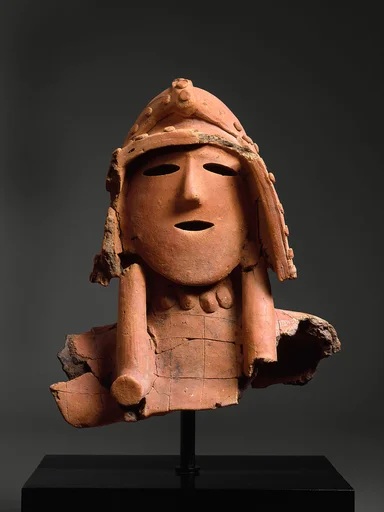
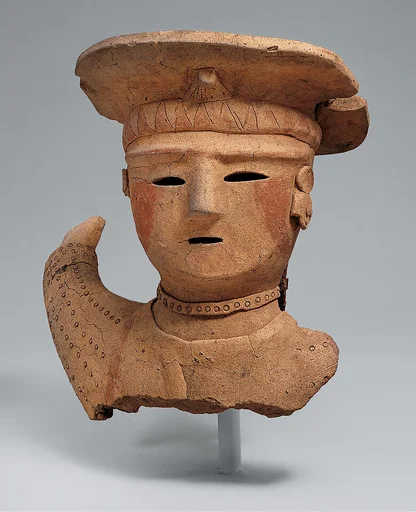
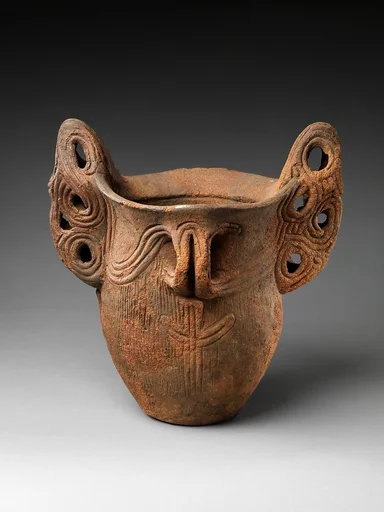
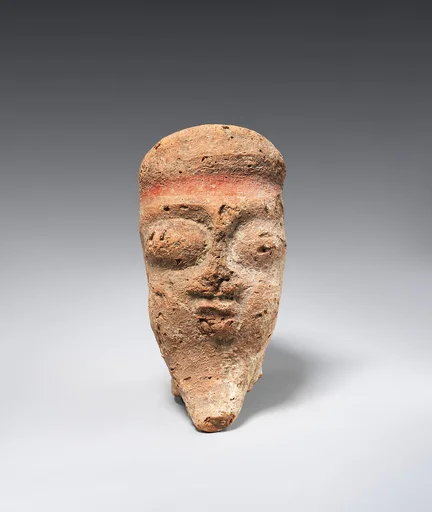
土偶|Head of a Clay Figure (Dogū)
Unknown
Date unknown · Earthenware with incised decoration (Katsusaka type) · Asian Art
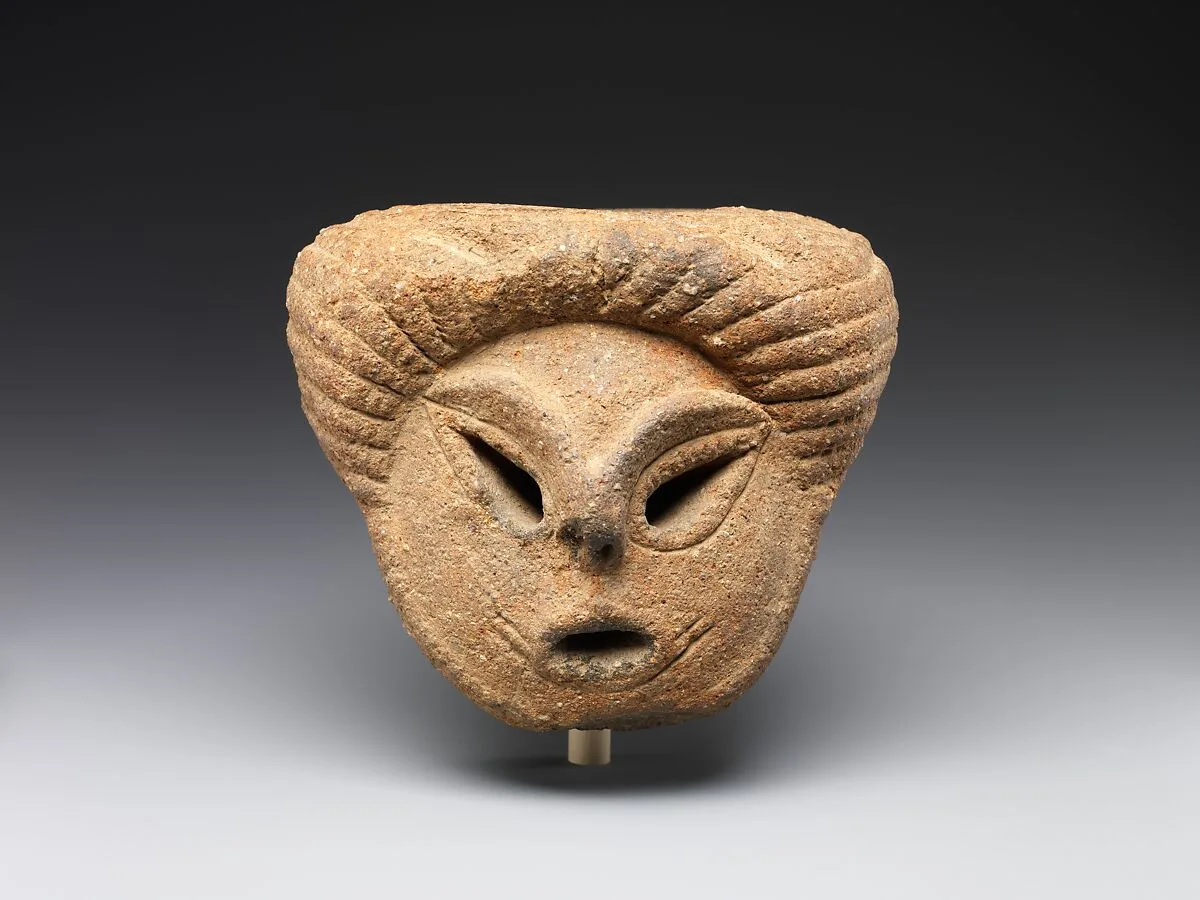
The Katsusaka style, exemplified by this head which was once attached to a larger figure, represents a transitional point in the development of dogū, when the flattened shapes of the Early Jōmon period dogū were being modified with limbs and coming closer in shape to the famous standing dogū of the Middle and Late Jōmon. The vast majority of dogū are not found intact, most having their heads or limbs removed or bodies broken, as in the case of this object, which was probably attached to a larger figure in the past. It is unknown exactly why dogū were broken before being discarded, but some theories contend that the dogū represented a kind of “earth mother” figure, and that breaking the dogū propagated the spirit of the “earth mother” in order to bring fertility to the land.
- Artist
- Unknown
- Date
- Date unknown
- Medium
- Earthenware with incised decoration (Katsusaka type)
- Culture
- Japan
- Department
- Asian Art
- Credit line
- The Harry G. C. Packard Collection of Asian Art, Gift of Harry G. C. Packard, and Purchase, Fletcher, Rogers, Harris Brisbane Dick, and Louis V. Bell Funds, Joseph Pulitzer Bequest, and The Annenberg Fund Inc. Gift, 1975