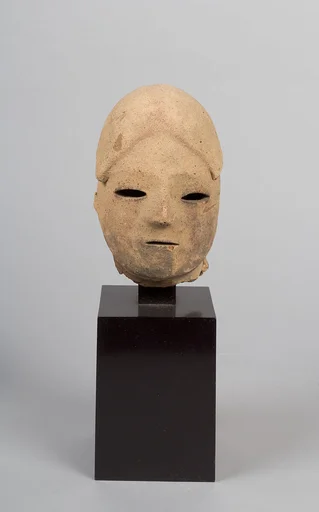
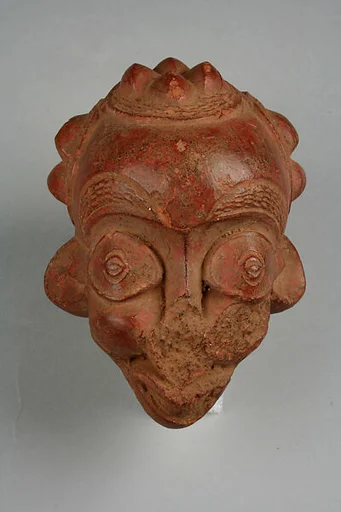
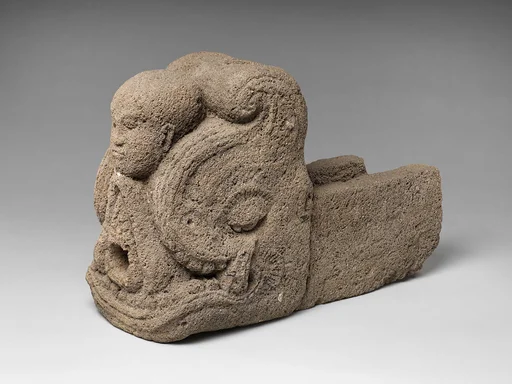
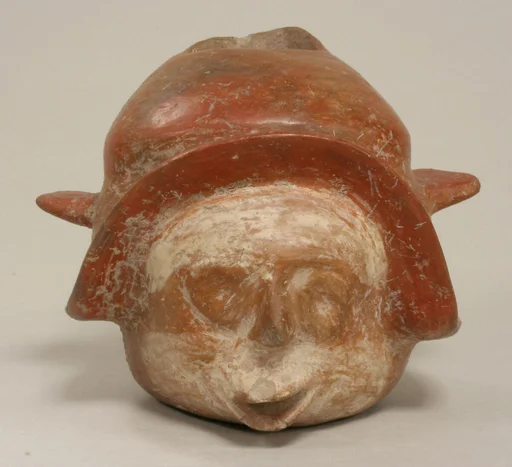
土偶|Head of a Figure (Dogū)
Unknown
Date unknown · Earthenware with incised and cord-marked designs · Asian Art
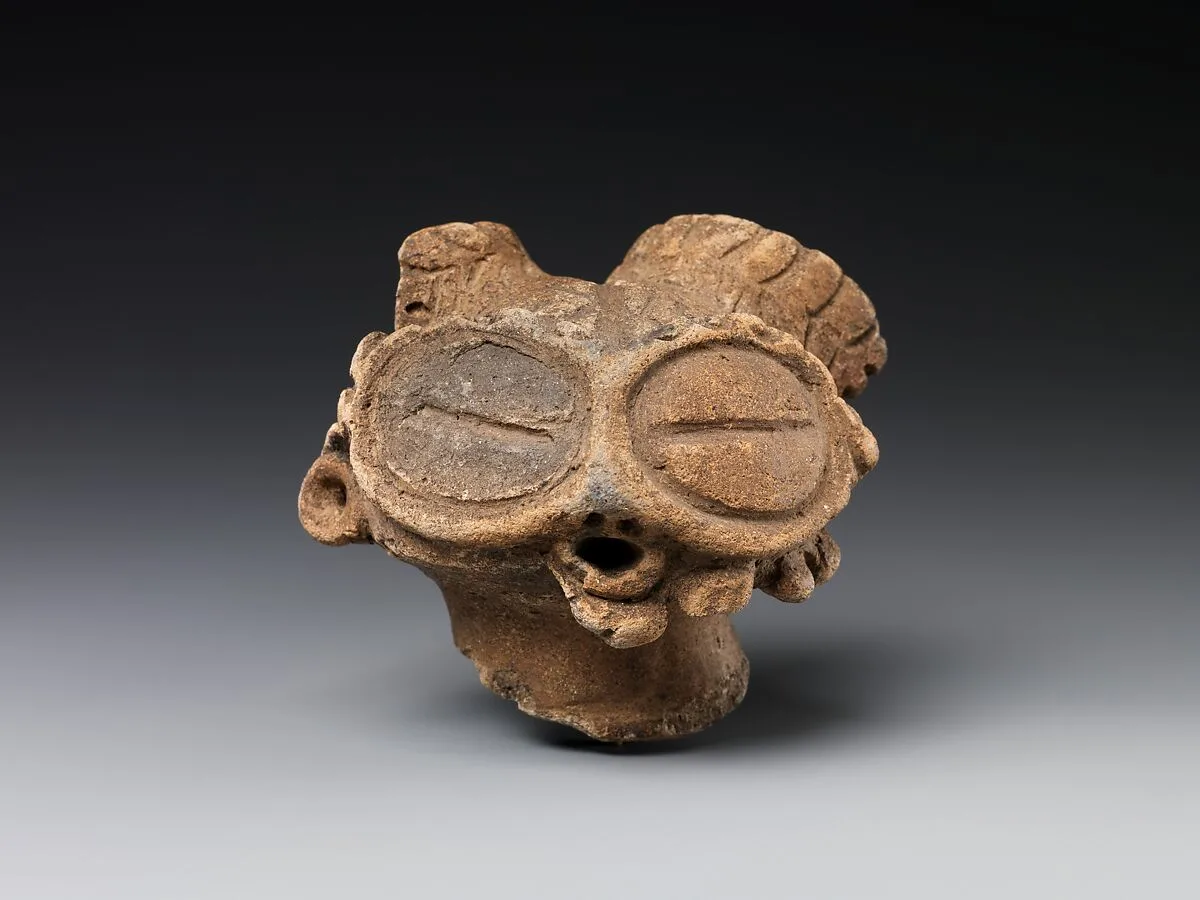
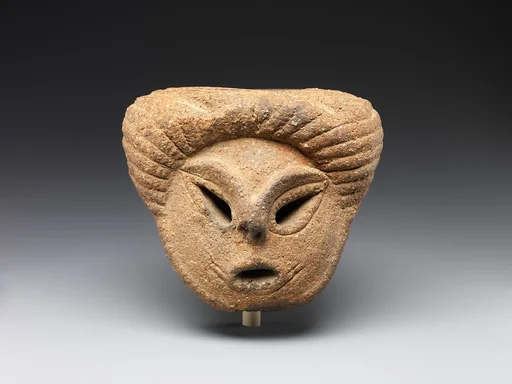
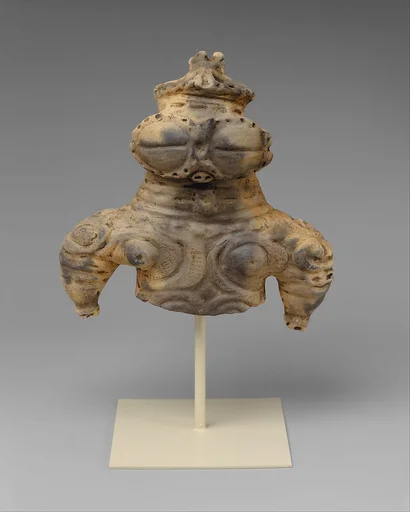
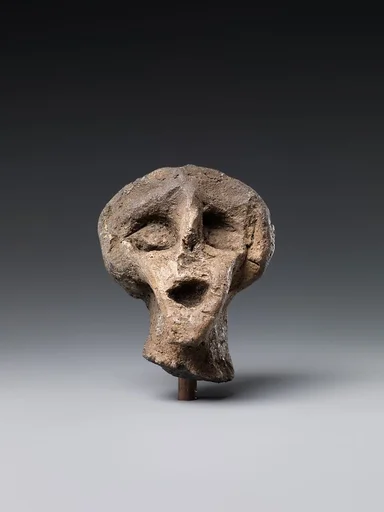
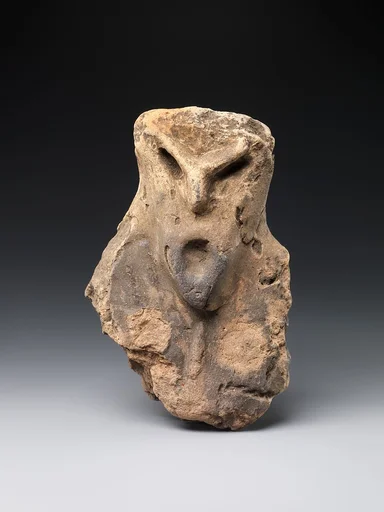
The bulging eyes of this head, which was once attached to a complete dogū clay figure, are characteristic of the Kamegaoka style of Jōmon pottery from the Final Period of Jōmon history. Created in northern Japan’s Tōhoku region, the head was probably ritually removed from the body of the figure to serve a religious purpose. The distinctive eyes of this figure, which crowd out the mouth, nose, and ears, were once thought by scholars to represent a kind of snow goggles common to other communities of the far north, such as the indigenous peoples of Siberia and the Inuit of Canada, but modern scholarship tends to believe that they reflect the Jōmon people’s emphasis on the eyes, which may have a kind of religious significance.
- Artist
- Unknown
- Date
- Date unknown
- Medium
- Earthenware with incised and cord-marked designs
- Culture
- Japan
- Department
- Asian Art
- Credit line
- The Harry G. C. Packard Collection of Asian Art, Gift of Harry G. C. Packard, and Purchase, Fletcher, Rogers, Harris Brisbane Dick, and Louis V. Bell Funds, Joseph Pulitzer Bequest, and The Annenberg Fund Inc. Gift, 1975