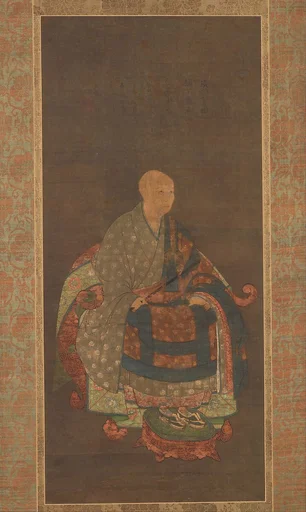
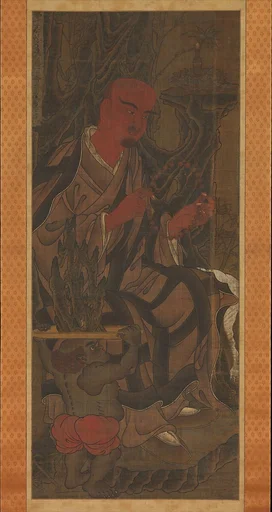
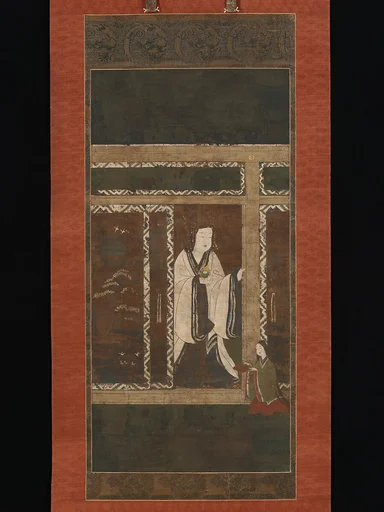
伝春日基光筆 玄奘三蔵像|Portrait of Xuanzang (Genjō) with Attendant
Kasuga Motomitsu
14th century · Hanging scroll; ink and color on silk · Asian Art
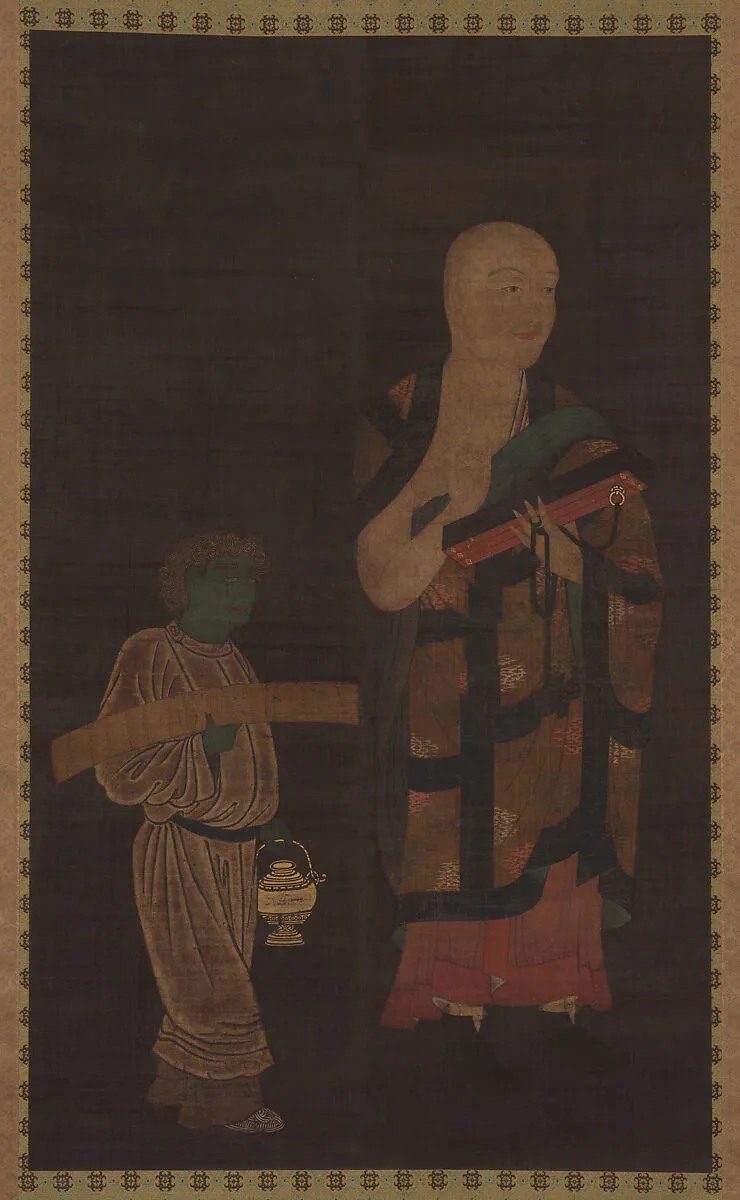
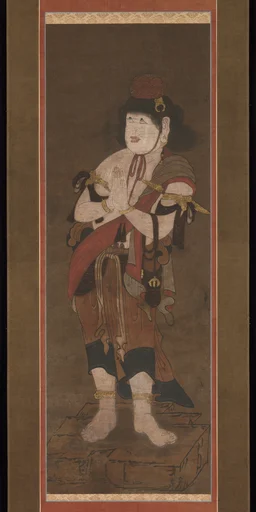
The Chinese monk Xuanzang (602–664), known as Genjō in Japan, translated a major body of Buddhist scripture from Sanskrit into Chinese. In Japan, he was honored as patriarch of the Hossō (Chinese: Faxiang) sect, and this painting would have been displayed by its monastic owners to validate the lineage and authority of their temple. Both Xuanzang’s mission to transmit the teachings and the painting that authenticates this transmission testify to the importance of lineage in Buddhist sects. Lineage is equally significant in the transmission of art and craft techniques in Japan, demonstrating a kinship between religious and artistic paradigms. Here, Xuanzang is depicted with an Indian acolyte, a reference to his travels to India in search of Buddhist teachings. The monk’s features are portrayed in taut “iron wire” lines derived from a Tang dynasty (618–907) representational mode used to connote venerable status.
- Artist
- Kasuga Motomitsu
- Date
- 14th century
- Medium
- Hanging scroll; ink and color on silk
- Culture
- Japan
- Department
- Asian Art
- Credit line
- H. O. Havemeyer Collection, Gift of Horace Havemeyer, 1929