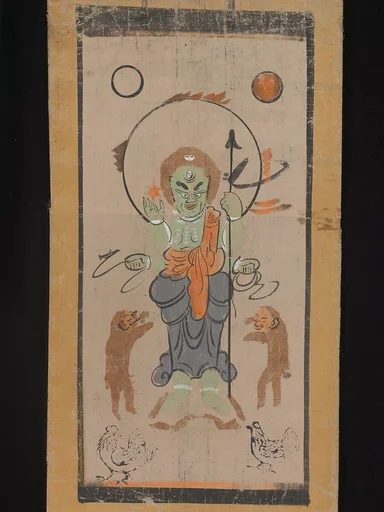
青面金剛夜叉図大津絵|Ōtsu-e of Shōmen Kongōyasha (Vajrayaksha)
Unknown
probably late 16th–early 17th century · Hanging scroll; ink, color, and gold on paper · Asian Art
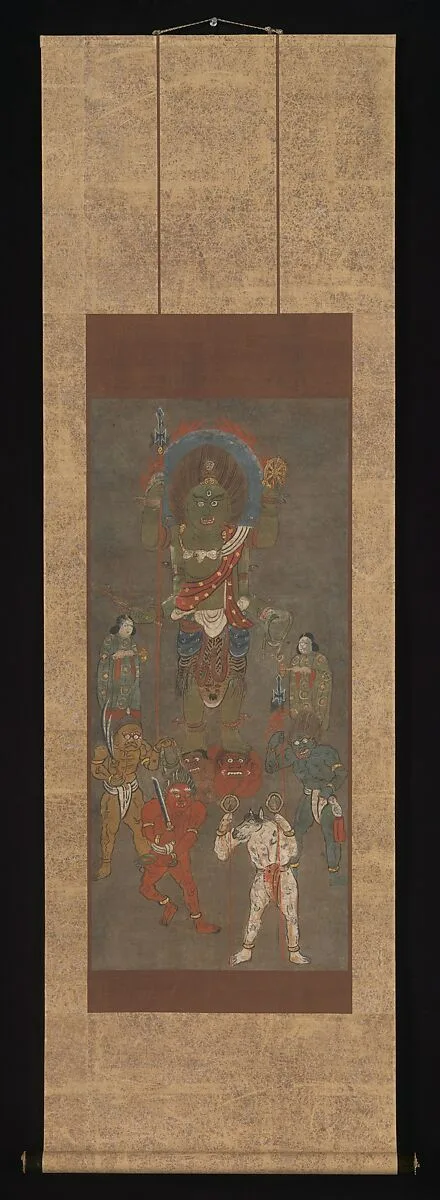
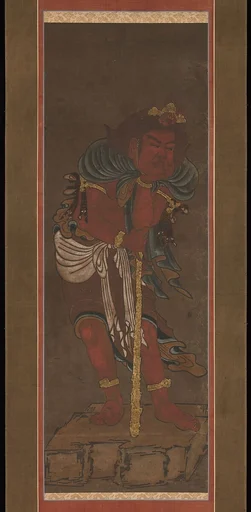
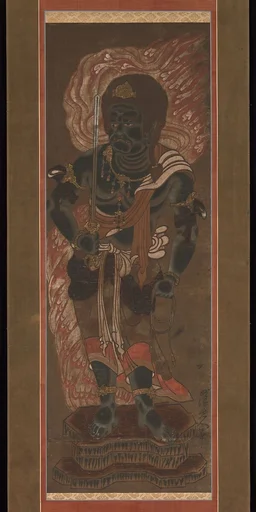
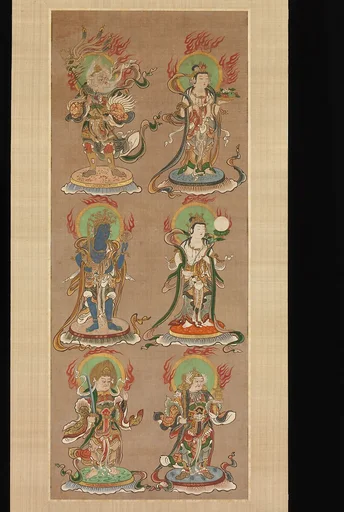
Ōtsu-e, or “pictures from Ōtsu Village," were folk paintings popular with travelers the busy trade and pilgrimage routes passing by Lake Biwa, to the northeast of Kyoto. The fierce blue-bodied deity Shōmen Kongōyasha served as the central icon for the popular rite of kōshin machi, an all-night religious vigil intended to protect believers from evil. Before him are four fierce yasha (Sanskrit: yaksha), wrathful deities who serve as guardians of Buddhism.
- Artist
- Unknown
- Date
- probably late 16th–early 17th century
- Medium
- Hanging scroll; ink, color, and gold on paper
- Culture
- Japan
- Department
- Asian Art
- Credit line
- The Harry G. C. Packard Collection of Asian Art, Gift of Harry G. C. Packard, and Purchase, Fletcher, Rogers, Harris Brisbane Dick, and Louis V. Bell Funds, Joseph Pulitzer Bequest, and The Annenberg Fund Inc. Gift, 1975