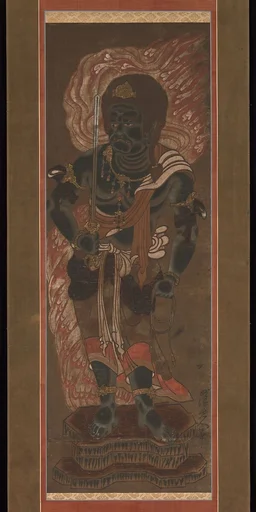
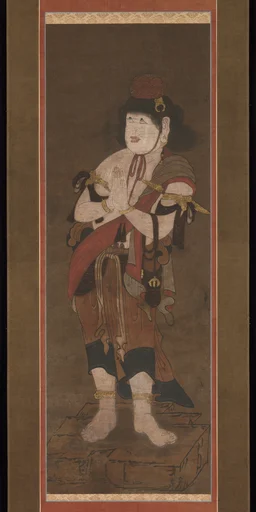
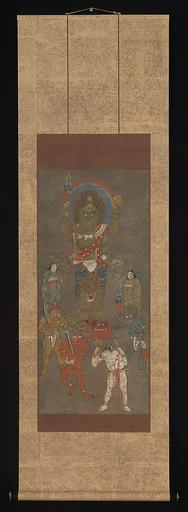
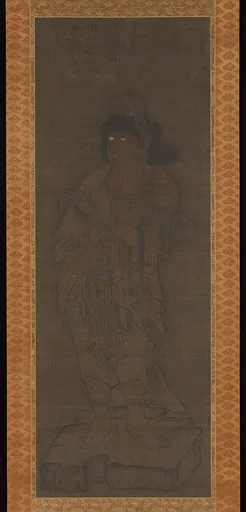
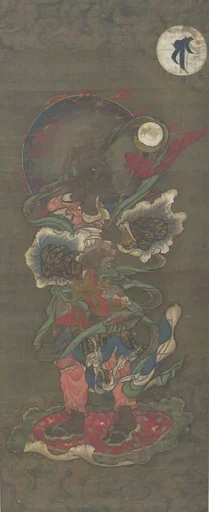
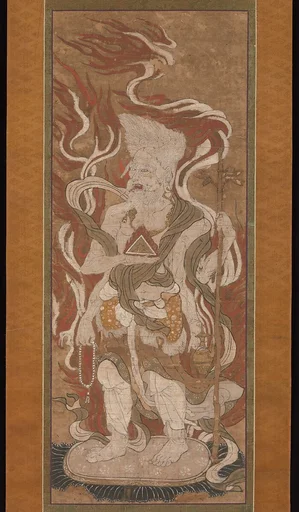
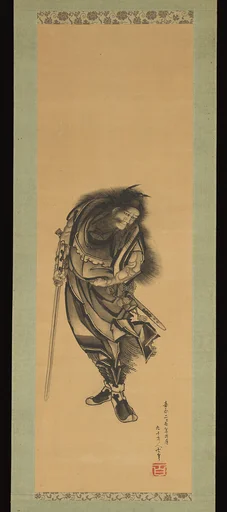
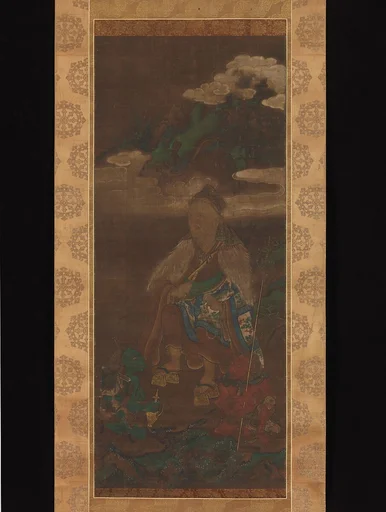
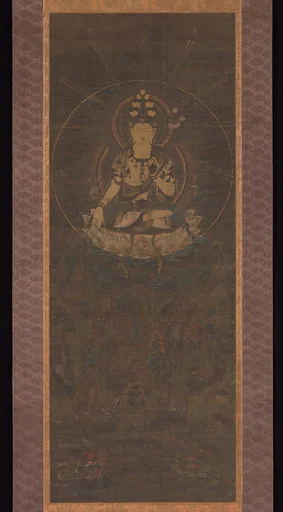
龍湫周沢写 不動明王二童子像|Fudō Myōō and Two Attendants
Ryūshū Shūtaku (Myōtaku)
Date unknown · One of a triptych of hanging scrolls; hand-colored woodblock print on paper · Asian Art
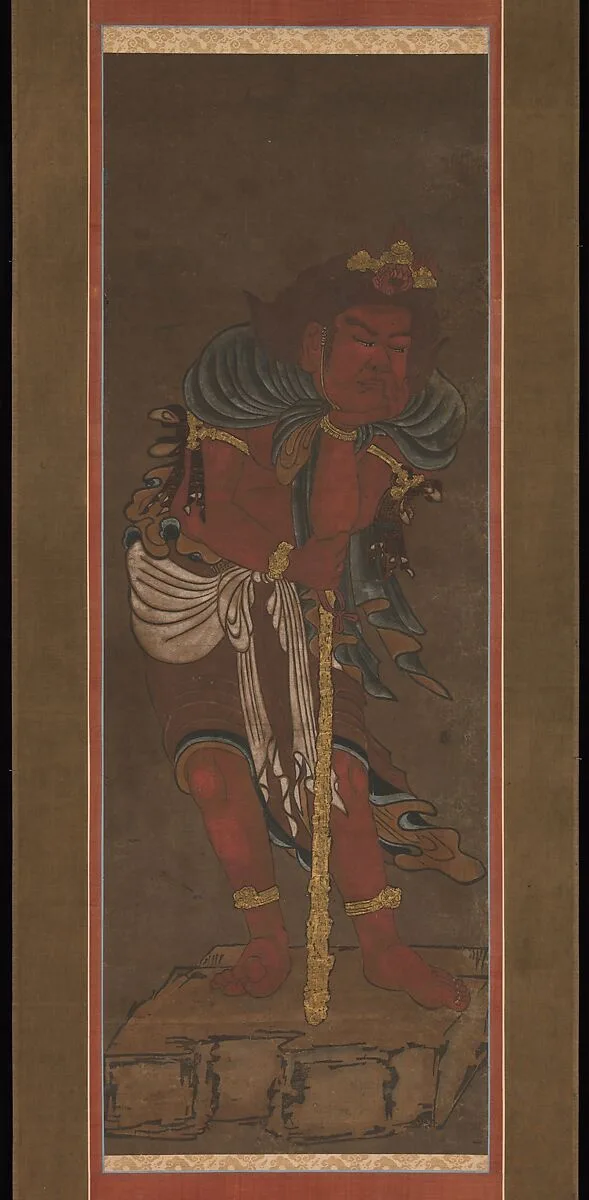
Fudō Myōō—literally, “the Immovable Wisdom King”—is a fearsome protector of Buddhist teachings. Originally an important deity of Japanese Esoteric Buddhism (Mikkyō), he was also revered in Zen temples. This triptych of images (1975.268.26–.28), hand-painted but with printed outlines, was created as one of the publication projects promoted by early medieval Zen temples to spread Buddhist teachings and iconography. This printed triptych seems to have been based on a painting of Fudō and his attendants executed by the noted Zen monk-scholar Ryūshū Shūtaku (also known as Myōtaku), who is said to have painted pictures of Fudō on a daily basis for over twenty years. The boy attendants often depicted with Fudō are Kongara (on the right) and Seitaka. The model for this printed triptych was most likely Myōtaku’s painting in the collection of the Henjōkō’in temple at Kōyasan
- Artist
- Ryūshū Shūtaku (Myōtaku)
- Date
- Date unknown
- Medium
- One of a triptych of hanging scrolls; hand-colored woodblock print on paper
- Culture
- Japan
- Department
- Asian Art
- Credit line
- The Harry G. C. Packard Collection of Asian Art, Gift of Harry G. C. Packard, and Purchase, Fletcher, Rogers, Harris Brisbane Dick, and Louis V. Bell Funds, Joseph Pulitzer Bequest, and The Annenberg Fund Inc. Gift, 1975