Bifolium from a Qur'an
Unknown
ca. 14th century · Ink, gold, and opaque watercolor on paper · Islamic Art
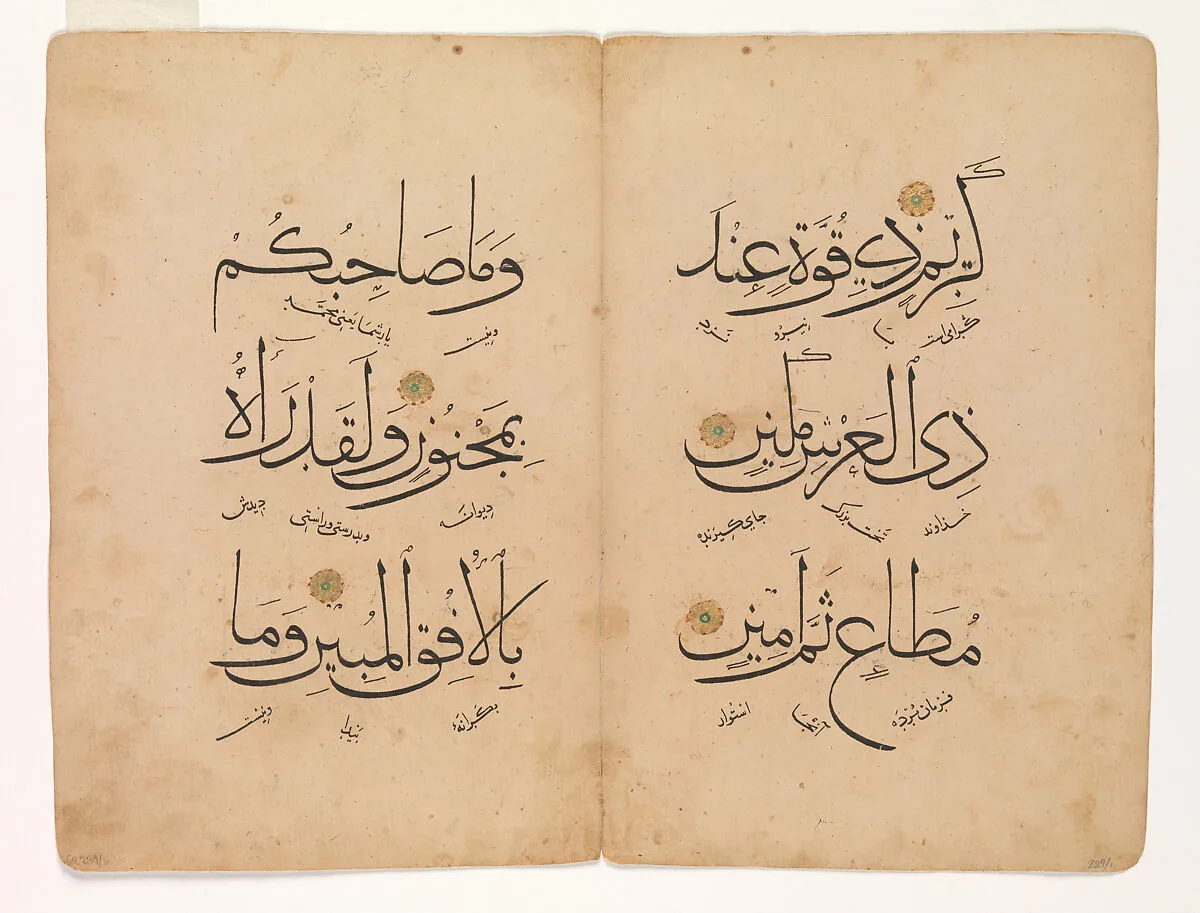
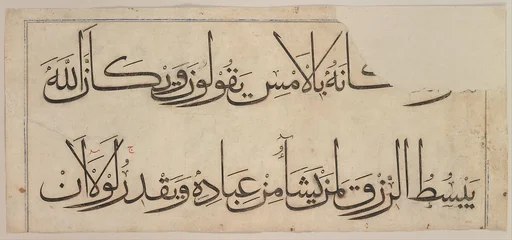
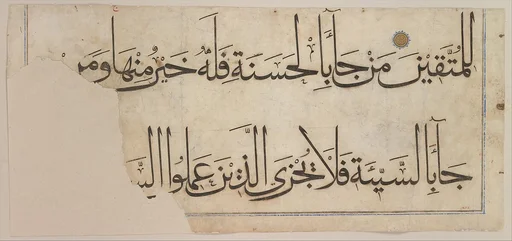
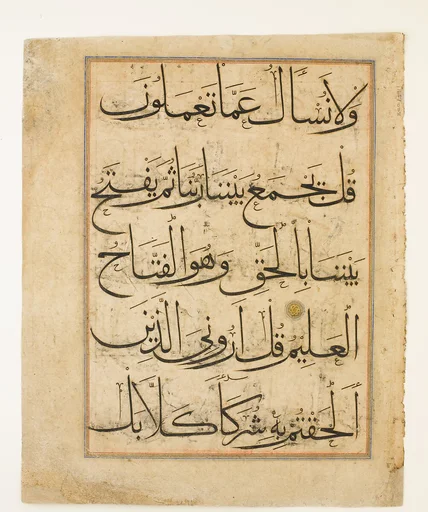
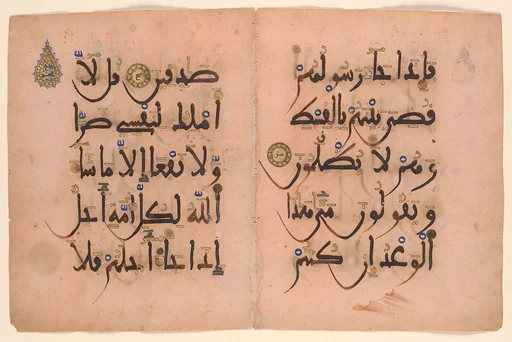
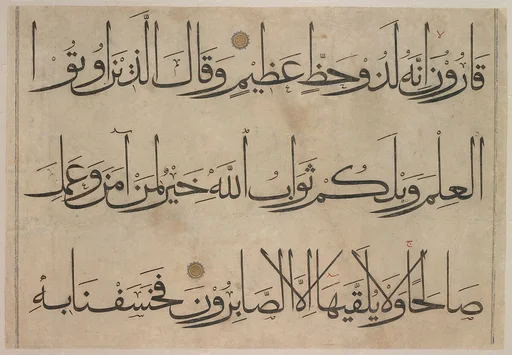
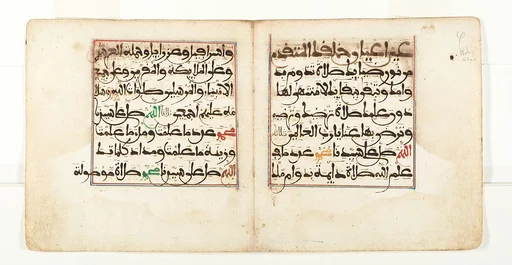
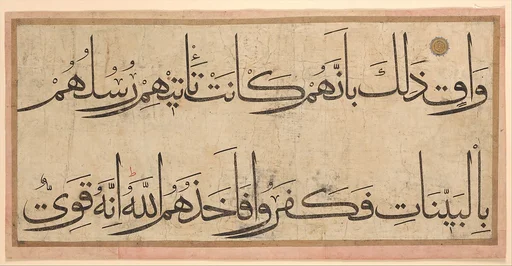
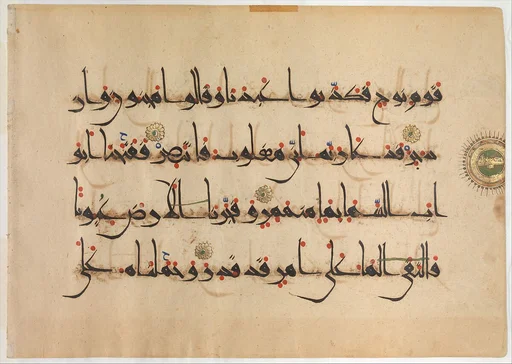
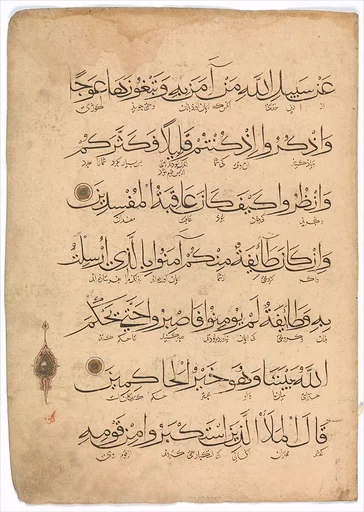
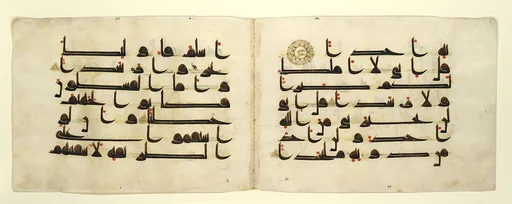
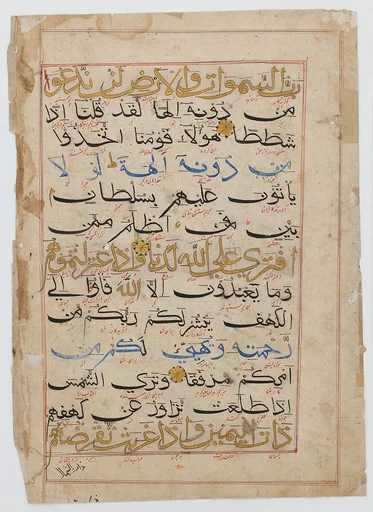
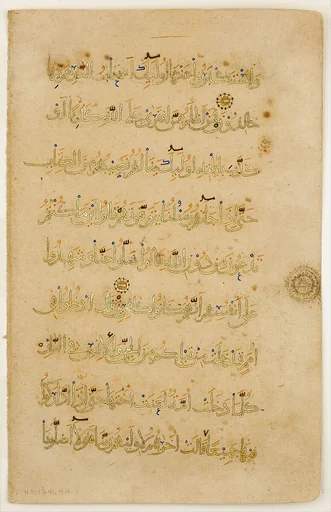
This double-page is from an important dispersed Qur’an manuscript from the fourteenth century. While the place of production, broadly attributed to Central Asia or Anatolia, remains yet to be determined, the calligraphy is remarkable for its particular thin variation of muhaqqaq script which includes some features of the thuluth script (defined by the tall letter shafts) and is noted for its unusual proportions and regularity. Muhaqqaq was a majestic type of script and was considered to be one of the most beautiful, as well as one of the most difficult scripts to execute well. In this bifolio each page consists of three generously spaced lines that alternate with inscriptions arranged in a chevron pattern; the only illumination on these folios are the roundels, indicating pause marks in gold, blue and red. These small interlinear words in naskhi are Persian translations of the word of God, to ensure the understanding of the Arabic text to its reader and owner who likely was more familiar with Persian than with Arabic.
- Artist
- Unknown
- Date
- ca. 14th century
- Medium
- Ink, gold, and opaque watercolor on paper
- Department
- Islamic Art
- Credit line
- Purchase, Mariam Azarm Gift, 2016