Bifolium from the Andalusian Pink Qur'an
Unknown
ca. 13th century · Ink, gold, silver, and opaque watercolor on paper · Islamic Art
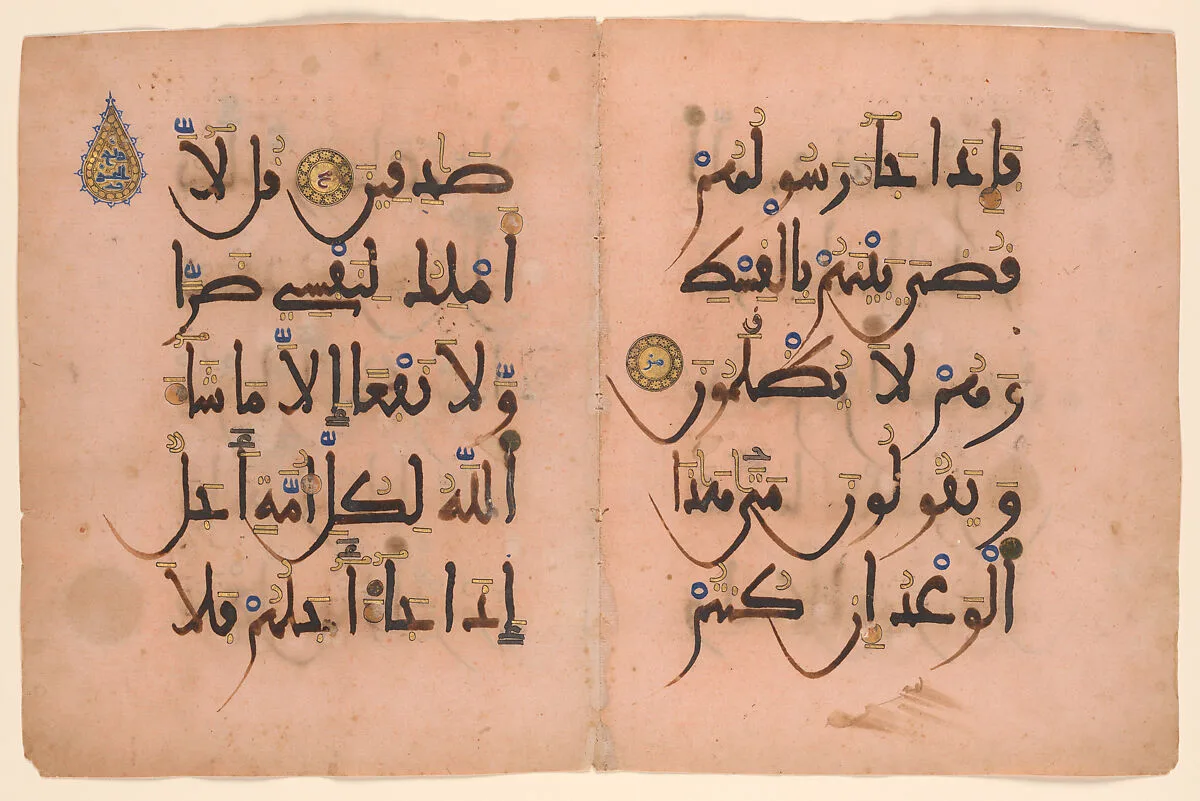
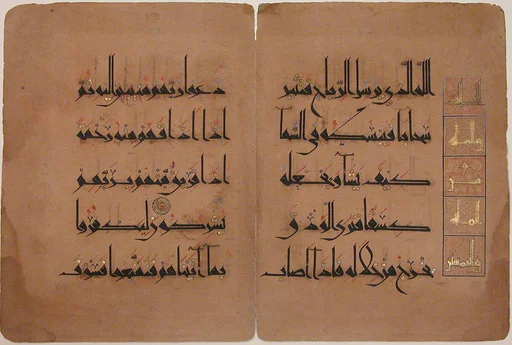
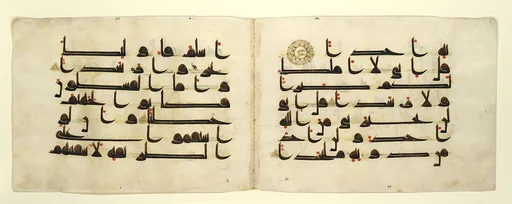
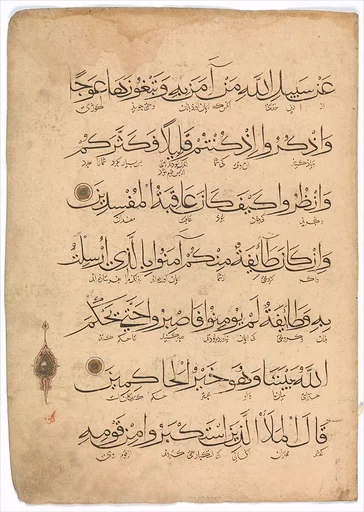
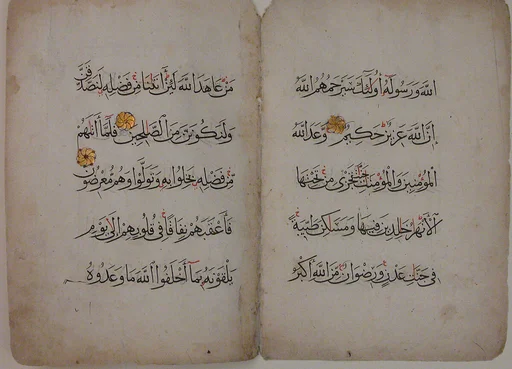
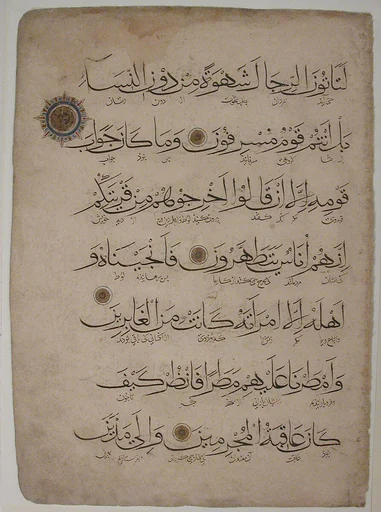
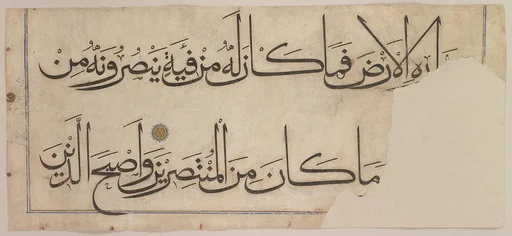
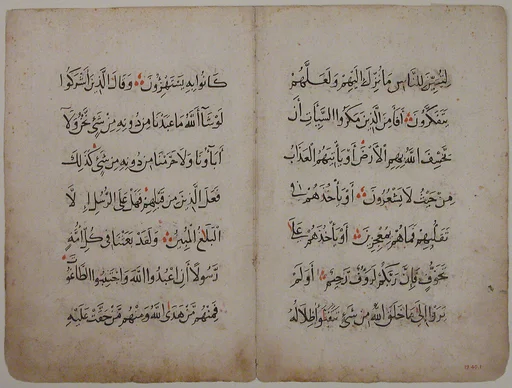
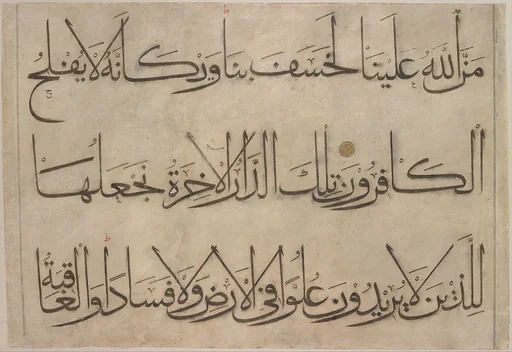
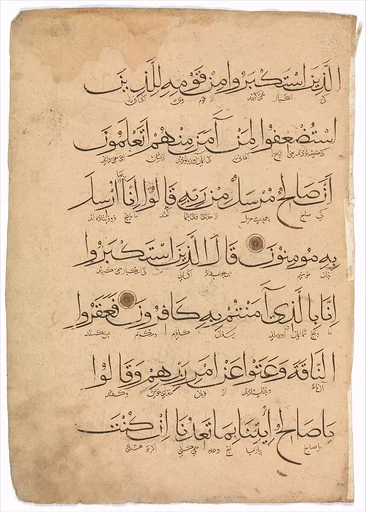
This bifolio belongs to a thirteenth-century Spanish manuscript named the "Pink Qur’an," after the hue of the paper. Each folio consists of five lines of text in bold maghribi script with diacritical and vocalization marks in gold outlined in brown, blue, and green. Verse numbers (Sura 7: part of 46–47 and 48–50) appear within gold discs in the form of blue abjad letters outlined in white (the abjad system assigns numerical values to the twenty-eight letters of the Arabic alphabet). The prostration (sajada) mark is a teardrop–shaped element in gold. The folio also contains the word hubus, or "pious foundation," which is pricked with a needle in the top left and right corners. The fine, consistent calligraphy, extensive use of gold, and elaborate illumination suggest that the Pink Qur’an was made for a royal or noble patron in Granada or Valencia. Unlike the traditional square format of Qur’ans from Spain and North Africa, the folios of the Pink Qur’an are rectangular. Another departure from convention is the use of paper, as parchment continued to be used for Qur’ans well into the fourteenth century in this region. The paper is believed to have come from the town of Javita, thirty-five miles southwest of Valencia, reportedly the site of the earliest paper mill in Spain.
- Artist
- Unknown
- Date
- ca. 13th century
- Medium
- Ink, gold, silver, and opaque watercolor on paper
- Department
- Islamic Art
- Credit line
- Purchase, Friends of Islamic Art Gifts, 2017