地蔵菩薩坐像|Jizō, Bodhisattva of the Earth Store (Kshitigarbha)
Unknown
second half 13th century · Wood with lacquer, pigment, and cut gold · Asian Art
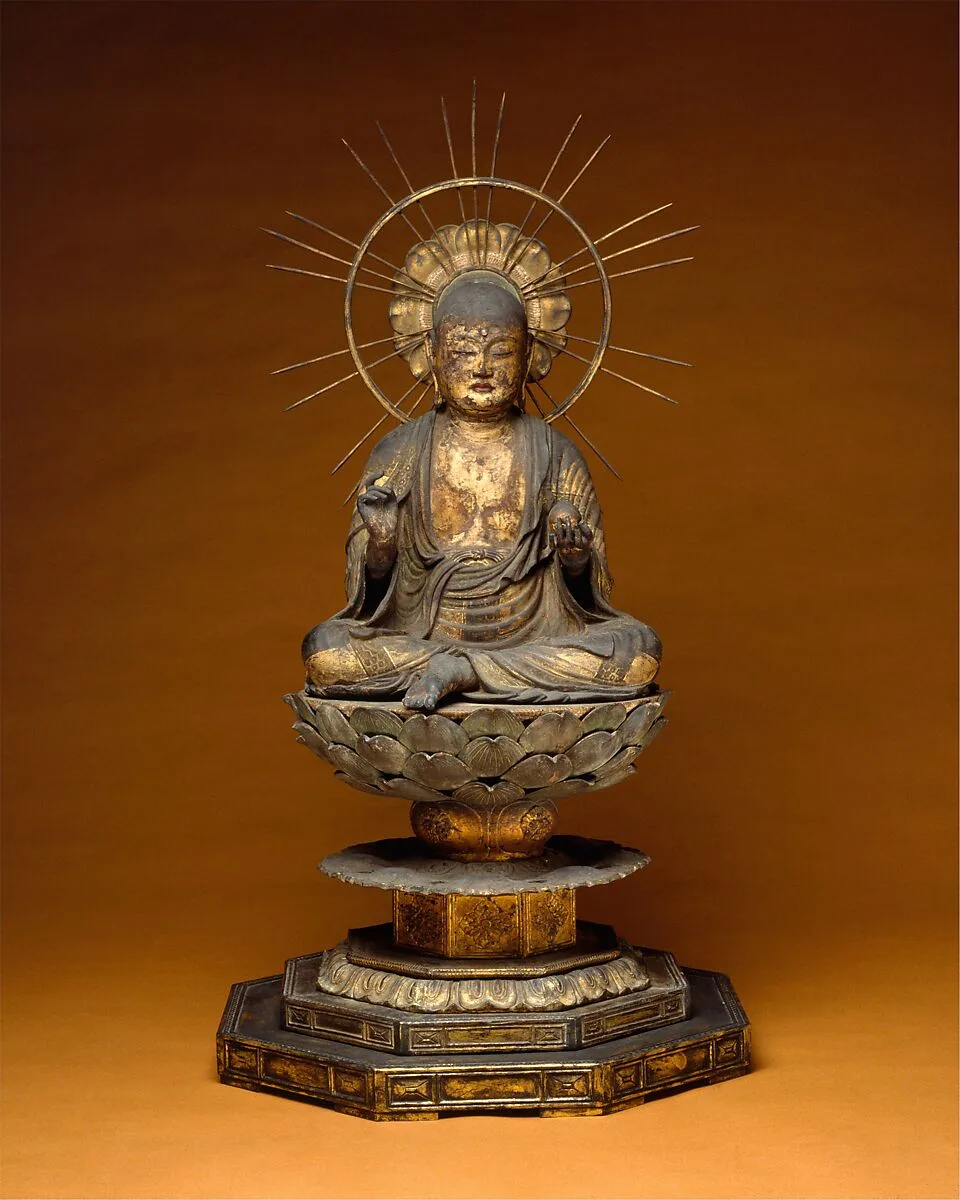
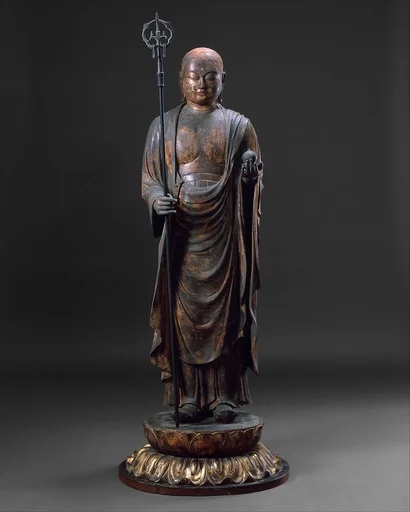
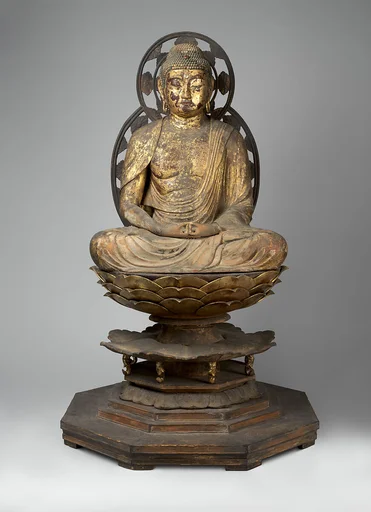
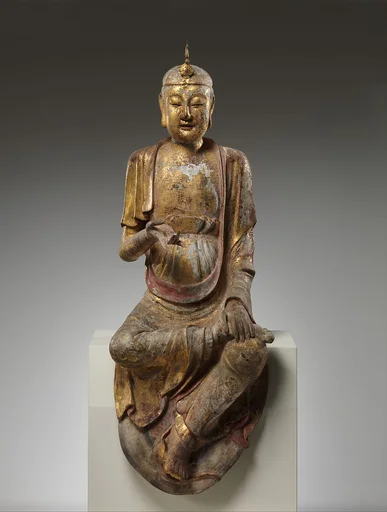
Represented in the guise of a Buddhist monk and devoid of the crown and jewels customarily worn by bodhisattvas, Jizō Bosatsu is among the most readily recognizable of the many deities in the Buddhist pantheon and perhaps the most sympathetic. Called Ksitigarbha ("Earth Womb") in Sanskrit, his worship originated in Central Asia. It reached Japan in the eighth century but flourished during the Kamakura period in connection with the Pure Land sects. Although Jizō is invoked for many roles—as protector of travelers, of children, and of women in childbirth—he was especially venerated for his intervention on behalf of those suffering in hell, the lowest of the Six Realms of Existence. He is portrayed as a monk with an open, compassionate expression ready to hear the call of the suffering. In his hand is a traveler's staff, its six rings a symbol of the extent of his mercy through all realms of being, and its clinking sound a signal of his foot's fall lest he harm even the smallest creature. This serenely graceful figure exemplifies the idealistic sculptural style that was often employed to convey the special ethos of Pure Land Buddhism: Jizō's warm, truthful facial features give him a compassionate expression that invites faith, which, in turn, will lead to salvation. His gently flowing robe, with its finely crafted gold-leaf designs, enhances the impression of elegant refinement.
- Artist
- Unknown
- Date
- second half 13th century
- Medium
- Wood with lacquer, pigment, and cut gold
- Culture
- Japan
- Department
- Asian Art
- Credit line
- The Harry G. C. Packard Collection of Asian Art, Gift of Harry G. C. Packard, and Purchase, Fletcher, Rogers, Harris Brisbane Dick, and Louis V. Bell Funds, Joseph Pulitzer Bequest, and The Annenberg Fund Inc. Gift, 1975