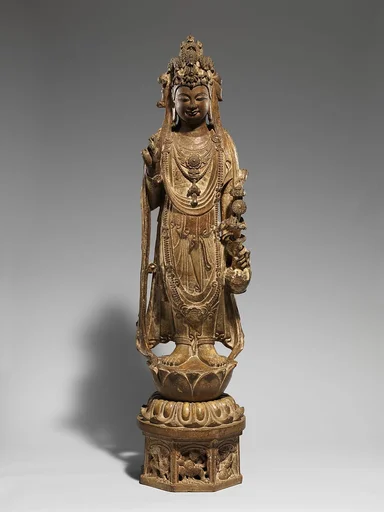
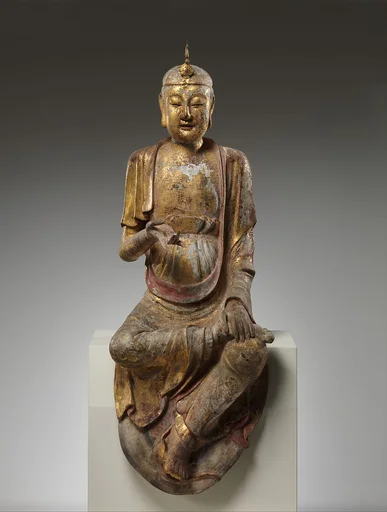
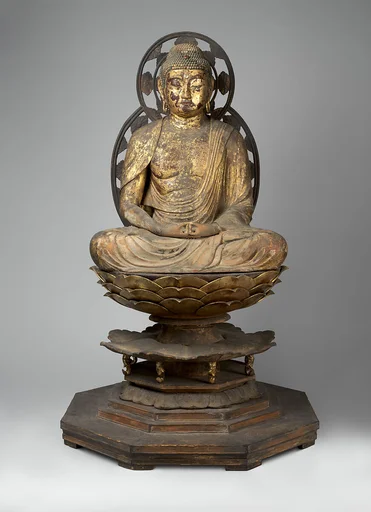
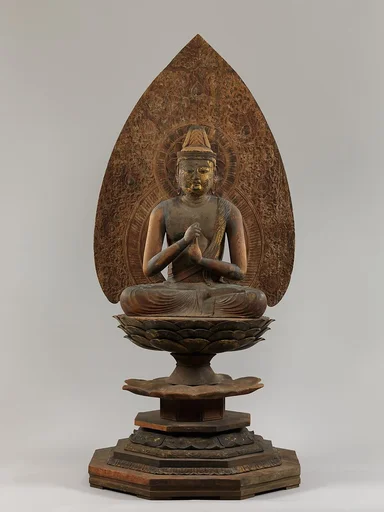
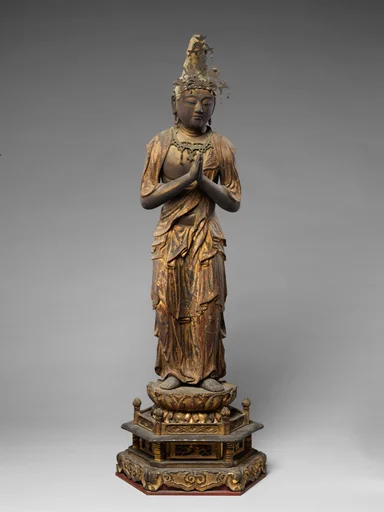
十一面観音立像 (Jūichimen Kannon ryūzō)|Jūichimen Kannon, the Bodhisattva of Compassion with Eleven Heads (Avalokiteshvara)
Unknown
mid- to late 14th century · Wood with lacquer, gold leaf, and metal decoration · Asian Art
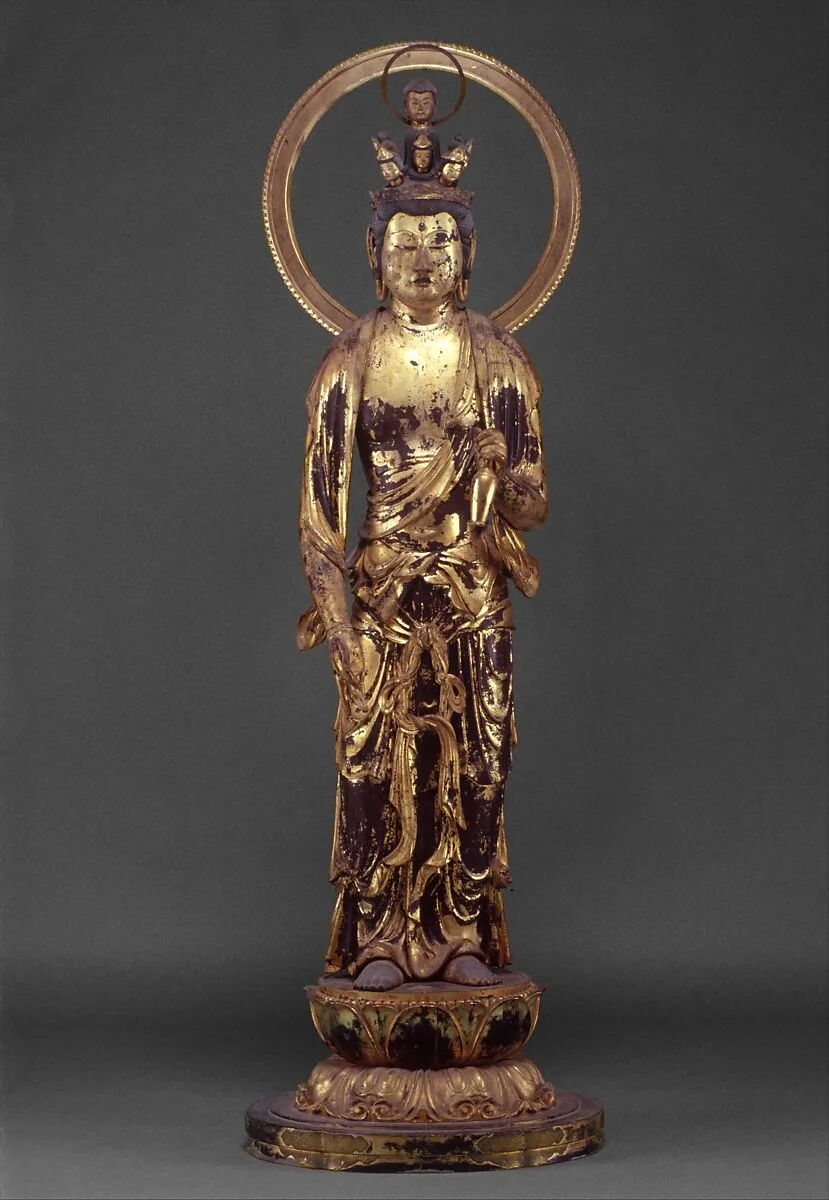
Jūichimen (“Eleven-Headed”) Kannon is an important bodhisattva in Esoteric Buddhism. Atop the deity’s own head were originally eleven miniature heads (some are now lost). Ten of these would have taken the form of bodhisattvas representing the stages toward enlightenment. The topmost head is that of Amida (Sanskrit: Amitabha), the Buddha from whom Kannon emanates. The fluid, deeply carved drapery shows the influence of a thirteenth-century style developed in Nara prefecture by the Kei school of Buddhist sculptors. However, the more decorative treatment of the robe and the heavy, solemn face suggest a fourteenth-century date for this imposing figure. It was originally installed at Kuhonji, a small Shingon school temple northwest of Kyoto.
- Artist
- Unknown
- Date
- mid- to late 14th century
- Medium
- Wood with lacquer, gold leaf, and metal decoration
- Culture
- Japan
- Department
- Asian Art
- Credit line
- The Harry G. C. Packard Collection of Asian Art, Gift of Harry G. C. Packard, and Purchase, Fletcher, Rogers, Harris Brisbane Dick, and Louis V. Bell Funds, Joseph Pulitzer Bequest, and The Annenberg Fund Inc. Gift, 1975