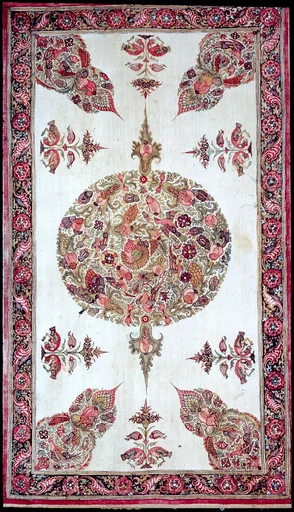
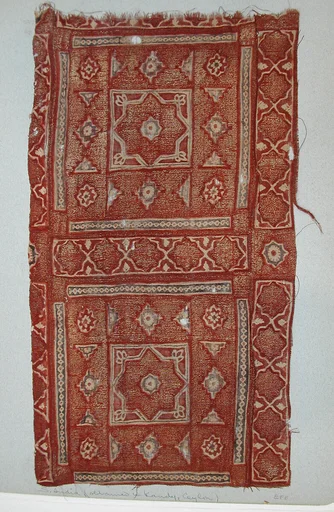
Panel of a Tent Lining
Unknown
1700–1740 · Cotton; plain weave, mordant painted and dyed, resist dyed · Islamic Art
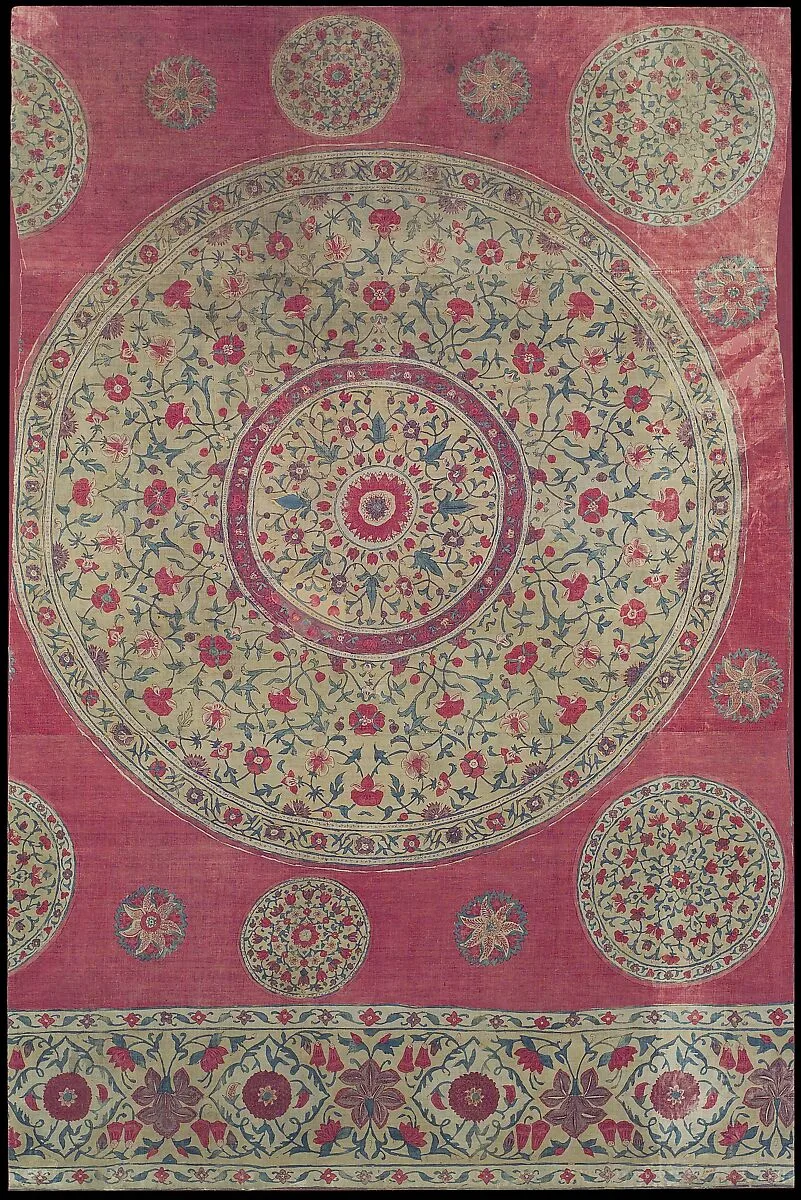
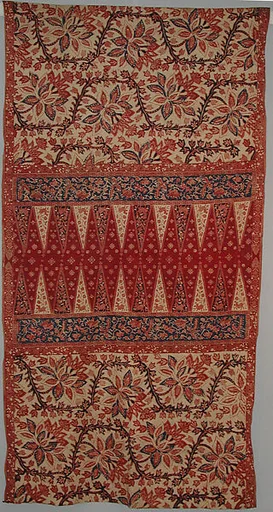
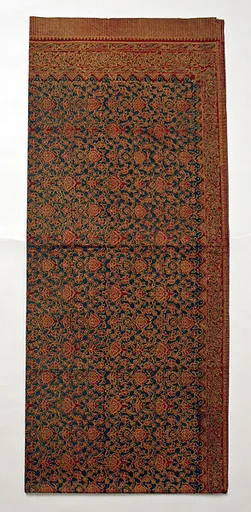
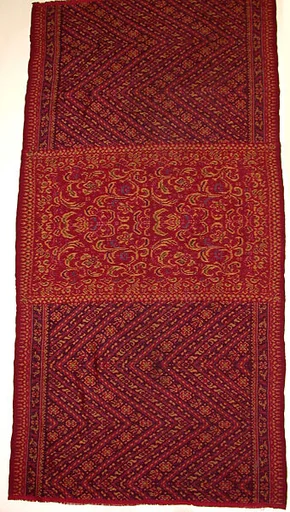
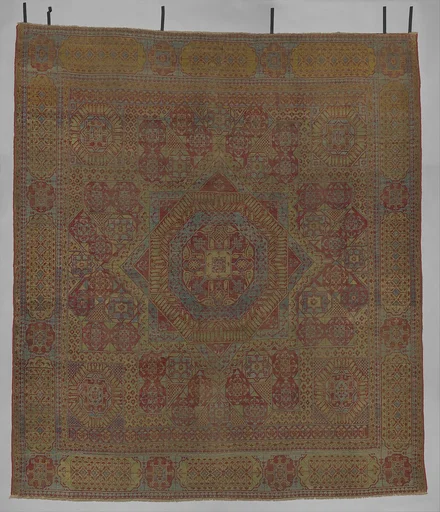
This panel was decorated using a traditional dyeing technique called kalamkari. This technique ws associated with the city of Burhanpur, which became a center for the production of dyed textiles in the late seventeenth and eighteenth centuries. Burhanpur textiles show great influence from the nearby Mughal tradition, favoring floral motifs within the cusped arches and arabesque decoration. On the Coromandel Coast, different types of kalamkari textiles were produced, including palampores (bed covers) made for the European market, and sarongs and ceremonial hangings traded to Southeast Asia. This panel lined an eighteenth-century Ottoman tent in Bulgaria, and its medallion-based design was probably made to suit that market.
- Artist
- Unknown
- Date
- 1700–1740
- Medium
- Cotton; plain weave, mordant painted and dyed, resist dyed
- Department
- Islamic Art
- Credit line
- Purchase, Friends of Islamic Art Gifts, 2005