Cover (Rumal)
Unknown
first half 17th century · Cotton; plain weave, mordant dyed and painted, resist dyed · Islamic Art
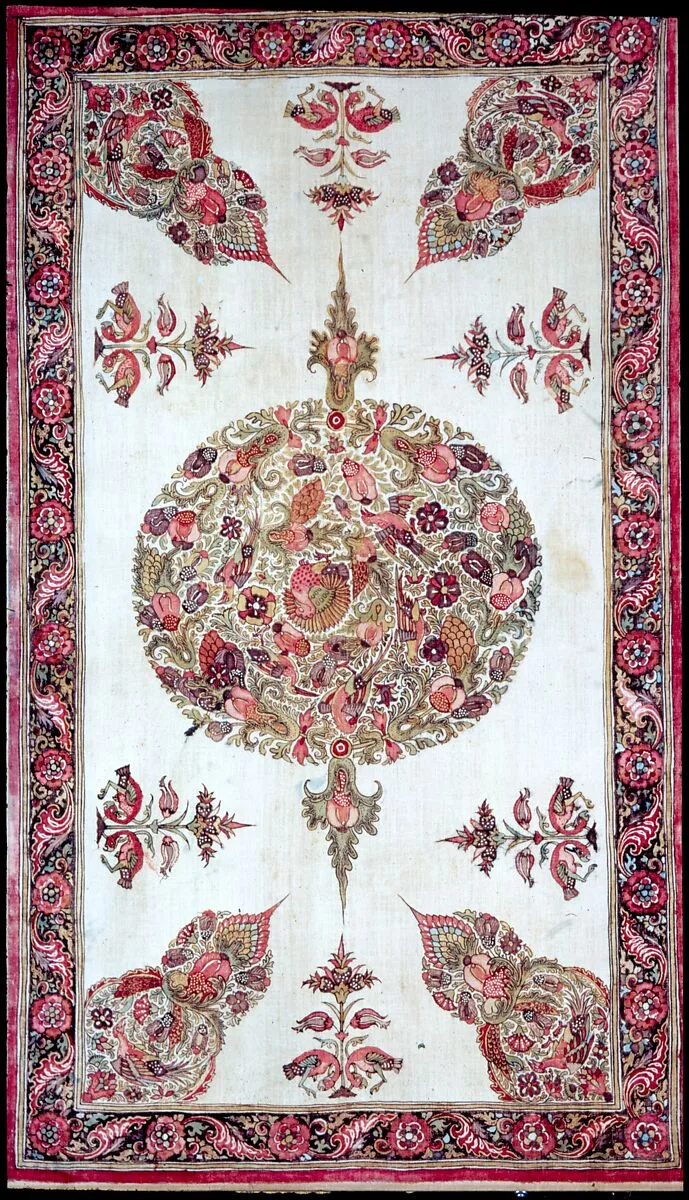
This small cotton cover was decorated using a traditional dyeing technique called kalamkari, which evolved in southern India. In this multi-step process, each color was applied with a stylus or by using wax resists before the entire cloth was submerged in a dye bath. The motif of a turkey in the central medallion would have been considered exotic, as turkeys had first entered India in only the previous century. In his memoirs, the Mughal emperor Jahangir wrote extensively about the animals, describing them in relation to more familiar species, including pea-hens and peacocks
- Artist
- Unknown
- Date
- first half 17th century
- Medium
- Cotton; plain weave, mordant dyed and painted, resist dyed
- Department
- Islamic Art
- Credit line
- Gift of Imre Schwaiger, 1928