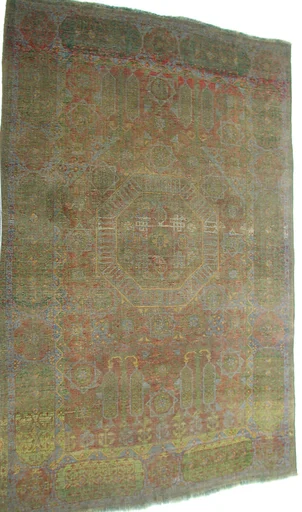
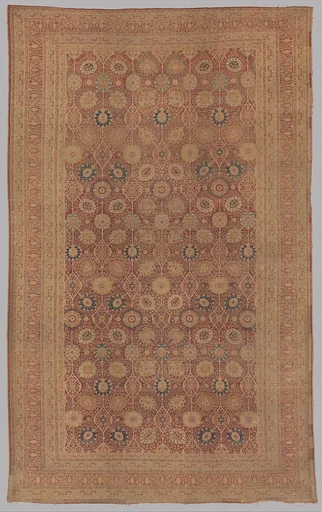
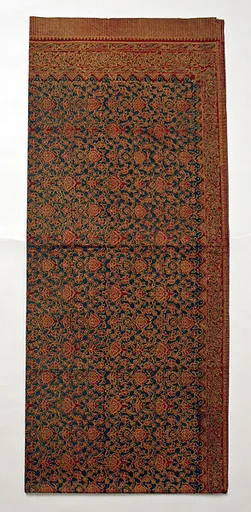
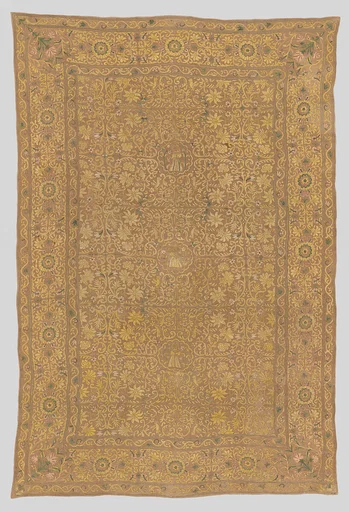
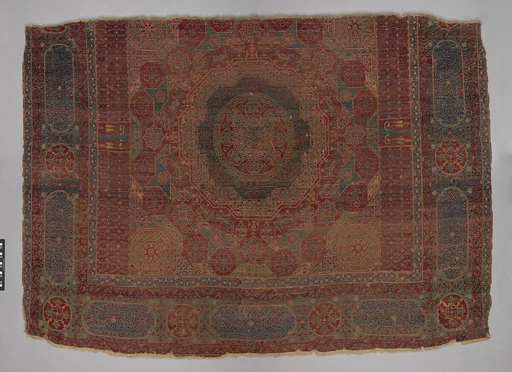
Carpet
Unknown
late 15th–early 16th century · Wool (warp, weft and pile); asymmetrically knotted pile · Islamic Art
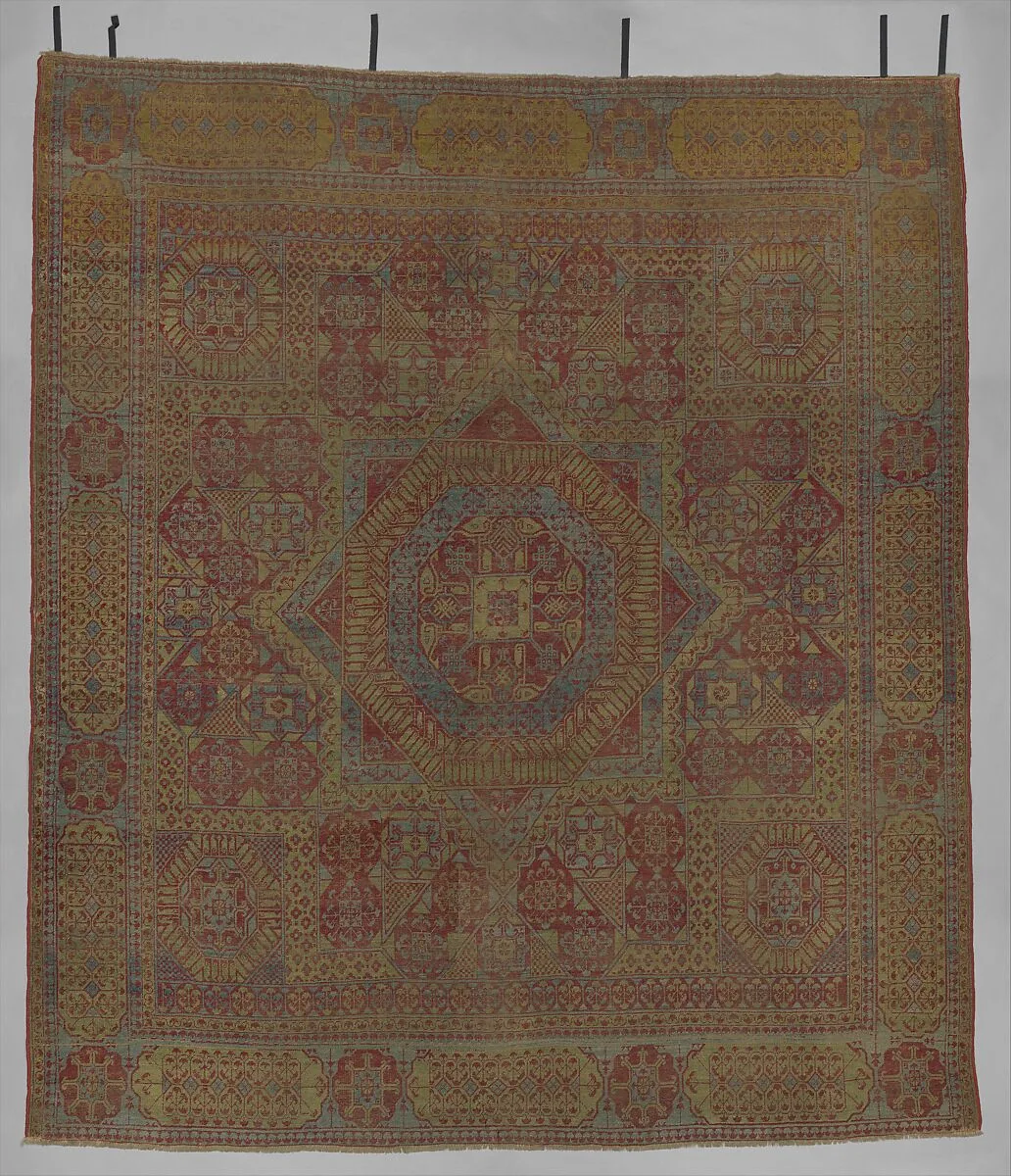
Documents first refer to Cairo as a carpet‑weaving center in the last quarter of the fifteenth century. Carpets of this type figured significantly in Mediterranean commerce and appear in Venetian paintings as early as the sixteenth century. They are characterized by kaleidoscopic profusion of tiny motifs and a limited color range, resulting in an iridescent effect. Production of these so‑called Mamluk carpets continued until the mid-sixteenth century, after the 1517 Ottoman conquest of Egypt.
- Artist
- Unknown
- Date
- late 15th–early 16th century
- Medium
- Wool (warp, weft and pile); asymmetrically knotted pile
- Department
- Islamic Art
- Credit line
- Bequest of George Blumenthal, 1941