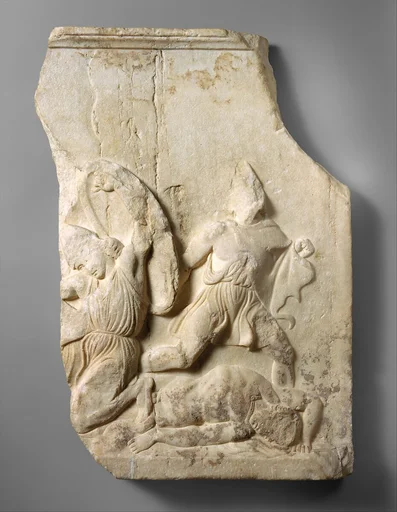
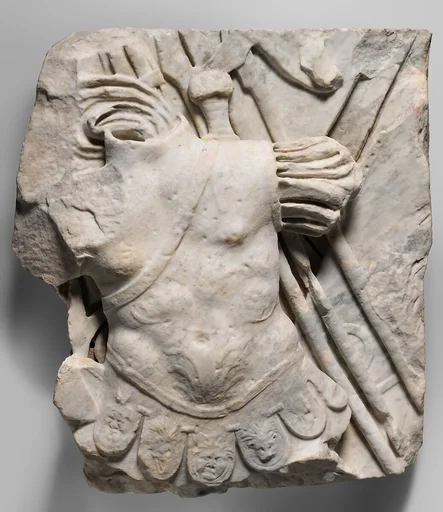
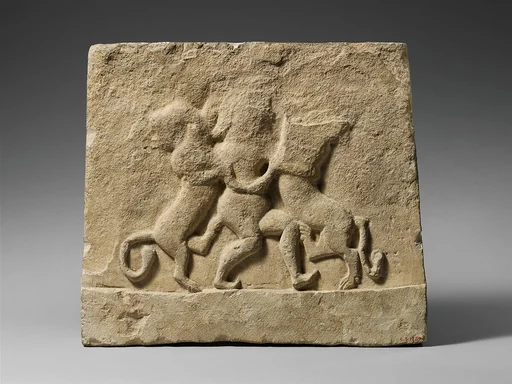
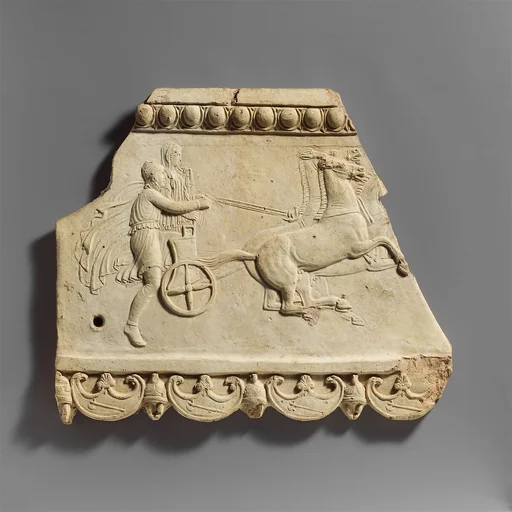
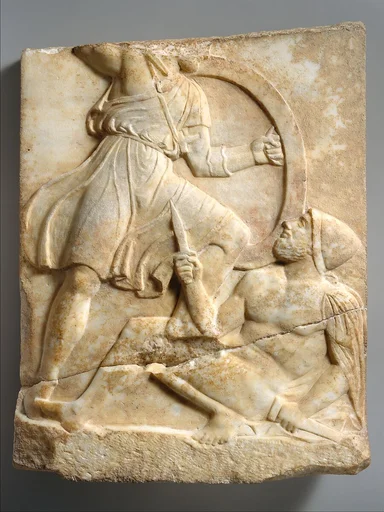
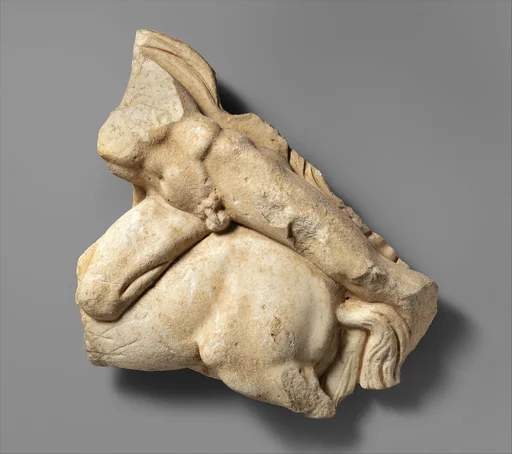
Marble relief fragment with gladiators
Unknown
1st–3rd century CE · Marble · Greek and Roman Art
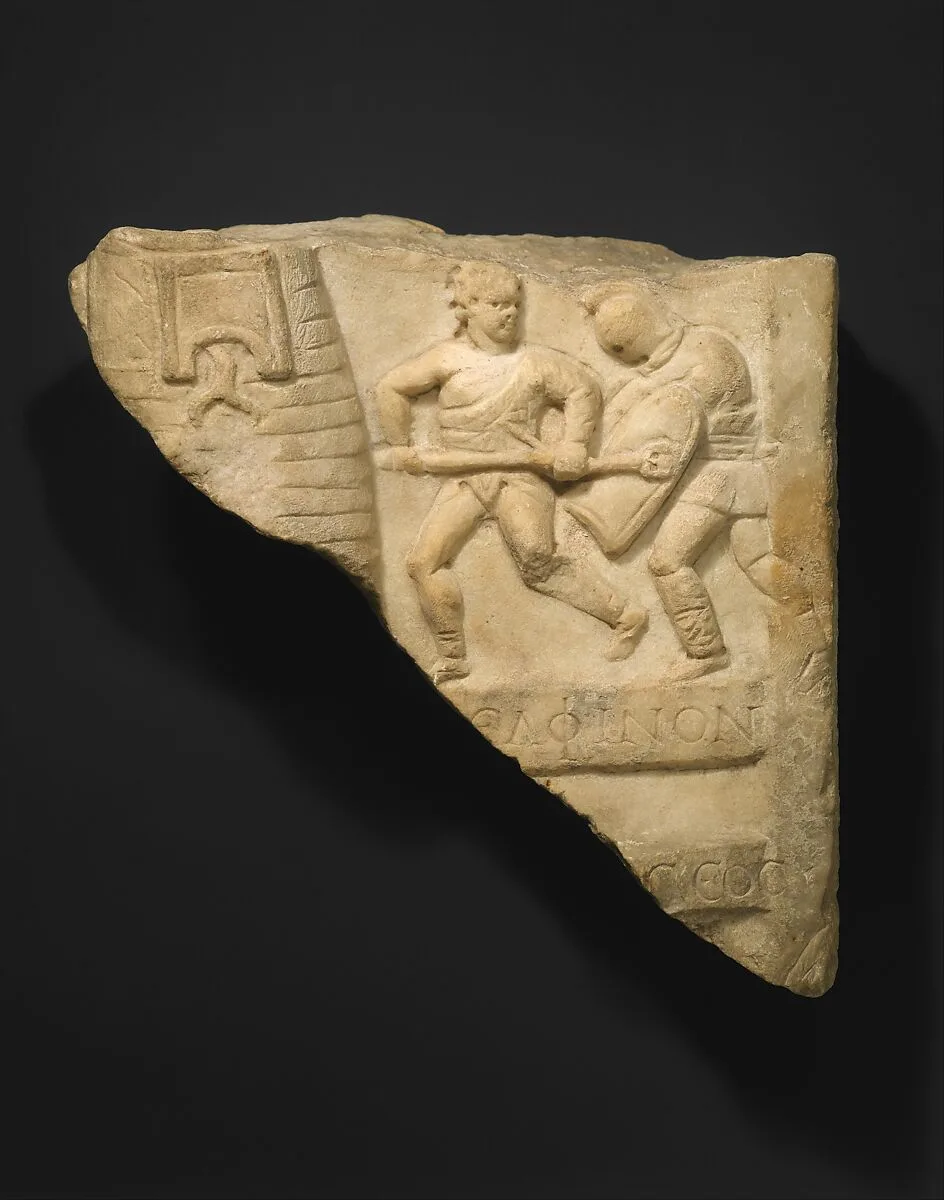
Gladiatorial shows were essentially a Roman phenomenon, but their popularity quickly spread to the Greek cities of the eastern part of the Empire. This fragmentary relief with its Greek inscription is evidence for the existence of gladiators in the Greek-speaking world. The scene shows two types of gladiators pitted against each other in the arena. In the Imperial period, there were seven main types of fighter; each was known by a different name, wore distinctive armor, and carried specific weapons. Most were heavily armed and wore helmets; these were the murmillo, thrax, hoplomachus, provocator, and secutor. In addition, there were the eques, who only fought against another eques since the contest started on horseback, and the retiarius, who was lightly armed with a trident, wore no helmet, and carried a net. Here a retiarius is being pursued by a secutor, and behind them to the left is part of the stage scenery or props that often featured in the games.
- Artist
- Unknown
- Date
- 1st–3rd century CE
- Medium
- Marble
- Culture
- Roman
- Department
- Greek and Roman Art
- Credit line
- Rogers Fund, 1957