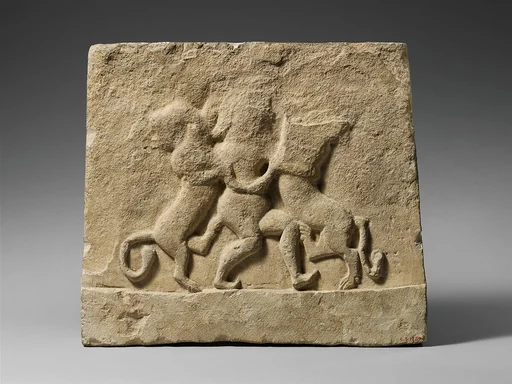
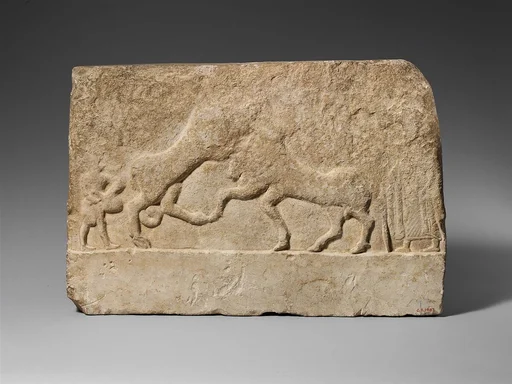
Limestone cippus base
Unknown
ca. 500–450 BCE · Limestone · Greek and Roman Art
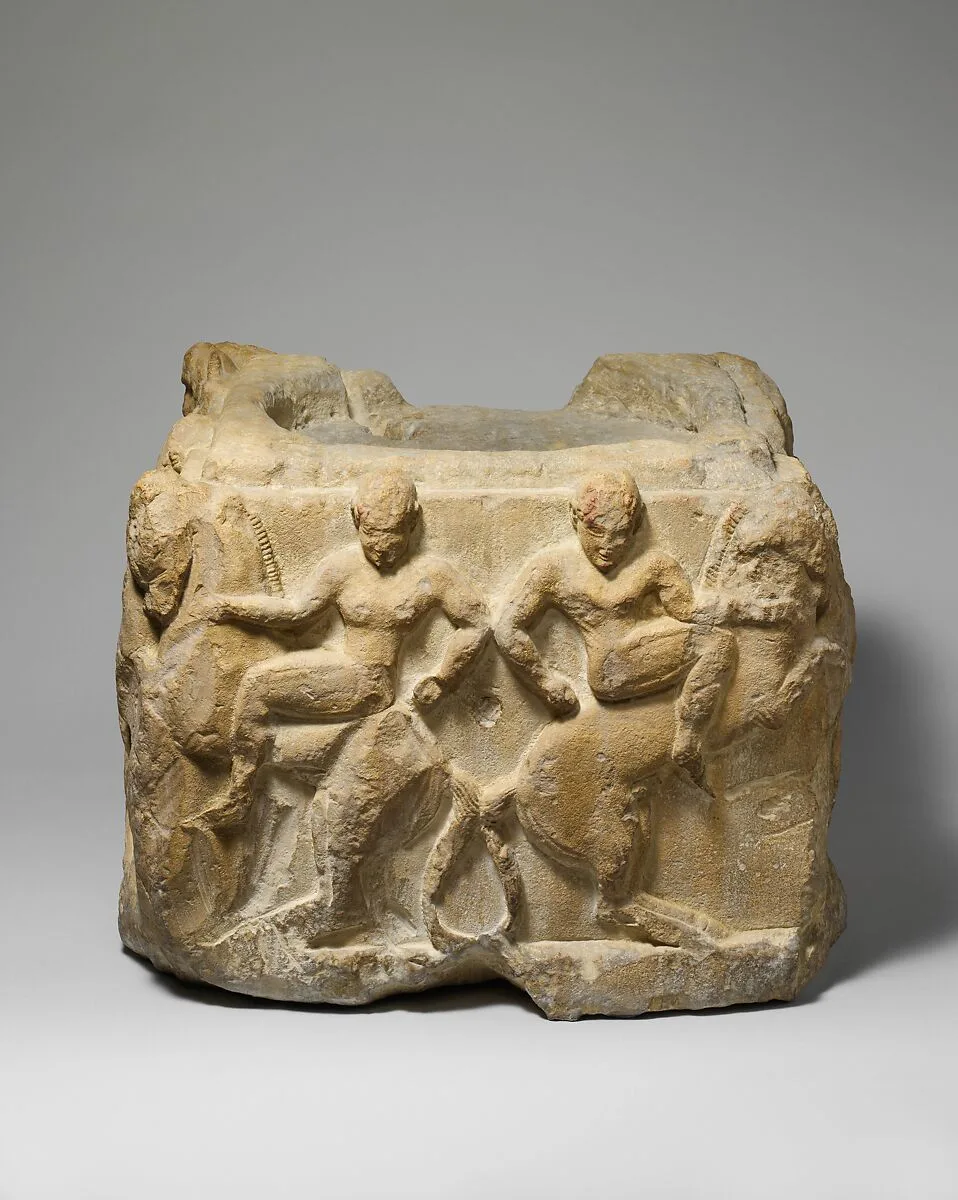
A cippus is a large stone marker used by the Etruscans to establish a boundary or, more commonly, to mark the location of a tomb. The Etruscans produced several types of cippi. This example, the only one in the Museum's collection, is a cubic block that originally would have supported a large spherical, onion-shaped, or pointed stone. Each side of the block is carved with an identical scene showing symmetrically disposed horsemen. These almost certainly represent the twin gods, Castur and Pultuce (Roman: Castor and Pollux), among the most popular deities worshiped by the Etruscans. This type of cippus is closely associated with Chiusi, an important city in Central Italy.
- Artist
- Unknown
- Date
- ca. 500–450 BCE
- Medium
- Limestone
- Culture
- Etruscan, probably Chiusine
- Department
- Greek and Roman Art
- Credit line
- Fletcher Fund, 1925